


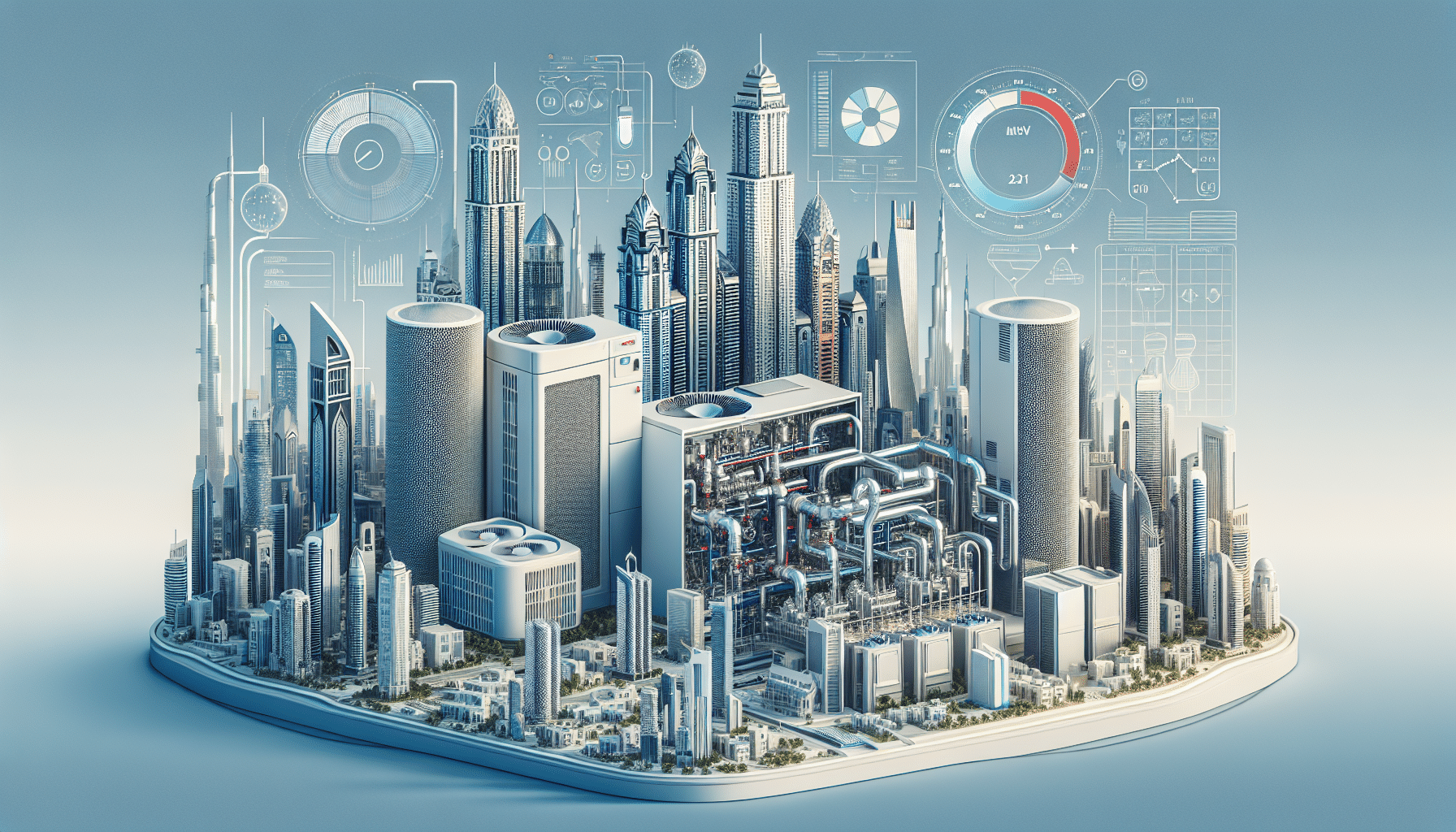
Explained For Dubai Buildings: Hvac Filtration Standards
Dubai’s extreme climate—with intense heat, high humidity, and substantial dust loads—creates unique challenges for indoor air quality management. HVAC Filtration Standards and MERV ratings explained for Dubai buildings must account for these environmental stressors that conventional filtration systems in temperate climates simply don’t encounter. Whether you’re managing a residential villa, commercial office, or hospitality facility, understanding how filtration works and which standards apply directly impacts occupant health, energy efficiency, and regulatory compliance.
The question isn’t whether your building needs advanced filtration. The question is whether your current HVAC filtration standards and MERV ratings explained for Dubai buildings are adequate for your specific application. Poor filtration leads to accelerated HVAC degradation, increased energy consumption, mold growth, and respiratory health impacts for occupants. Yet many building managers operate with outdated filtration strategies that don’t meet 2025 requirements or local authority standards.
Hvac Filtration Standards And Merv Ratings Explained For Dubai Buildings – Understanding MERV Ratings and Filter Efficiency
MERV stands for Minimum Efficiency Reporting Value—a standardised rating system that measures how effectively an air filter captures particles of various sizes. The scale ranges from MERV 1 to MERV 20, where higher numbers indicate greater filtration efficiency. When discussing HVAC filtration standards and MERV ratings explained for Dubai buildings, understanding this fundamental scale is your starting point.
MERV ratings measure efficiency across three particle size ranges: particles between 0.3–1 micrometres, 1–3 micrometres, and 3–10 micrometres. A MERV 8 filter might capture 70% of particles in the 3–10 micrometre range but only 20% of smaller particles. A MERV 13 filter captures 85% across the same range and significantly more of the smaller particles that penetrate deeper into the respiratory system. This distinction matters enormously in Dubai’s environment, where outdoor air carries fine dust, salt particles from coastal regions, and industrial pollution.
The MERV Scale Explained
MERV 1–4: Capture only the largest particles (10+ micrometres). These basic filters work for simple dust control but provide minimal health protection. Most modern buildings have moved beyond this level.
MERV 5–8: Capture particles down to 3 micrometres. Suitable for standard residential applications with average air quality concerns. However, in Dubai’s dusty environment, these filters clog quickly and require frequent replacement. This relates directly to Hvac Filtration Standards And Merv Ratings Explained For Dubai Buildings.
MERV 9–12: Capture particles as small as 1 micrometre, including fine dust, pollen, and some mold spores. This range represents the sweet spot for many residential and light commercial applications in the UAE.
MERV 13 and higher: Capture particles smaller than 1 micrometre, including fine particulates (PM2.5), bacteria, and viral particles. MERV 13 has become the new baseline standard for new construction in Dubai as of 2025. MERV 15 and above are reserved for critical environments like hospitals, data centres, and pharmaceutical facilities.
Hvac Filtration Standards And Merv Ratings Explained For Dubai Buildings – Dubai Municipality and Local HVAC Filtration Regulations
Dubai’s regulatory landscape governing HVAC filtration standards and MERV ratings explained for Dubai buildings has evolved significantly. The Emirates Authority for Standardization and Metrology (ESMA) provides certification standards for air filters and HVAC systems used throughout the UAE. These aren’t optional guidelines—they’re mandatory requirements for new construction and major renovations.
As of 2025, Dubai’s Green Building Regulations mandate MERV 13 or higher for all new construction projects. This represents a substantial shift from previous standards that allowed MERV 8 in many applications. The Dubai Municipality Environmental Health Standards also set specific pollutant limits: formaldehyde must not exceed 0.08 parts per million, total volatile organic compounds (TVOCs) should not exceed 300 micrograms per cubic metre, and suspended particulates must not exceed 150 micrograms per cubic metre.
Key Regulatory Bodies
Dubai Municipality: Sets building codes, environmental standards, and air quality requirements for all structures. The Building Code specifies air exchange rates, filtration efficiency standards, and HVAC system materials. When considering Hvac Filtration Standards And Merv Ratings Explained For Dubai Buildings, this becomes clear.
Dubai Health Authority (DHA): Mandates air quality reporting for public and commercial spaces. Healthcare facilities, schools, and hospitality venues fall under particularly stringent requirements.
ESMA (Emirates Authority for Standardization and Metrology): Provides certification standards ensuring filters and HVAC equipment meet specifications before installation. Only ESMA-certified filters should be used in new construction.
Dubai Civil Defence and Fire & Life Safety Code: Specifies ventilation effectiveness checks and system functionality requirements that must be verified during and after construction.
Hvac Filtration Standards And Merv Ratings Explained For Dubai Buildings – MERV Standards and Practical Applications for Dubai Building
HVAC filtration standards and MERV ratings explained for Dubai buildings must be matched to specific building types and use cases. A one-size-fits-all approach fails because occupancy types, contaminant sources, and health sensitivities vary dramatically.
Residential Villas and Apartments
Residential buildings typically require MERV 13 minimum under current Dubai regulations. This captures fine dust, pollen, mold spores, and the fine particulates that accumulate in the UAE climate. In our experience investigating indoor environmental problems across Dubai, homes with MERV 8 filtration consistently show elevated spore counts and accelerated HVAC degradation due to dust accumulation. The importance of Hvac Filtration Standards And Merv Ratings Explained For Dubai Buildings is evident here.
However, residential applications also demand consideration of filter resistance. Higher MERV ratings create greater static pressure in HVAC systems, increasing energy consumption and putting stress on fan motors. A well-designed system balances MERV 13 filtration with appropriately sized ductwork and fan capacity.
Commercial and Office Buildings
Commercial spaces typically demand MERV 13–15, particularly if the building houses sensitive populations (elderly, children, immunocompromised individuals) or if occupancy density is high. Open-plan offices with shared air handling systems benefit from higher MERV ratings because a single contamination source can affect many occupants. Filtration becomes part of health risk management.
Healthcare and Hospitality Facilities
Hospitals, clinics, and 5-star hotels require MERV 15 or HEPA filtration (which exceed MERV ratings entirely, capturing 99.97% of particles 0.3 micrometres and larger). These facilities must comply with DHA standards that exceed municipal requirements. In hospitality especially, guest perception of air quality directly impacts reputation and occupancy rates.
Critical Facilities
Data centres, pharmaceutical manufacturing, and precision laboratories require HEPA or ULPA (Ultra Low Penetration Air) filtration. Standard MERV ratings don’t apply—these environments need absolute particle control to protect sensitive equipment or products.
Filter Selection Guide: Choosing the Right MERV Rating
Selecting appropriate filtration for your building requires balancing multiple factors. HVAC filtration standards and MERV ratings explained for Dubai buildings must account for outdoor air quality, occupant health needs, budget constraints, and system capacity.
Assessing Your Building’s Needs
Outdoor air quality: Dubai’s location near the coast and proximity to industrial areas means outdoor air contains saltwater aerosol, dust, and occasional pollution spikes. This justifies higher MERV ratings than you might use in temperate climates.
Occupant health profiles: Buildings with residents or workers who have asthma, allergies, or respiratory conditions benefit from MERV 13 minimum. Children’s facilities and schools should exceed this threshold.
System capacity: Older HVAC systems designed for MERV 8 filters may struggle with MERV 13 or higher. Before upgrading, verify that ductwork, dampers, and fan motors can handle the increased static pressure. Undersized systems operating against excessive filter resistance waste energy and can fail prematurely.
Budget and lifecycle costs: Higher MERV filters cost more initially (typically AED 150–400 per filter depending on size) and clog faster in Dubai’s dusty environment, requiring more frequent replacement. Calculate the total cost of ownership over three to five years.
Climate-Specific Considerations
Dubai’s climate creates unique filtration challenges. Temperatures regularly exceed 45°C, humidity fluctuates dramatically between 20% in winter and 80% in summer, and airborne dust concentrations are among the highest globally. This combination means filters clog faster than in temperate climates. Plan for filter replacement every 1–2 months rather than the 3–6 month intervals common elsewhere. Understanding Hvac Filtration Standards And Merv Ratings Explained For Dubai Buildings helps with this aspect.
Additionally, thermal stress on filter media in hot climates can accelerate degradation. Ensure filters are installed in shaded sections of HVAC systems where possible, and verify that plenum temperatures don’t exceed filter media specifications (typically 65°C maximum).
Maintenance Schedules and Filter Replacement in Desert Climates
Proper maintenance of HVAC filtration standards and MERV ratings explained for Dubai buildings isn’t optional—it’s essential for system longevity and air quality. Neglected filters reduce efficiency, increase energy consumption, and can allow unfiltered air to bypass the system entirely.
Inspection and Replacement Protocols
Implement monthly visual inspections of filter condition. In Dubai’s environment, you may observe significant dust accumulation within just weeks. Don’t rely on “replacement intervals”—replace filters when they show visible dirt or when pressure drop exceeds manufacturer specifications (typically 250 Pascals).
The Dubai Municipality recommends filter replacement every 1–2 months for residential properties and monthly or more frequently for commercial buildings, depending on occupancy and outdoor air quality. This is significantly more frequent than recommendations for temperate climates, reflecting the intense environmental stress.
System Commissioning Requirements
New construction requires specific commissioning procedures. Filters must be protected during construction—install them late in the building process or change them before occupancy. Unprotected filters exposed to construction dust become essentially non-functional before the building is even occupied. Hvac Filtration Standards And Merv Ratings Explained For Dubai Buildings factors into this consideration.
All ductwork should be pressure-tested when external static pressure exceeds 250 Pascals or when installed in unconditioned spaces. Air leakage testing ensures systems don’t waste conditioned air through poorly sealed joints. Buildings with cooling loads of 1 megawatt or greater must demonstrate air leakage rates not exceeding 10 cubic metres per hour per square metre of building envelope at 50 Pascal pressure differential.
Documentation and Compliance
Maintain detailed records of all filter replacements, system inspections, and pressure drop measurements. Dubai Municipality and DHA conduct audits of commercial facilities and healthcare buildings, expecting documented evidence of maintenance compliance. Poor records can result in fines or forced system shutdowns.
Advanced Filtration Technologies Beyond Standard MERV
While MERV ratings address particulate filtration, many modern HVAC systems incorporate additional technologies to address other air quality challenges. Understanding HVAC filtration standards and MERV ratings explained for Dubai buildings now includes awareness of these complementary systems.
Multi-Stage Filtration Systems
Advanced systems combine pre-filters, HEPA filters, and activated carbon filters in sequential stages. Pre-filters (MERV 5–8) capture large particles, protecting downstream filters and extending their life. HEPA filters then capture fine particles. Activated carbon absorbs volatile organic compounds (VOCs), odours, and chemical pollutants—a critical capability given off-gassing from building materials and furnishings.
This multi-stage approach dramatically extends filter life and improves overall air quality. In our microbiology laboratory at Saniservice, we’ve analysed air samples from buildings using sequential filtration versus single-stage systems. Sequential systems consistently show lower concentrations of particulates, mold spores, and chemical pollutants. This relates directly to Hvac Filtration Standards And Merv Ratings Explained For Dubai Buildings.
Energy Recovery Ventilators and Heat Recovery Ventilators
In Dubai’s extreme climate, Energy Recovery Ventilators (ERVs) and Heat Recovery Ventilators (HRVs) improve indoor air exchange efficiency while minimising energy consumption. These systems exchange heat and moisture between exhaust air (being removed from the building) and fresh outdoor air (being introduced). In summer, they cool incoming hot air by exchanging heat with cooler exhaust air. In winter, they warm incoming cold air.
This technology is increasingly specified in Dubai Green Building Regulation projects because it reduces cooling loads significantly—potentially by 15–25% depending on design—while maintaining fresh air supply. The filters in ERV/HRV systems require the same maintenance protocols as conventional HVAC filters.
UV-C Germicidal Irradiation
Some modern HVAC systems incorporate UV-C light within air handling units to inactivate mold spores, bacteria, and viruses. This technology gained prominence following COVID-19 awareness about airborne pathogen transmission. UV-C germicidal irradiation can be highly effective but requires proper installation, maintenance, and periodic lamp replacement. It should complement rather than replace mechanical filtration.
Real-Time IAQ Monitoring Systems
Smart buildings increasingly include continuous indoor air quality monitoring systems that measure PM2.5, PM10, CO₂, temperature, and humidity in real-time. These systems enable data-driven adjustment of HVAC operations—increasing filtration and ventilation when pollutant spikes are detected, reducing them during clean periods. Dubai Municipality emphasises these technologies as part of its smart building initiative.
Cost-Effectiveness and Energy Implications
HVAC filtration standards and MERV ratings explained for Dubai buildings cannot ignore cost realities. Higher filtration creates operational expenses that must be justified by health benefits and energy trade-offs.
Filter Costs and Lifecycle Analysis
A typical villa might use four to six filters per system. MERV 8 filters cost approximately AED 80–150 each; MERV 13 filters cost AED 200–350 each; HEPA filters cost AED 400–800 each. In Dubai’s environment, replacing filters every 1–2 months means annual filter costs of AED 2,400–4,200 for a villa using MERV 13 filtration across two systems.
Commercial buildings and hospitality facilities with larger systems and multiple air handling units incur substantially higher costs. A mid-size commercial building might spend AED 15,000–40,000 annually on filter replacement alone.
Energy Consumption Trade-offs
Higher MERV filters increase static pressure in HVAC systems, requiring fan motors to work harder. This increases electricity consumption, a significant cost factor in Dubai where cooling represents 40–60% of building energy use. However, properly maintained systems with appropriate ductwork sizing can minimise this penalty to 5–10% increased consumption.
The energy cost of operating systems with clogged filters often exceeds the cost of higher-MERV filtration. Clogged filters force systems to work harder to move air, consuming more electricity while providing worse filtration. Maintaining clean filters through appropriate replacement schedules is more cost-effective than delaying replacements.
Health and Productivity Benefits
Numerous studies document that improved indoor air quality reduces absenteeism, increases cognitive performance, and decreases respiratory symptoms. In commercial and hospitality settings, these benefits often justify filtration investments through increased occupancy, higher guest satisfaction ratings, and reduced healthcare costs for employees. When considering Hvac Filtration Standards And Merv Ratings Explained For Dubai Buildings, this becomes clear.
Expert Recommendations for Dubai Building Owners
After 12 years developing Indoor Sciences capabilities at Saniservice and investigating hundreds of indoor environmental problems across Dubai, patterns emerge about what actually works. Here are evidence-based recommendations for implementing HVAC filtration standards and MERV ratings explained for Dubai buildings.
For Residential Properties
Minimum specification: MERV 13 filtration in all occupied areas. This meets current regulatory requirements and provides meaningful health protection in Dubai’s dusty environment.
Filter schedule: Plan for replacement every 4–6 weeks under normal conditions, more frequently during high-dust periods (spring months particularly). Don’t wait for the filter to appear black—replace based on time intervals.
System assessment: Before upgrading to higher MERV filters, have an HVAC professional verify that your system can accommodate the additional static pressure without oversizing the fan motor.
Pre-filter consideration: Install MERV 8 pre-filters to extend the life of your main MERV 13 filters and reduce overall filtration costs.
For Commercial Buildings and Offices
Multi-stage approach: Implement pre-filters (MERV 8), main filters (MERV 13–15), and consider activated carbon for VOC removal if the building is new or heavily furnished.
Continuous monitoring: Install real-time IAQ sensors to track filtration effectiveness and trigger maintenance alerts when performance degrades.
Documentation system: Use building management systems to log all filter replacements, pressure drop readings, and maintenance activities. This creates compliance evidence for municipal audits.
Energy optimisation: Pair high-MERV filtration with Energy Recovery Ventilators to offset the energy cost of increased filter resistance.
For Healthcare and Hospitality Facilities
Exceed minimum standards: Use MERV 15 or HEPA filtration depending on facility type. Healthcare facilities particularly benefit from UV-C germicidal irradiation in addition to mechanical filtration. The importance of Hvac Filtration Standards And Merv Ratings Explained For Dubai Buildings is evident here.
Increased maintenance: Implement weekly filter inspections and monthly replacement schedules. These facilities cannot tolerate filter degradation because occupant populations are sensitive.
Compliance verification: Conduct quarterly air quality testing to document that filtration systems maintain required standards. Work with qualified laboratories (like our facility at Saniservice) that understand DHA requirements.
For All Building Types: Five Essential Actions
1. Verify system capacity: Have a qualified HVAC engineer confirm that your system can operate safely with your chosen MERV rating.
2. Establish replacement schedules: Don’t rely on feel or guess—replace filters on a fixed schedule (typically monthly to bi-monthly in Dubai) regardless of appearance.
3. Use certified filters: Ensure all filters carry ESMA certification or equivalent international standards (ISO 16890 or equivalent).
4. Maintain documentation: Keep detailed records of all filter replacements, system maintenance, and air quality testing.
5. Combine with other practices: High-quality filtration works best alongside humidity control (maintain 40–60% relative humidity), regular HVAC duct cleaning, and moisture prevention measures.
Conclusion: Protecting Your Indoor Environment Through Proper Filtration
HVAC filtration standards and MERV ratings explained for Dubai buildings represent far more than technical specifications. They’re the foundation of occupant health, system longevity, and regulatory compliance in one of the world’s most challenging climates.
Dubai’s mandatory shift to MERV 13 filtration reflects recognition that standard filtration is inadequate for this environment. The intense dust loads, high temperatures, and coastal conditions all converge to degrade air quality rapidly. Properties that fail to implement appropriate filtration face accelerated HVAC degradation, increased energy consumption, mold growth, and occupant health impacts.
The investment in quality filtration, proper system design, and disciplined maintenance schedules pays dividends through improved air quality, reduced energy waste, and protection against the hidden contamination problems we investigate regularly. Whether you’re managing a residential villa, commercial property, or healthcare facility, appropriate HVAC filtration standards and MERV ratings explained for Dubai buildings should be non-negotiable.
Start by assessing your current system’s capacity and filtration specifications. If you’re operating MERV 8 or lower, upgrade to MERV 13 minimum. If you’re unsure whether your system can handle higher-rated filters safely, engage a qualified HVAC professional for assessment. Most importantly, establish a disciplined replacement schedule and maintain detailed documentation. In Dubai’s environment, maintenance consistency determines success. Understanding Hvac Filtration Standards And Merv Ratings Explained For Dubai Buildings is key to success in this area.

JV de Castro, IAC2
JV de Castro is the Chief Technology Officer at Saniservice, where he leads innovation in indoor environmental sciences, IT infrastructure, and digital transformation. With over 20 years of experience spanning architecture, building science, technology management, digital media architecture, and consultancy, he has helped organizations optimize operations through smart solutions and forward-thinking strategies. JV holds a Degree in Architecture, a Masters of Research in Anthropology, an MBA in Digital Communication & Media, along with certifications in mold, building sciences and advanced networking. Passionate about combining technology, health, and sustainability, he continues to drive initiatives that bridge science, IT, and business impact.


Leave a Reply