

The building-science consultancy of Saniservice

We find the cause. Measured, not assumed.

Mold that keeps coming back, a smell that won't leave, a room that never feels right. The symptom is rarely the cause. We measure what the building is doing, read it against a published benchmark, and state what must change.

Indoor Science investigates the system, not the smell.

Scroll to explore
The discipline

What is Indoor Science?

Indoor Science investigates the indoor environment to understand what is happening, why it is happening, and what must change.

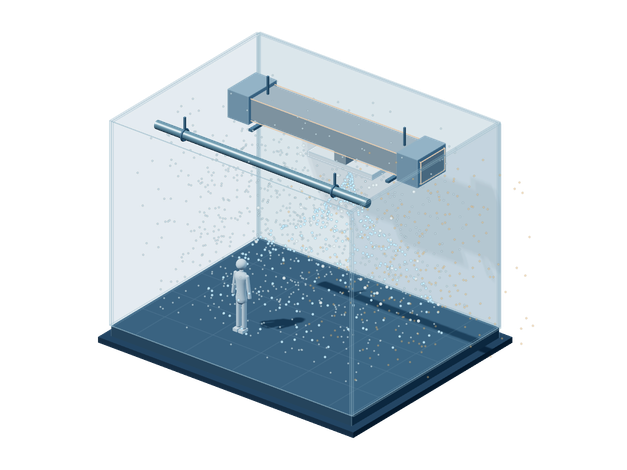
It reads a building as one system: the air and the moisture it carries, the temperature of every surface, the cooling and the way air moves through the rooms, the walls and materials, and the people who occupy the space. A symptom in one place often has its cause in another.

Open the control volume

One room, read as one system.

A healthy indoor environment should not be assumed. It should be measured.

How we work

Investigate. Measure. Resolve. Verify.

  1. Investigate.

    The building, its history and its symptoms, recorded precisely. Where the cause is likely to lie, narrowed by how air, moisture and heat behave in a building of this kind, in this climate.

    Understand what is happening.

  2. Measure.

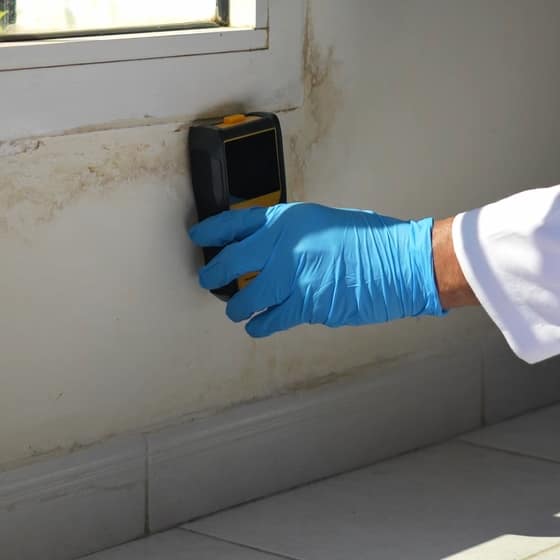
    Calibrated instruments in the field and analysis in the Saniservice Department of Microbiology, every reading set against a named benchmark.

    Establish why it is happening.

  3. Resolve.

    A written prescription, in order of priority, with the evidence beside each item. The work is carried out to the letter, by Saniservice or by your own contractor.

    Determine what must change.

  4. Verify.

    Measured again after the work, against criteria set before it began.

    Verify that the intervention achieved the intended result.

Science doesn't negotiate its findings.

We put science in our name. It obliges us.

  • Observe precisely.
  • Measure honestly.
  • Conclude only what the evidence supports.

Hot, humid climates are different.

Heat, humidity, hard cooling, condensation, air leakage and cold surfaces interact in ways that are often invisible. Much of the published indoor science comes from cold climates; in the Gulf the moisture comes from outside. At Dubai and Abu Dhabi the outdoor dew point is above 22 °C, about the temperature of a cool air-conditioned room, in about one hour of every four. Any surface colder than the dew point of the air around it collects water, and where it stays wet, mold follows, often out of sight.

Case record

The visible symptom is not necessarily the cause.

Documentary photograph of condensation on exposed ductwork

Case 1. The wall that was dry.

A storage room in a private residence in Dubai. The paint was blistering and there was water on the floor. It looked like water in the wall. The wall measured dry. The room air was at 72.1% relative humidity, which put its dew point at 18.7 °C, and the supply duct, its insulation failed, ran colder than that. The water came out of the air, onto the duct, and dripped to the floor. Repainting the wall would have changed nothing.

Read the investigation record

Most of the industry treats what can be seen, and the symptom returns on schedule. We treat what can be measured.

Investigation report

What you receive.

Anonymized specimen cover of an Indoor Sciences diagnostic report
Anonymized specimen cover · Illustrative report structure

At the end of an investigation you hold a written report, specific to one property and signed by the people who measured.

Explore the reportTap to explore the report

The conditions documented on site, with measurements and context specific to your property.

The explanation behind the findings, and the conditions that contribute to the problem.

The readings and observations supporting each finding, including what the evidence can establish.

The corrective work required, with priorities and a defined scope.

The criteria and follow-up checks used to confirm whether the condition is resolved.

Not a collection of test results. A clear path from evidence to resolution.

Practice credentials

If you want the cause found, we should talk.

Indoor Sciences is for clients who want the cause established, the corrective scope defined and the result verified.

Mold active and spreading now? Saniservice's mold team is on 800-MOLDS, 8am to 6pm.