There is no standard package. What you describe decides what is measured: a smell with nothing visible is a different investigation from a stain under a bathroom, and neither needs everything below. The scientist chooses from these methods, and your quotation lists exactly which, where and why.
| Method | What it is | When the scientist includes it | Read against |
|---|
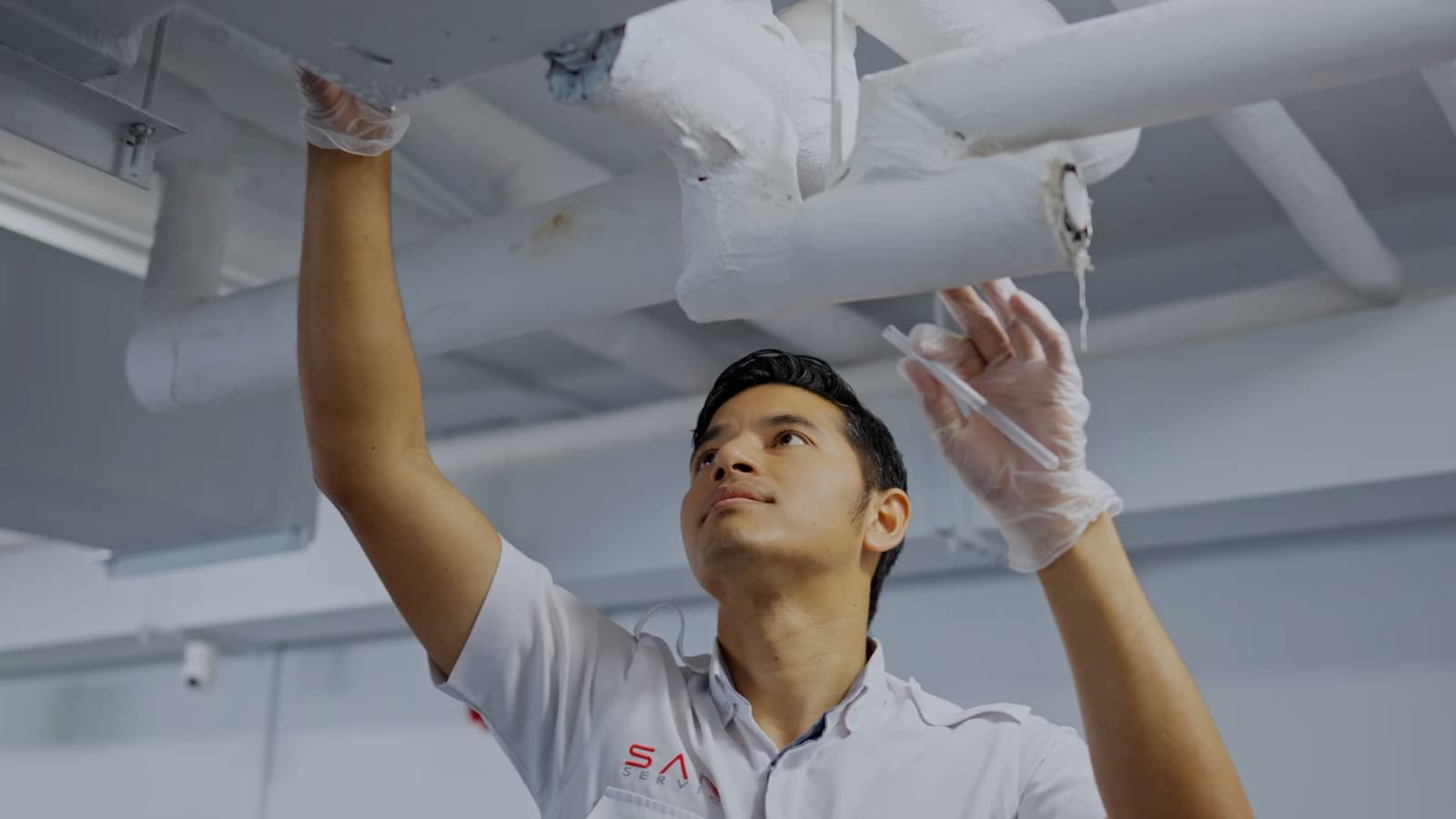
| Room-by-room inspection | by an IAC2 Mold Certified inspector, following the IAC2 Mold Inspection Standards of Practice | Always. It is how every other method is aimed. | IAC2 Mold Inspection Standards of Practice |
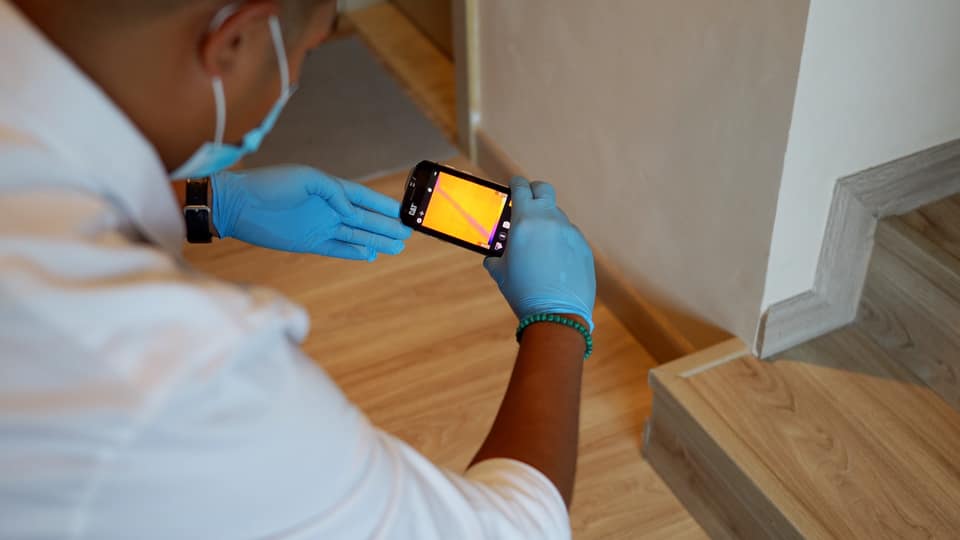
| Thermal camera pass | over walls, ceilings, ducts and pipes to find the cold spots and the wet patches | When a cold or wet surface is suspected and nothing shows on the paint. | The dew point of the room |
| Moisture readings | inside walls, floors and timber | Wherever there has been water, a stain, or a material that feels damp or soft. | the practice's own criteria, labeled as such |
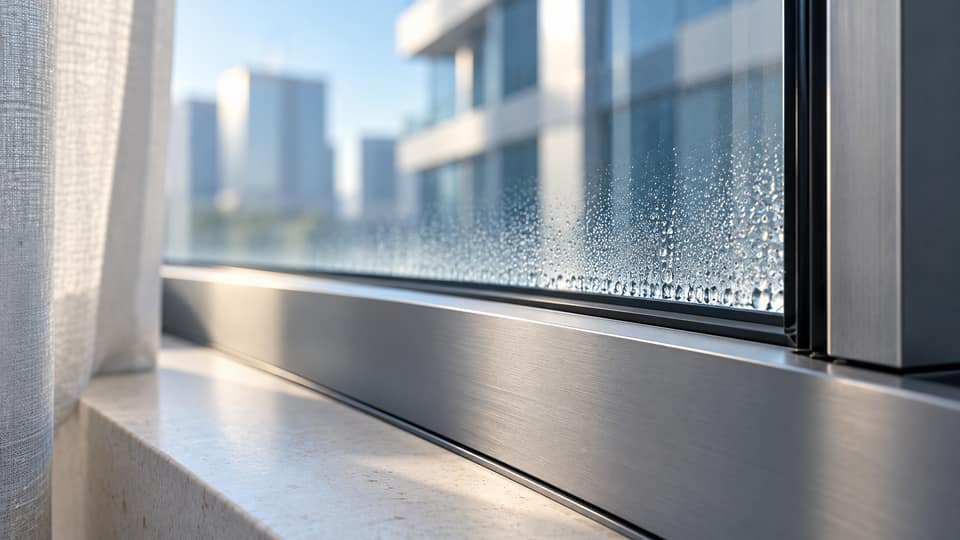
| Surface temperature and dew point | surface temperatures where a cold surface is suspected; air temperature and humidity in each room, from which its dew point, the temperature at which the moisture in the air turns back into water, is computed | Whenever the complaint is humidity, condensation, or growth with no leak. | room humidity against Dubai Municipality's 60% guideline (TG 142); surface temperature against the room's dew point |
| Room pressure | the pressure of each room against its neighbors and against outdoors | When growth sits inside cavities or at the top of outside walls, or a door pulls shut on its own. | practice criterion, direction only |
| Air sampling for mold spores | read against the Dubai Municipality guideline of 500 CFU/m³ (TG 119), a count of living mold per cubic meter of air | When there is a smell with nothing visible, a health concern, or a result someone else must accept. | DM TG 119 |
| Surface swabs | where growth is visible or suspected | To settle whether a mark is growth, and what it is. | ANSI/IICRC S520-2024, Conditions 1, 2 and 3 |
| The Moldiness Profile | a surface-by-surface culture of settled dust that maps where growth is concentrated and where it is not | When the source is hidden and the question is where. | the practice's own criteria, labeled as such |
Every culture sample is grown and read in the Saniservice Department of Microbiology; each species is identified under the microscope and reported location by location, with how much living mold there was and whether any of the species found are the ones that only grow where a material has been wet. The species matters less than where it is growing and why.
We culture, because living mold is what colonizes, spreads and has to be removed. Where you, your physician or a protocol you are following specifically requires an ERMI mold-DNA result, we arrange it alongside culture, never in place of it: that one sample is analyzed by a laboratory in Europe or the United States, and its turnaround sets the minimum.