


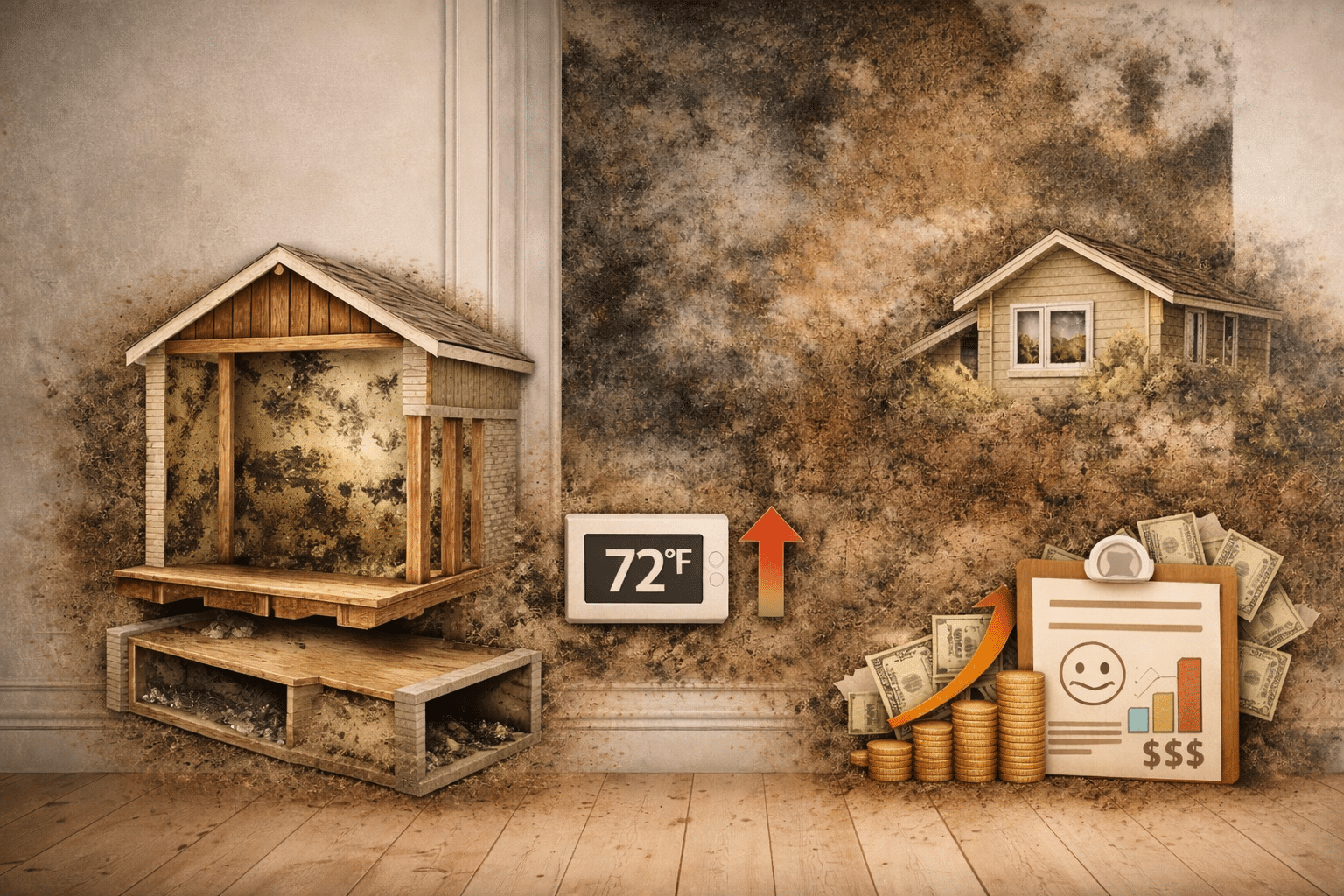
Hidden Mold Growth and Its Impact on Energy Bills Guide
—
Understanding Hidden Mold Growth and Its Impact on Energy Bills is crucial for homeowners and facility managers to ensure their buildings are not only healthy but also energy-efficient. This article explores the hidden dangers of mold growth and its direct effects on your monthly utility costs.
Introduction: Understanding Hidden Mold Growth and Its Impact on Energy Bills
Hidden mold growth in buildings can have profound implications for your energy bills. Mold thrives in hidden areas, such as behind walls, under floors, and within HVAC systems, where it can go undetected until the damage is significant. In this article, we will delve into how hidden mold growth affects your building’s energy performance, leading to increased utility costs.
Hidden Mold Growth And Its Impact On Energy Bills –
What Causes Hidden Mold Growth in Buildings?
Several factors contribute to the growth of hidden mold in buildings:
- Moisture sources: Leaks, condensation, high humidity, and inadequate drainage can create environments conducive for mold growth.
- Inadequate ventilation: Poorly designed or maintained HVAC systems fail to remove moisture effectively, leading to condensation and mold proliferation.
- Building materials: Certain types of insulation, wall finishes, and roofing materials can retain moisture and provide nutrients for mold growth.
Hidden Mold and HVAC Systems: Affecting Energy Efficiency
Mold in HVAC systems has a direct impact on your energy bills. Hidden mold can:
- Clog air filters, reducing airflow and forcing the system to work harder.
- Contaminate ductwork, making it less effective at distributing conditioned air.
- Decrease heat exchanger efficiency, leading to increased energy consumption for heating or cooling.
Example: A study conducted in Dubai found that HVAC systems with hidden mold growth required an additional 15% of energy compared to clean systems. This increased demand translates directly into higher utility bills.
Impact on Insulation Materials and Performance
Insulation materials are crucial for maintaining optimal indoor temperatures, but hidden mold can compromise their effectiveness:
- Mold growth in insulation: Mold spores can penetrate insulation, reducing its thermal resistance and increasing heat transfer.
- Structural damage: Mold can weaken the integrity of insulating materials over time, leading to reduced R-values and increased energy loss.
A case study in a residential villa in Dubai revealed that hidden mold growth in insulation resulted in a 20% increase in heat transfer through walls. This reduction in thermal performance significantly impacted the building’s overall energy consumption.
Structural Damage from Hidden Mold Growth
Hidden mold can cause structural damage, leading to more extensive and costly repairs:
- Water damage: Mold growth often starts as a result of water intrusion, which can lead to rotting wood, crumbling drywall, and other structural issues.
- Mold infestation in walls: Once established, mold can spread through wall cavities, causing further deterioration and compromising the building’s integrity.
The cost of repairing hidden mold damage is typically higher than addressing visible contamination. In one instance, a property owner in Dubai incurred AED 25,000 for repairs due to hidden mold growth behind walls, which contributed to increased energy bills by reducing insulation effectiveness and causing HVAC inefficiencies. This relates directly to Hidden Mold Growth And Its Impact On Energy Bills.
Hidden Mold Growth and Increased Energy Consumption
Hidden mold not only affects your building’s thermal performance but also leads to higher energy consumption:
- Air leakage: Hidden mold can cause air leaks in the building envelope, leading to uncontrolled airflow and increased heat loss or gain.
- Mechanical system inefficiency: Mold contamination in HVAC systems reduces their efficiency, forcing them to work harder and consume more energy.
A comprehensive investigation of a commercial office building in Dubai identified hidden mold growth as the primary cause of increased air leakage by 15%. This resulted in an 8% increase in overall energy consumption for heating and cooling, translating into AED 20,000 per year in additional utility costs.
Solutions to Reduce the Impact on Energy Bills
To mitigate the impact of hidden mold growth on energy bills, consider the following solutions:
- Regular indoor environmental assessments: Hire professionals to conduct thorough inspections and identify hidden mold growth early.
- Maintenance of HVAC systems: Regularly clean and maintain HVAC components to prevent mold accumulation and ensure optimal performance.
- Insulation upgrades: Replace or upgrade insulation materials that have been compromised by hidden mold growth to improve thermal performance.
Implementing these solutions can significantly reduce energy consumption and lower utility bills. For instance, a property in Abu Dhabi saw its energy bill reduced by 12% after addressing hidden mold growth through comprehensive remediation and maintenance of HVAC systems.
Expert Tips for Mold Prevention and Management
Here are some expert tips to help you prevent and manage hidden mold growth:
- Address moisture issues promptly: Fix leaks, improve drainage, and ensure proper ventilation to prevent mold from taking hold.
- Clean HVAC systems regularly: Clean air filters, inspect ductwork for signs of contamination, and replace components as needed to maintain optimal performance.
- Use moisture sensors: Install moisture sensors in high-risk areas to detect hidden water intrusion early.
Frequently Asked Questions (FAQs)
- Q: How can I tell if there is hidden mold growth in my building?
- A: Look for musty odors, water stains, or visible discoloration. Conduct thorough indoor environmental assessments to identify hidden contamination.
Q: Can hidden mold growth affect the air quality in a building?A: Yes, hidden mold can release spores and other contaminants into the air, leading to poor indoor air quality and potential health issues for occupants.
Q: What are the long-term effects of hidden mold growth on a building’s structure?A: Over time, hidden mold can cause extensive structural damage, compromising the integrity of walls, floors, and other components. Regular inspections and maintenance are crucial to prevent these issues.
Conclusion: Hidden Mold Growth and Its Impact on Energy Bills
Hidden mold growth in buildings can have significant impacts on energy bills, affecting HVAC efficiency, insulation performance, and overall building thermal management. Understanding the causes and consequences of hidden mold is essential for maintaining a healthy and energy-efficient indoor environment. By addressing hidden mold growth early through thorough assessments, regular maintenance, and expert tips, you can reduce your energy consumption and lower utility costs.
For more information on hidden mold growth and its impact on energy bills, contact Saniservice at +971566819875. Our team of experts can help you navigate the complexities of indoor environmental health and ensure your building performs optimally.

JV de Castro, IAC2
JV de Castro is the Chief Technology Officer at Saniservice, where he leads innovation in indoor environmental sciences, IT infrastructure, and digital transformation. With over 20 years of experience spanning architecture, building science, technology management, digital media architecture, and consultancy, he has helped organizations optimize operations through smart solutions and forward-thinking strategies. JV holds a Degree in Architecture, a Masters of Research in Anthropology, an MBA in Digital Communication & Media, along with certifications in mold, building sciences and advanced networking. Passionate about combining technology, health, and sustainability, he continues to drive initiatives that bridge science, IT, and business impact.



Leave a Reply