


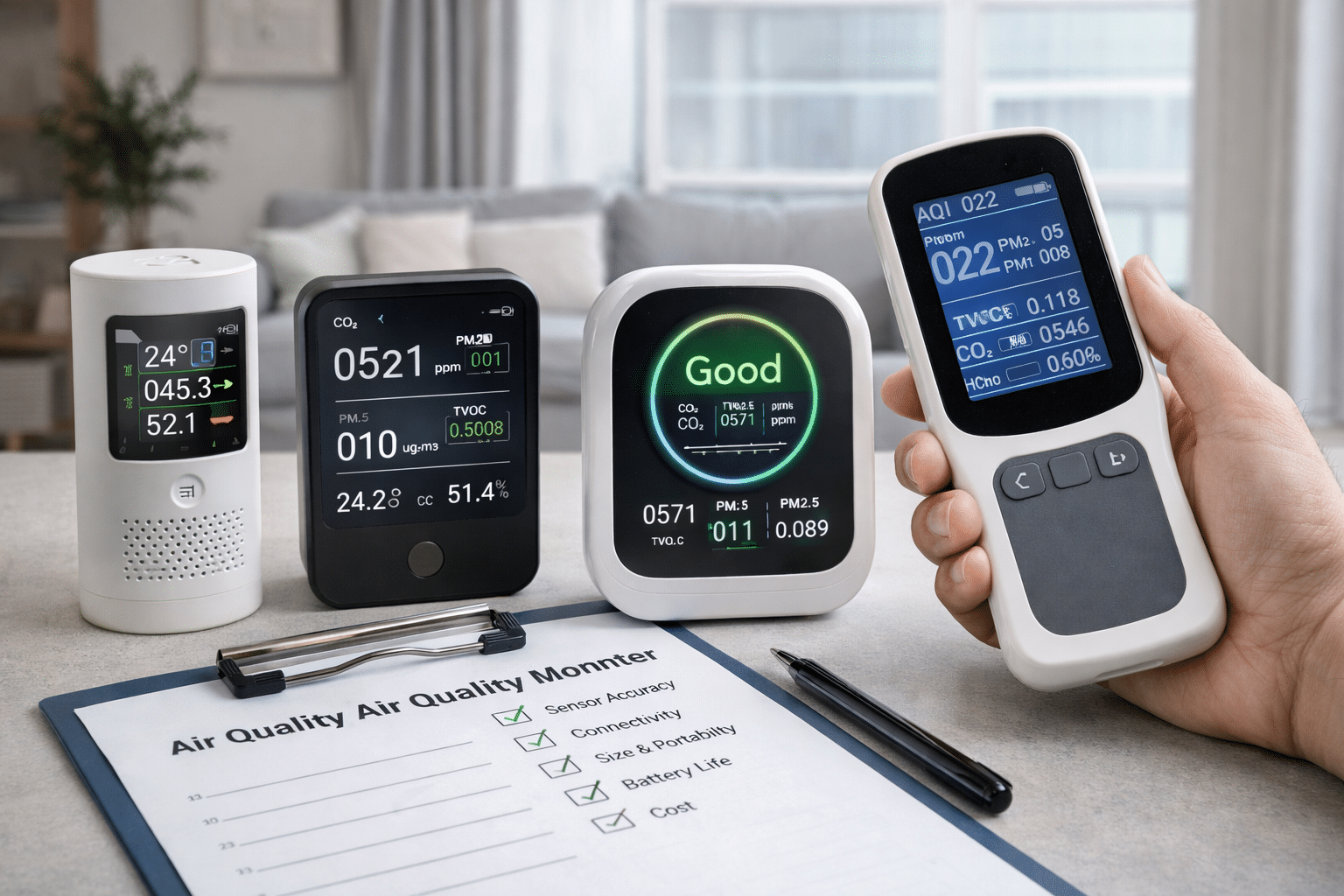
How To Choose The Right Air Quality Monitor For Your Home
Table of Contents
Introduction
Indoor air quality is a critical aspect of our health and well-being, especially in urban environments like those found in Dubai. An air quality monitor can help you understand the pollutants present in your home, allowing for proactive measures to improve your living conditions. This guide will provide a comprehensive overview of How to Choose the right air quality monitor for your home.
Understanding How to Choose the Right Air Quality Monitor for Your Home
Before you start selecting an air quality monitor, it’s important to understand what these devices measure and why they are essential. Air Quality Monitors can detect a range of pollutants including particulate matter (PM2.5/PM10), volatile organic compounds (VOCs), carbon dioxide (CO2), and radon levels. By choosing the right monitor, you can ensure that your home’s air is free from harmful contaminants.
Identifying Pollutants
Understanding the types of pollutants present in your home will help you choose a device that addresses specific concerns. For example, if you have pets or allergies, a monitor with high sensitivity to particulate matter and allergens would be beneficial. This relates directly to Choose The Right Air Quality Monitor For Your Home.
Main Factors to Consider When Choosing an Air Quality Monito
When selecting the right air quality monitor, several factors should be taken into account:
- Pollutant Detection Capabilities: Look for monitors that can detect common indoor pollutants like PM2.5/PM10, VOCs, CO2, and radon.
- Accuracy and Reliability: Choose a monitor with accurate sensors and regular firmware updates to ensure ongoing reliability.
- User Interface and Display: A clear display and intuitive interface make it easier to understand the data and take appropriate actions.
- Alarm Systems and Notifications: An effective alarm system can alert you to dangerous levels of pollutants in real-time.
- Battery Life and Power Sources: Consider the battery life or power source options, as they affect convenience and longevity.
- Integration with Smart Home Systems: Compatibility with other smart home devices can enhance overall functionality and control.
- Price: Determine your budget before purchasing to ensure you get a device that meets both your needs and financial constraints.
Sensor Types and Sensor Metrics
The type of sensors used in air quality monitors can significantly impact their performance. Common sensor types include:
- Particulate Matter Sensors: These measure particulate matter (PM2.5/PM10) levels, providing insights into dust and pollen.
- VOC Sensors: Detect volatile organic compounds, which can come from various sources like cleaning products or building materials.
- CO2 Sensors: Measure carbon dioxide levels, indicating the freshness of air in enclosed spaces.
- Radon Detectors: Essential for detecting this radioactive gas that can seep into homes from beneath the ground.
Understanding these metrics will help you choose a monitor that provides comprehensive data about your home’s indoor environment.
Display and Notification Systems
The display and notification systems are crucial for understanding and acting on air quality data:
- Real-Time Data Display: Look for monitors that provide real-time readings, allowing you to monitor your home’s air quality continuously.
- Alarm Systems: An effective alarm system can alert you to dangerous levels of pollutants in real-time. This is particularly important if you have respiratory issues or young children at home.
- Mobile App Connectivity: Many modern monitors come with companion apps that allow you to view data remotely and receive notifications on your smartphone.
Compatibility and Integration
Ensuring compatibility with other smart home devices can enhance the functionality of an air quality monitor:
- Smart Home Ecosystems: Some monitors integrate seamlessly with popular smart home ecosystems like Google Home, Amazon Alexa, or Apple HomeKit.
- Wi-Fi and Bluetooth Connectivity: These wireless technologies enable remote monitoring and easy setup.
- HVAC Integration: Look for monitors that can communicate with your HVAC system to automatically adjust settings based on air quality data.
Budget Considerations for Air Quality Monitors
While investing in a high-quality air quality monitor is important, it’s also crucial to consider your budget:
- Entry-Level Devices: These are affordable and suitable for basic monitoring needs.
- Mid-Range Monitors: Offer more advanced features and better accuracy at a slightly higher cost.
- Premium Models: Provide comprehensive data, user-friendly interfaces, and additional health-related features like air purification suggestions.
Setting a budget upfront will help you narrow down your choices to devices that align with your financial constraints while still providing adequate protection for your family.
Expert Tips for Picking the Right Air Quality Monitor
- Research and Read Reviews: Look at reviews from reputable sources to understand user experiences with different devices.
- Consider Your Family’s Needs: If you have pets or allergies, choose a monitor that can detect allergens. For those concerned about radon, ensure the device has appropriate detection capabilities.
- Evaluate Sensor Quality and Accuracy: Look for monitors with high-quality sensors that provide accurate readings over time.
- Check Power Source Options: Ensure the monitor can operate on battery power or has a reliable power source to avoid constant recharging.
- Look for Regular Software Updates: Firmware updates ensure that your device remains current and provides accurate data.
Frequently Asked Questions (FAQs)
- Q: How often should I replace the sensors in my air quality monitor?
A: Sensor replacement depends on the manufacturer’s recommendations, but typically, you should expect to replace them every 1-3 years. When considering Choose The Right Air Quality Monitor For Your Home, this becomes clear.
- Q: Can air quality monitors also improve the air quality in my home?
A: While they can detect and alert you about poor air quality, most air quality monitors do not include built-in filtration systems. You may need to complement your monitor with an air purifier or other air cleaning devices.
- Q: How much does a good air quality monitor cost?
A: Prices range from AED 500 for basic models to AED 3,000 for premium devices. Choose based on your specific needs and budget. The importance of Choose The Right Air Quality Monitor For Your Home is evident here.
Conclusion
Selecting the right air quality monitor is a crucial step in maintaining good Indoor Air Quality at home. By considering factors like pollutant detection, accuracy, display options, notifications, compatibility with smart devices, and budget, you can choose a device that provides comprehensive data to help improve your family’s health. Understanding Choose The Right Air Quality Monitor For Your Home is key to success in this area.

JV de Castro, IAC2
JV de Castro is the Chief Technology Officer at Saniservice, where he leads innovation in indoor environmental sciences, IT infrastructure, and digital transformation. With over 20 years of experience spanning architecture, building science, technology management, digital media architecture, and consultancy, he has helped organizations optimize operations through smart solutions and forward-thinking strategies. JV holds a Degree in Architecture, a Masters of Research in Anthropology, an MBA in Digital Communication & Media, along with certifications in mold, building sciences and advanced networking. Passionate about combining technology, health, and sustainability, he continues to drive initiatives that bridge science, IT, and business impact.


Leave a Reply