


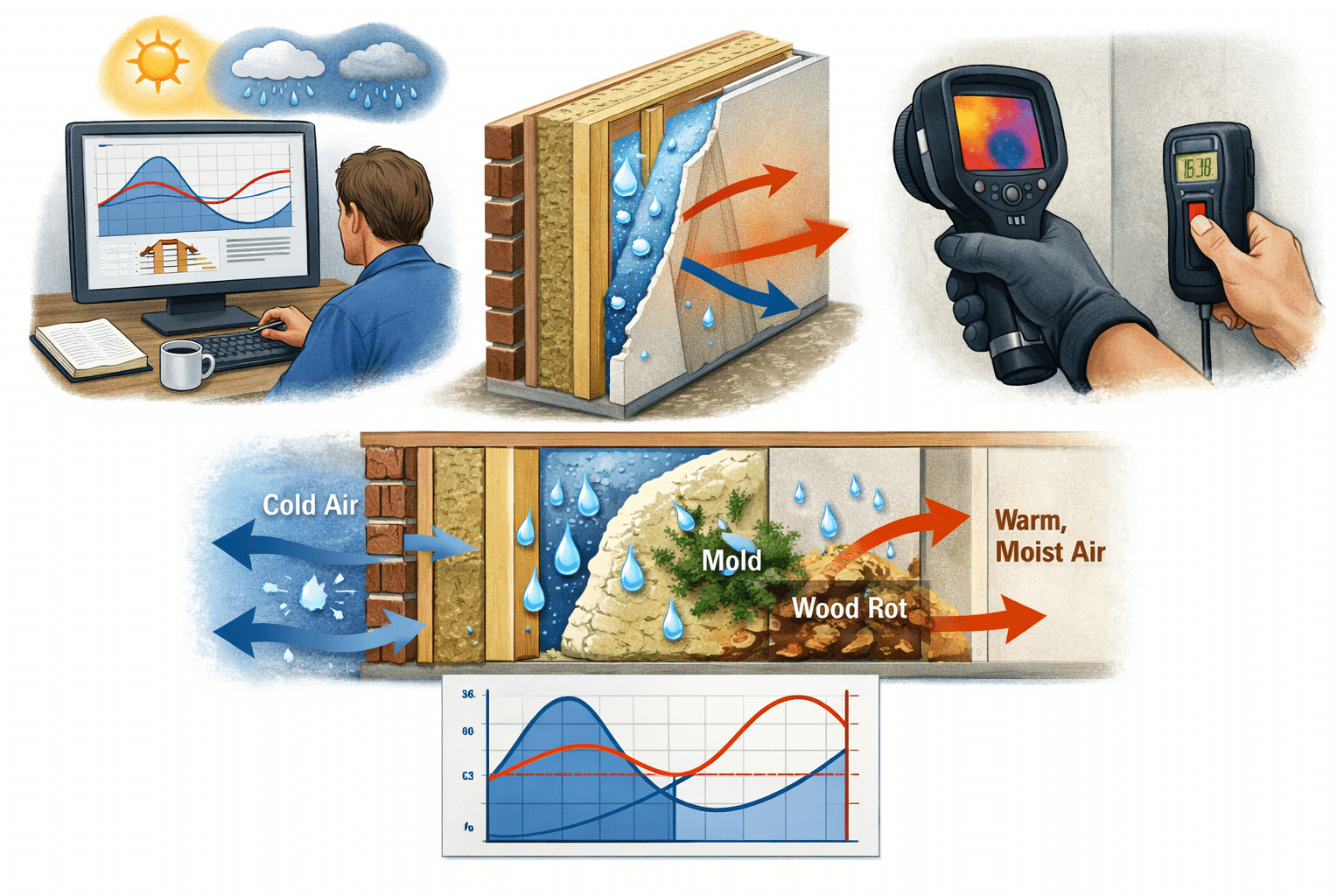
Hygrothermal Analysis For Preventing Hidden Moisture Issues
Preventing hidden moisture issues is crucial for Dubai property owners facing extreme humidity and temperature fluctuations. Hygrothermal analysis provides essential tools for early detection, saving significant costs and maintaining indoor air quality. This complete guide reveals 11 expert methods for preventing hidden moisture issues in Dubai buildings.
Table of Contents
- Introduction to Moisture Prevention
- Understanding Hygrothermal Analysis
- Hygrothermal Analysis Methods
- Hidden Moisture Identification Techniques
- Indoor Air Quality Testing Protocols
- Water Contamination Risk Assessment
- Hygrothermal Dynamics in Building Assemblies
- Expert Tips for Moisture Prevention
- Frequently Asked Questions
- Conclusion on Moisture Prevention
Introduction to Moisture Prevention
Hygrothermal analysis is a critical tool for preventing hidden moisture issues, particularly in the rapidly developing regions of Dubai, UAE. These hidden moisture problems often go unnoticed until they cause significant damage or health risks, leading to substantial repair costs and compromised indoor air quality. This guide aims to elucidate why moisture prevention is essential for maintaining healthy indoor environments in Dubai.
Understanding Hygrothermal Analysis
Hygrothermal analysis involves the study of moisture movement, heat transfer, and their effects on building assemblies. This scientific approach is vital for preventing hidden moisture issues that can lead to mold growth, structural damage, and poor indoor air quality. In Dubai, where extreme humidity and temperature fluctuations are common, hygrothermal analysis becomes indispensable for moisture prevention.
What is Hygrothermal Analysis?
Hygrothermal analysis combines the study of moisture (hygro) and thermal (thermal) properties in building materials to predict and understand how these factors interact within a structure. This interdisciplinary approach helps identify areas where hidden moisture might accumulate, allowing for targeted prevention strategies.
Hygrothermal Analysis Methods
Several methods can be employed in hygrothermal analysis for preventing hidden moisture issues to ensure accurate and reliable results. These include computational fluid dynamics (CFD) modeling, dew point calculations, and thermal imaging techniques.
Computational Fluid Dynamics (CFD)
CFD simulations can model airflow, moisture movement, and temperature distribution within Dubai buildings. This method provides detailed insights into potential hotspots where hidden moisture might accumulate, allowing for proactive prevention strategies.
Dew Point Calculations
Determining dew points is crucial for preventing hidden moisture issues by identifying when condensation may occur. By calculating the dew point at various points within a building, hygrothermal analysis can pinpoint areas with high moisture risk in Dubai properties.
Hidden Moisture Identification Techniques
Identifying hidden moisture is often challenging due to its concealed nature. However, several techniques can help locate these problematic areas for preventing hidden moisture issues:
Thermal Imaging and Infrared Diagnostics
Thermal imaging cameras can reveal temperature variations that indicate hidden moisture. Cold spots in walls or floors often signal the presence of moisture, even when it is not visibly apparent in Dubai properties.
Moisture Meter Surveys
Moisture meters are portable instruments used to measure water content in building materials. These devices can be invaluable for preventing hidden moisture issues by detecting moisture behind walls or under floors where visual inspection is impossible.
Indoor Air Quality Testing Protocols
Ensuring good indoor air quality (IAQ) is crucial for the health of occupants in Dubai. Hygrothermal analysis can complement IAQ testing by identifying moisture-related issues that could compromise air quality, essential for prevention.
Particulate Matter Monitoring
Microscopic particles, including spores and allergens, are often present in environments with high humidity. Regular particulate matter monitoring can help track IAQ and identify sources of contamination for preventing hidden moisture issues.
Volatile Organic Compound (VOC) Analysis
VOCs released from building materials and furnishings can affect indoor air quality. Analyzing VOC levels through hygrothermal analysis can provide insights into potential health risks associated with moisture problems in Dubai properties.
Water Contamination Risk Assessment
Water contamination is another critical aspect of indoor environmental health, particularly in high-end residential properties in Dubai. Hygrothermal analysis can help assess the risk of waterborne contaminants and provide recommendations for prevention.
Wastewater Backflow Prevention
Backflow from wastewater systems is a significant source of contamination. Hygrothermal analysis can identify potential backflow areas and recommend appropriate mitigation strategies for preventing hidden moisture issues.
Hygrothermal Dynamics in Building Assemblies
The hygrothermal behavior of building assemblies plays a critical role in moisture management. Understanding this dynamic helps in preventing hidden moisture issues that can lead to mold growth and structural damage in Dubai.
Moisture Pathways and Condensation
Identifying moisture pathways is essential for preventing hidden moisture issues by stopping condensation, which often leads to mold growth. Hygrothermal analysis can map these pathways and recommend appropriate building modifications for Dubai properties.
Expert Tips for Moisture Prevention
Preventing hidden moisture issues requires a proactive approach. Here are expert tips to help maintain healthy indoor environments in Dubai:
- Regular Hygrothermal Assessments: Schedule regular hygrothermal assessments to identify potential issues early for preventing hidden moisture issues.
- Proper Ventilation: Ensure adequate ventilation systems to prevent moisture buildup and promote air circulation in Dubai buildings.
- Material Selection: Choose building materials with low water absorption rates to reduce moisture risks.
- Thermal Insulation: Proper insulation can help regulate temperature and humidity, reducing condensation risks.
- Seal Gaps: Seal gaps and cracks in walls and floors to prevent air infiltration and moisture intrusion.
Frequently Asked Questions
Q: Why is preventing hidden moisture issues important in Dubai?
A: Prevention helps avoid mold growth, structural damage, and compromised air quality. It ensures a healthier living environment by providing detailed insights into moisture behavior within Dubai buildings.
Q: How often should hygrothermal assessments be conducted for preventing hidden moisture issues?
A: Hygrothermal assessments should be conducted annually or whenever significant changes are made to the building, such as renovations or modifications in Dubai properties. This frequency ensures that prevention is addressed promptly.
Q: Can hygrothermal analysis help with energy efficiency while preventing hidden moisture issues?
A: Yes, by identifying areas where heat and moisture move inefficiently, hygrothermal analysis can also contribute to energy savings. Proper moisture management reduces the need for excessive heating or cooling in Dubai, leading to lower utility bills.
Conclusion on Moisture Prevention
Hygrothermal analysis is a powerful tool for preventing hidden moisture issues that can lead to costly repairs and health risks in Dubai properties. By understanding the hygrothermal behavior of buildings, property owners can take proactive measures to maintain healthy indoor environments. Regular assessments, proper ventilation, material selection, and sealing gaps are key steps in ensuring long-term structural integrity and air quality.

JV de Castro, IAC2
JV de Castro is the Chief Technology Officer at Saniservice, where he leads innovation in indoor environmental sciences, IT infrastructure, and digital transformation. With over 20 years of experience spanning architecture, building science, technology management, digital media architecture, and consultancy, he has helped organizations optimize operations through smart solutions and forward-thinking strategies. JV holds a Degree in Architecture, a Masters of Research in Anthropology, an MBA in Digital Communication & Media, along with certifications in mold, building sciences and advanced networking. Passionate about combining technology, health, and sustainability, he continues to drive initiatives that bridge science, IT, and business impact.



Leave a Reply