


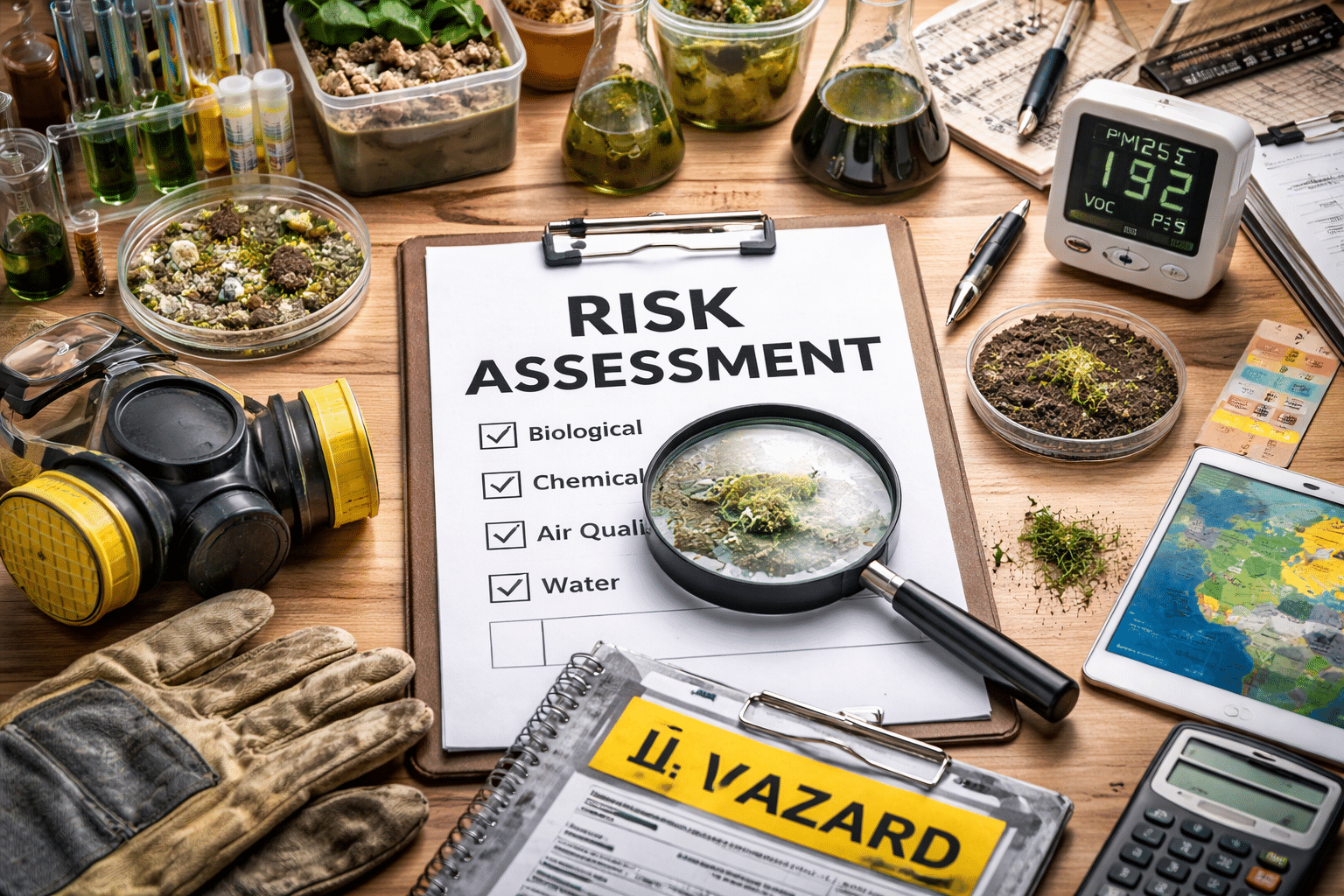
Risk Assessment For Environmental Health
EXCERPT: Risk assessment for environmental health is critical for Dubai’s unique building challenges. From mold growth to air quality issues, understanding hazard identification and control protects occupants in UAE properties. This complete guide reveals 7 essential steps for risk assessment for environmental health in Dubai’s indoor environments.
Table of Contents
- Introduction to Risk Assessment for Environmental Health
- Defining Risk Assessment for Environmental Health
- Identifying Hazards and Risks in Dubai Buildings
- Assessing Exposure Potentials
- Evaluating Risk to Health
- Controlling and Managing Risks
- Risk Assessment for Environmental Health in Dubai
- Examples of Risk Assessment Processes
- Expert Tips for Effective Risk Assessment
- Frequently Asked Questions
- Conclusion on Environmental Health Assessment
Introduction to Risk Assessment for Environmental Health
Risk assessment for environmental health is a critical process aimed at identifying, evaluating, and controlling potential hazards that may affect human well-being in indoor environments. This guide provides an in-depth exploration of principles, methodologies, and practical applications of risk assessment for environmental health in the built environment, specifically tailored to property managers, architects, engineers, and professionals in Dubai.
In Dubai and the wider UAE region, where rapid urbanization and diverse building typologies create unique challenges, a thorough understanding of risk assessment for environmental health is essential for maintaining indoor air quality, ensuring structural integrity, and protecting public health.
Defining Risk Assessment for Environmental Health
Risk assessment for environmental health is a systematic approach used to identify potential risks and evaluate their likelihood of causing harm. It involves the following steps:
- Hazard identification: Identifying sources that may cause harm.
- Exposure assessment: Estimating how people come into contact with these hazards.
- Risk characterization: Combining information from hazard and exposure assessments to estimate risk levels.
The primary goal of risk assessment for environmental health is to prioritize actions that can mitigate risks, thereby protecting human health. In Dubai, where high humidity and rapid construction practices contribute to unique indoor environmental challenges, a robust framework ensures buildings are designed and operated to safeguard occupants.
Identifying Hazards and Risks in Dubai Buildings
The first step in risk assessment for environmental health is identifying potential hazards. These can include:
- Mold growth: Mold spores can cause respiratory issues, allergic reactions, and other health problems in Dubai properties.
- Contaminated water systems: Bacterial contamination from Legionella or other pathogens poses serious health risks.
- Volatile organic compounds (VOCs): Off-gassing from building materials can lead to indoor air pollution.
- Radon exposure: This radioactive gas is a known carcinogen that can seep into buildings.
- Metallic contaminants: Heavy metals such as lead or mercury can leach into indoor environments.
For example, in Dubai’s high-rise apartments and luxury villas, hidden mold growth behind skirting boards is a common issue. Comprehensive risk assessment for environmental health must consider these potential hazards to develop effective mitigation strategies.
Assessing Exposure Potentials
Once hazards are identified through risk assessment for environmental health, the next step is to assess exposure potentials. This involves determining:
- Frequency of contact: How often occupants come into contact with a given hazard.
- Dose-response relationship: The degree of harm caused by varying levels of exposure.
- Susceptibility factors: Characteristics that make individuals more or less likely to be affected, such as age, pre-existing conditions, and immune status.
For instance, in a residential villa in Dubai, occupants may frequently come into contact with mold spores released from hidden growth behind walls. Understanding these exposure potentials allows for targeted interventions that can significantly reduce health risks.
Evaluating Risk to Health
Once hazards and exposure potentials are identified, risk assessment for environmental health involves evaluating the risk to human health. This includes:
- Health effects assessment: Determining the specific health impacts of different exposures.
- Risk characterization: Quantifying the overall risk based on exposure levels and health effects.
- Safety margin analysis: Establishing safety factors to ensure risks are well below harmful thresholds.
For example, in a commercial office building in Dubai, risk assessment for environmental health may reveal elevated levels of VOCs from newly installed furniture. Evaluating the health effects helps determine if action is necessary to protect employees’ respiratory and neurological health.
Controlling and Managing Risks
After evaluating risks, risk assessment for environmental health requires implementing control measures to manage potential hazards. This involves:
- Risk reduction strategies: Implementing engineering controls, administrative practices, or personal protective equipment.
- Monitoring and maintenance: Regularly checking systems and conditions to ensure continuous compliance with safety standards.
- Communication and education: Informing occupants about potential risks and providing guidance on mitigation.
In Dubai’s rapidly growing real estate sector, regular risk assessment for environmental health is essential for maintaining indoor environmental quality. For example, a thorough mold remediation protocol might involve removing visible growth and addressing underlying moisture issues through improved ventilation.
Risk Assessment for Environmental Health in Dubai
Dubai’s unique climate and building practices present specific challenges for risk assessment for environmental health:
- Climate considerations: High temperatures and humidity levels necessitate robust ventilation systems to prevent moisture accumulation.
- Rapid construction: New buildings often lack necessary moisture barriers or air sealing, leading to hidden mold growth.
- Diverse occupancy: A mix of local residents, expatriates, and transient workers requires flexible management strategies.
In Dubai, risk assessment for environmental health might involve:
- Thermal imaging surveys: Identifying hidden moisture issues before they become visible mold growth.
- Mold sampling and analysis: Targeted assessments to detect hidden contamination in high-risk areas.
- Air quality monitoring: Regular testing to ensure compliance with local regulations.
- Water system inspections: Routine checks for bacterial contamination and waterborne pathogens.
Examples of Risk Assessment Processes
To illustrate risk assessment for environmental health, consider a case study involving a luxury villa in Dubai:
- Hazard identification: Initial surveys revealed potential mold growth behind skirting boards and elevated VOC levels from newly installed furniture.
- Exposure assessment: Occupants reported chronic respiratory symptoms, suggesting high exposure to indoor pollutants.
- Risk characterization: Mold spore counts were significantly higher than baseline, indicating substantial health risk.
- Control measures: A comprehensive remediation plan was implemented, including dehumidification systems, mold removal, and air quality monitoring.
This case study highlights the importance of thorough risk assessment for environmental health that addresses both visible and hidden hazards in Dubai properties.
Expert Tips for Effective Risk Assessment
To ensure effective risk assessment for environmental health in Dubai:
- Engage multidisciplinary teams: Collaborate with architects, engineers, microbiologists, and specialists to cover all aspects.
- Use advanced diagnostic tools: Leverage thermal imaging, mold testing kits, and air quality monitors.
- Implement regular maintenance schedules: Establish routine inspections and cleaning protocols.
- Train occupants and staff: Educate residents about proper hygiene practices and reporting concerns.
- Stay updated on local regulations: Ensure compliance with Dubai Municipality standards.
Frequently Asked Questions
Q: How often should risk assessment for environmental health be conducted?
A: Risk assessment for environmental health should be performed regularly, at least annually, or more frequently in high-risk Dubai environments to ensure emerging issues are addressed promptly.
Q: What tools are essential for risk assessment for environmental health?
A: Key tools include thermal imaging cameras, mold testing kits, air quality monitors, and moisture meters to identify hidden hazards in Dubai properties.
Q: How can I educate occupants about risk assessment for environmental health?
A: Conduct workshops or training sessions to inform occupants about potential risks and preventive measures, empowering them to maintain healthy indoor environments.
Conclusion on Environmental Health Assessment
Risk assessment for environmental health is a critical component of ensuring well-being and safety of building occupants in the UAE. By following the steps outlined in this guide, professionals can identify and mitigate potential hazards effectively. Through multidisciplinary approaches, advanced diagnostic tools, and proactive management strategies, we can create healthier living and working environments that protect the health of Dubai’s diverse population.

JV de Castro, IAC2
JV de Castro is the Chief Technology Officer at Saniservice, where he leads innovation in indoor environmental sciences, IT infrastructure, and digital transformation. With over 20 years of experience spanning architecture, building science, technology management, digital media architecture, and consultancy, he has helped organizations optimize operations through smart solutions and forward-thinking strategies. JV holds a Degree in Architecture, a Masters of Research in Anthropology, an MBA in Digital Communication & Media, along with certifications in mold, building sciences and advanced networking. Passionate about combining technology, health, and sustainability, he continues to drive initiatives that bridge science, IT, and business impact.



Leave a Reply