Top Sources Of Mycotoxin Contamination In Indoor Air
Table of Contents
Understanding Top Sources of Mycotoxin Contamination in Indoor Air
Mycotoxins are toxic secondary metabolites produced by fungi, often found in indoor environments. These toxins can have severe health impacts and require accurate identification and mitigation strategies. The primary sources of mycotoxin contamination in indoor air include mold growth, inadequate ventilation, moisture issues, and building materials.
Mold Growth as the Primary Source
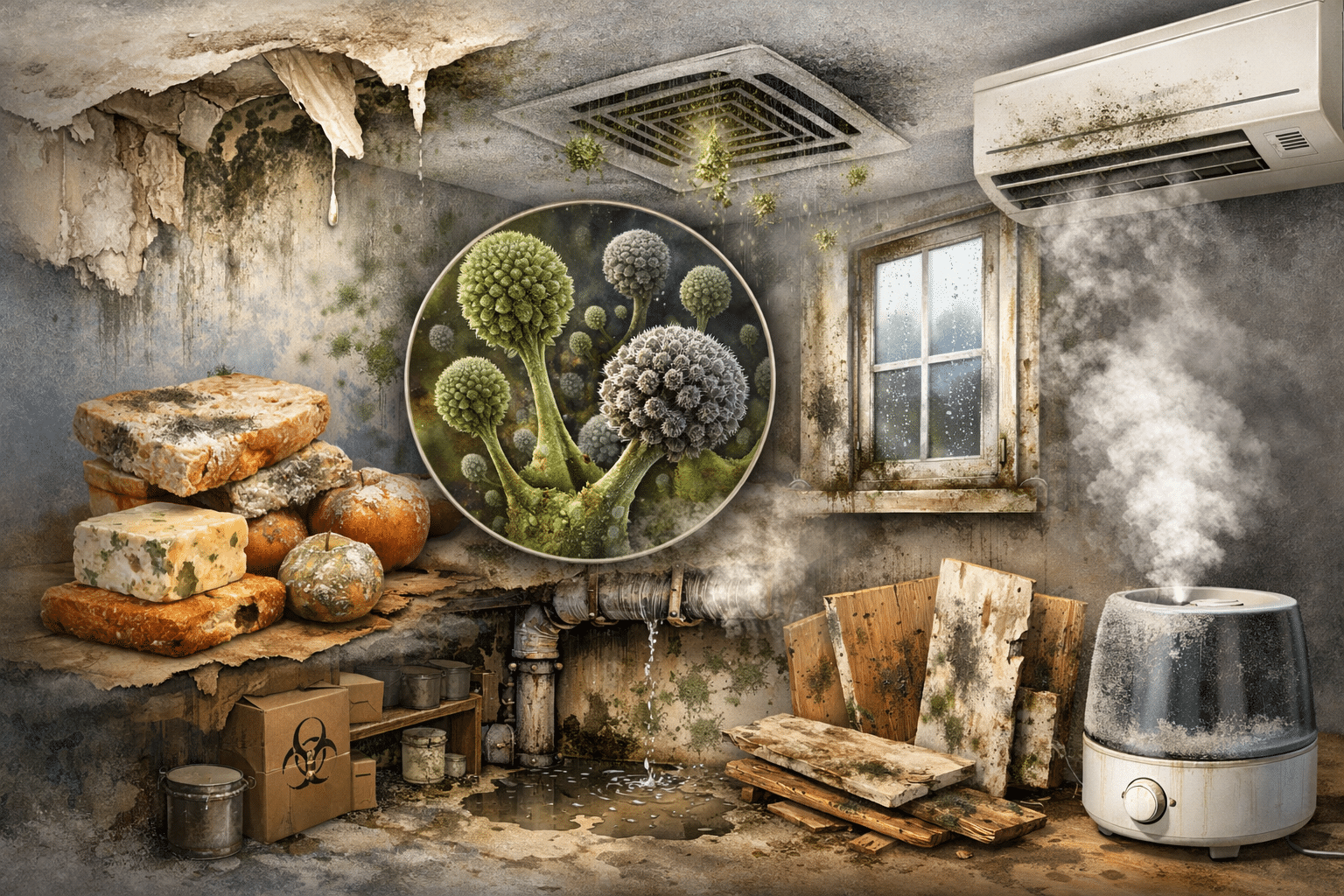
Mold spores release mycotoxins into the air when conditions are favorable. In Dubai’s hot, humid climate, buildings with poor moisture management can become breeding grounds for mold. Common culprits include:
– Water-damaged walls and ceilings: Leaks or flooding create ideal environments for mold growth.
– Basements and crawl spaces: These areas often have high humidity levels that encourage fungal proliferation.
– Roof leaks: Damage to roofing materials can lead to water infiltration, promoting mold colonies.
Inadequate Ventilation Contributes to Contamination
Poor air circulation can trap moisture and encourage mold growth. In Dubai’s densely populated residential areas, insufficient ventilation exacerbates the risk of mycotoxin contamination:
– Blocked or dirty HVAC systems: Filters clogged with dust and debris hinder airflow, allowing mold spores to circulate.
– Damp basements: Lack of proper ventilation can lead to condensation, promoting fungal growth.
Moisture Management is Critical
Excess moisture in indoor environments provides the necessary conditions for mycotoxin production. In Dubai’s climate, addressing moisture issues is essential:
– Leaky pipes and plumbing: Water leaks can saturate building materials, fostering mold growth.
– Inadequate insulation: Poorly insulated walls and roofs allow heat loss, leading to condensation.
Building Materials as Another Source
Certain construction materials can harbor mycotoxins:
– Wood products: Untreated wood can become a substrate for mold growth.
– Paper-based products: Moisture can cause these materials to degrade, releasing toxins into the air.
Top Sources Of Mycotoxin Contamination In Indoor Air – Why Airborne Sampling is Crucial for Accurate Testing
Airborne mycotoxins pose a significant health risk. Traditional surface sampling methods often miss airborne contaminants:
– Surface sampling limitations: This approach only captures visible mold, overlooking airborne spores.
– Airborne sampling benefits: It provides a more comprehensive assessment of contamination in indoor air quality and helps identify potential sources.
How Mycotoxins Spread Through Air in Homes
Mycotoxin-laden spores can travel through the air, spreading contamination:
– Air movement: HVAC systems and open windows facilitate the spread of airborne mycotoxins.
– Sedimentation: Spores settle on surfaces but remain suspended in the air for extended periods.
Top Sources Of Mycotoxin Contamination In Indoor Air – Managing Mycotoxin Risk Through HVAC Maintenance
Regular maintenance of HVAC systems is crucial for preventing mycotoxin spread:
– Frequent filter changes: Replace filters at recommended intervals to prevent clogging.
– Dryer air: Use dehumidifiers and ensure proper ventilation to reduce indoor moisture levels.
The Role of Air Quality in Indoor Environments
Air quality significantly impacts the spread and detection of mycotoxins:
– Carbon dioxide levels: High CO2 concentrations indicate poor air quality, promoting mold growth.
– Ventilation rates: Adequate ventilation reduces humidity levels and minimizes mycotoxin formation.
Comparing Surface and Airborne Testing
Surface testing vs. airborne sampling offers different insights:
–
Surface Testing Limitations
– Primarily detects visible mold.
– Misses airborne spores, limiting comprehensive assessment.
–
Airborne Sampling Benefits
– Provides a more accurate picture of indoor air quality.
– Identifies potential sources of contamination that surface testing might miss.
Verdict on Airborne Testing for Mycotoxin Contamination
Airborne mycotoxin sampling is essential for accurate identification and effective prevention. Surface testing alone is insufficient, as it fails to account for airborne spores that can pose significant health risks.
Recommendations for Indoor Environmental Health
To protect against mycotoxins in indoor air:
– Regularly test air quality:
– Use advanced equipment like thermal imaging and infrared sensors.
– Implement comprehensive sampling strategies:
– Combine surface testing with airborne sampling.
FAQ Section on Mycotoxin Contamination
1. Q: Can mycotoxins be detected through regular air quality tests?
A: Yes, using advanced testing methods can detect mycotoxins in indoor air.
2. Q: How often should I test for airborne mycotoxins?
A: Test annually or after significant building modifications to ensure continuous safety.
3. Q: What are the signs of elevated mycotoxin levels in indoor air?
A: Symptoms include respiratory issues, headaches, and skin irritation. Regular testing can help identify these concerns early.
Conclusion on Top Sources of Mycotoxin Contamination
Understanding the top sources of mycotoxin contamination is crucial for accurate indoor air quality assessment and effective prevention strategies. Airborne sampling provides a more comprehensive approach, ensuring thorough identification and mitigation of mycotoxins in indoor environments.

JV de Castro, IAC2
JV de Castro is the Chief Technology Officer at Saniservice, where he leads innovation in indoor environmental sciences, IT infrastructure, and digital transformation. With over 20 years of experience spanning architecture, building science, technology management, digital media architecture, and consultancy, he has helped organizations optimize operations through smart solutions and forward-thinking strategies. JV holds a Degree in Architecture, a Masters of Research in Anthropology, an MBA in Digital Communication & Media, along with certifications in mold, building sciences and advanced networking. Passionate about combining technology, health, and sustainability, he continues to drive initiatives that bridge science, IT, and business impact.