Health Effects of Poor Indoor Air in Schools Guide for UAE
The Health Effects of poor indoor air in schools represent a critical concern for educational institutions across the UAE. In Dubai’s climate-controlled environment, where students and staff spend up to eight hours daily in sealed classrooms, the quality of indoor air directly impacts learning outcomes, attendance rates, and long-term health. The health effects of poor indoor air in schools extend beyond temporary discomfort to include serious respiratory conditions, cognitive impairment, and chronic health issues that can affect children throughout their educational journey.
Throughout my twelve years with Saniservice’s Indoor Sciences division, I’ve investigated numerous educational facilities across the Emirates. The health effects of poor indoor air in schools often manifest subtly—increased absenteeism, decreased concentration, and unexplained allergy symptoms among both students and teachers. In one particularly concerning case at a Dubai private school, we discovered that what administrators had dismissed as “seasonal allergies” was actually a systemic indoor air quality issue affecting nearly 30% of the student population.
This comprehensive examination of the health effects of poor indoor air in schools will explore the specific challenges facing UAE educational institutions, the scientific mechanisms behind these health impacts, and practical solutions that school administrators can implement immediately. Understanding these health effects of poor indoor air in schools is the first step toward creating healthier learning environments for our children.
Understanding Health Effects of Poor Indoor Air in Schools
The health effects of poor indoor air in schools begin with understanding how indoor environments differ from outdoor air quality. In educational facilities, multiple factors converge to create unique challenges. Classroom occupancy densities often exceed recommended levels, with 25-30 students sharing limited air volume. Construction materials, cleaning products, art supplies, and science laboratory chemicals all contribute to the complex chemical mixture that students breathe daily.
The health effects of poor indoor air in schools manifest through various biological mechanisms. When students inhale contaminated air, particulate matter can penetrate deep into lung tissue, triggering inflammatory responses. Volatile organic compounds from building materials and cleaning products can cross the blood-brain barrier, affecting neurological function. Biological contaminants like mold spores and bacteria can colonize respiratory systems, leading to chronic infections and allergic reactions.
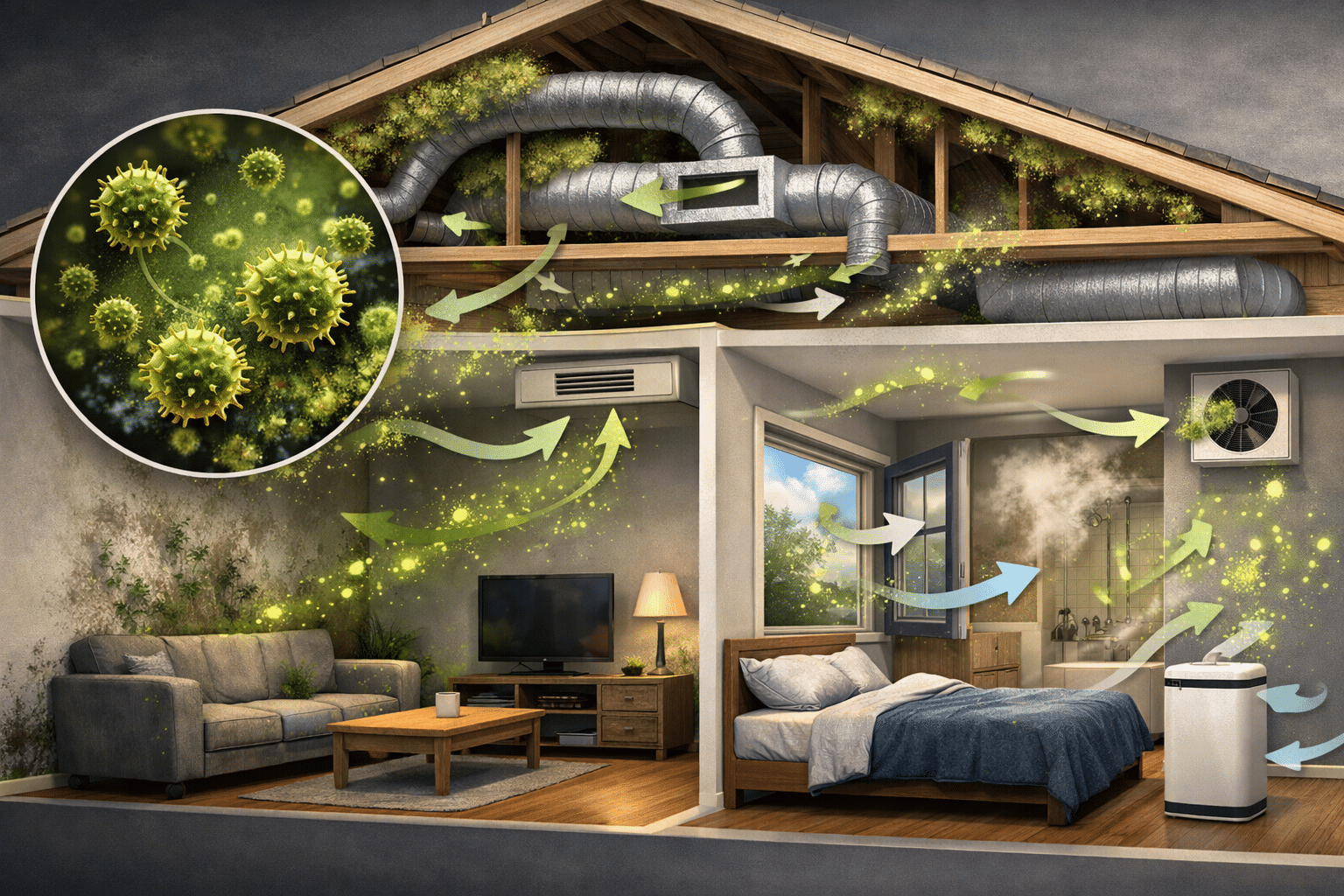
In the UAE context, the health effects of poor indoor air in schools are exacerbated by year-round air conditioning dependency. HVAC systems that aren’t properly maintained become amplifiers rather than solutions, recirculating contaminants throughout entire school buildings. I’ve documented cases where a single contaminated HVAC unit affected multiple classrooms, demonstrating how centralized systems can magnify the health effects of poor indoor air in schools.
Health Effects Of Poor Indoor Air In Schools – UAE-Specific Challenges for School Air Quality
The health effects of poor indoor air in schools across the UAE are significantly influenced by regional climate factors. Dubai’s extreme summer temperatures, which regularly exceed 40°C, necessitate continuous air conditioning from March through November. This creates a sealed environment where indoor pollutants accumulate rather than dissipate. The constant temperature differential between outdoor and indoor environments also promotes condensation within building assemblies, creating ideal conditions for microbial growth.
Construction practices in the UAE present additional challenges for managing the health effects of poor indoor air in schools. Many educational facilities were built during rapid expansion periods, sometimes prioritizing speed over building science principles. I’ve observed inadequate vapour barriers, insufficient insulation, and problematic HVAC designs that contribute directly to the health effects of poor indoor air in schools. These architectural shortcomings create thermal bridges where condensation occurs, leading to hidden mold growth within wall cavities.
Cultural factors also influence the health effects of poor indoor air in schools. The preference for carpeted floors in many institutions, while providing acoustic benefits, can harbour dust mites, allergens, and microbial contamination if not properly maintained. Regular carpet cleaning schedules often fail to address deep contamination, particularly in high-traffic areas near classroom entrances and common spaces.
Health Effects Of Poor Indoor Air In Schools: Common Pollutants in UAE Schools
The specific contaminants driving health effects of poor indoor air in schools vary by institution but typically include several consistent categories. Particulate matter from outdoor pollution enters through ventilation systems and open doors, combining with indoor sources like chalk dust, paper particles, and textile fibres. In our testing across Dubai schools, we consistently find PM2.5 levels exceeding WHO guidelines, particularly in classrooms near busy roadways.
Biological Contaminants
Mold represents one of the most significant biological contributors to health effects of poor indoor air in schools. In the UAE’s humid climate, condensation forms on cold surfaces like window frames, concrete columns, and behind wall-mounted displays. I’ve investigated classrooms where hidden mold growth behind bulletin boards created spore concentrations 200% above acceptable levels, correlating with increased asthma incidents among sensitive students.
Chemical Pollutants
Volatile organic compounds from cleaning products, furniture off-gassing, and art supplies contribute substantially to health effects of poor indoor air in schools. Many institutions use industrial-strength cleaning agents that leave chemical residues on surfaces, which then volatilize into the breathing zone. New furniture and carpeting can off-gas formaldehyde and other compounds for months after installation, particularly problematic during the start of academic years.
Respiratory Health Impacts on Students
The most immediate health effects of poor indoor air in schools manifest in respiratory systems. Children breathe more air relative to their body weight than adults, making them particularly vulnerable to airborne contaminants. Asthma prevalence among UAE school children has increased significantly in recent decades, with poor indoor air quality identified as a major contributing factor in numerous studies.
During our investigations of health effects of poor indoor air in schools, we’ve documented clear patterns between specific contaminants and respiratory outcomes. Classrooms with elevated mold spore counts consistently show higher rates of wheezing, coughing, and asthma medication use. Areas with high particulate matter levels correlate with increased sinusitis and bronchitis cases. These health effects of poor indoor air in schools often lead to increased absenteeism, particularly during peak allergy seasons.
The respiratory health effects of poor indoor air in schools can become chronic with prolonged exposure. Children who develop asthma due to school environmental factors may experience reduced lung function development, creating lifelong health limitations. Early intervention is crucial to prevent these long-term consequences of the health effects of poor indoor air in schools.
Cognitive and Learning Impacts
Beyond physical health, the cognitive health effects of poor indoor air in schools represent a serious concern for educational outcomes. Research demonstrates that elevated CO2 levels, common in overcrowded classrooms with inadequate ventilation, directly impair cognitive function. Students in poorly ventilated spaces show reduced attention spans, slower reaction times, and decreased academic performance across all subject areas.
The health effects of poor indoor air in schools on learning extend to memory formation and information retention. Studies have shown that students in classrooms with better ventilation score significantly higher on standardized tests than those in poorly ventilated spaces. The mechanism involves both oxygen deprivation from high CO2 levels and the neurological impact of certain chemical contaminants commonly found in educational environments.
In practical terms, the health effects of poor indoor air in schools manifest as increased disciplinary issues, reduced participation, and lower overall academic achievement. Teachers also experience these cognitive impacts, potentially affecting instructional quality and classroom management. Addressing these health effects of poor indoor air in schools benefits both students and educators simultaneously.
Long-Term Health Effects
The cumulative health effects of poor indoor air in schools can extend far beyond the educational years. Children exposed to certain contaminants during critical developmental periods may experience lasting health consequences. Mold exposure in childhood, for example, has been linked to increased susceptibility to respiratory conditions throughout life. Chemical exposure during developmental windows can affect neurological development and immune system function.
Perhaps the most concerning of the long-term health effects of poor indoor air in schools involves the development of multiple chemical sensitivity and other environmental illnesses. Students who experience repeated exposure to complex mixtures of contaminants may develop heightened sensitivity that persists into adulthood, limiting their ability to work in various environments and reducing overall quality of life.
The economic implications of these long-term health effects of poor indoor air in schools are substantial. Healthcare costs associated with environmentally triggered conditions, reduced workforce participation, and decreased productivity represent significant societal burdens. Investing in improved indoor air quality in educational facilities provides returns that extend far beyond the school years.
Prevention Strategies for UAE Schools
Addressing the health effects of poor indoor air in schools requires comprehensive strategies tailored to UAE conditions. HVAC system maintenance represents the first line of defense. Regular filter changes, coil cleaning, and duct inspection can significantly reduce contaminant circulation. I recommend schools implement quarterly professional HVAC inspections, particularly before peak usage periods at the start of each term.
Moisture control is crucial for preventing the biological health effects of poor indoor air in schools. Installing humidity monitors throughout facilities helps identify areas prone to condensation. Addressing thermal bridges through additional insulation or vapour barriers can prevent the hidden mold growth that often drives the most serious health effects of poor indoor air in schools.
Material selection plays a significant role in mitigating health effects of poor indoor air in schools. Choosing low-VOC furnishings, formaldehyde-free materials, and easy-to-clean surfaces reduces chemical off-gassing and allergen accumulation. Many Dubai schools are transitioning to vinyl composition tile instead of carpet for this reason, particularly in classrooms serving younger children with developing respiratory systems.
Testing and Monitoring Solutions
Professional assessment provides the foundation for addressing health effects of poor indoor air in schools. Comprehensive testing should include air sampling for particulate matter, mold spores, and chemical contaminants; surface testing for biological growth; and HVAC system evaluation for contamination and performance issues. I recommend baseline testing for all educational facilities, followed by annual reassessment.
Continuous monitoring systems offer proactive management of health effects of poor indoor air in schools. Modern sensor technology allows real-time tracking of CO2 levels, humidity, temperature, and particulate matter. These systems can alert facilities staff to developing problems before they affect occupant health, representing a significant advancement in managing health effects of poor indoor air in schools.
At Saniservice, we’ve helped numerous UAE schools implement monitoring programs that have reduced absenteeism by 15-30% within the first year. The data collected through these programs also helps justify infrastructure investments to school boards and parents, demonstrating the tangible benefits of addressing health effects of poor indoor air in schools.
Expert Tips for School Administrators
- Schedule professional HVAC cleaning during each major school break to maintain system performance
- Implement a moisture response protocol for immediately addressing spills, leaks, and condensation issues
- Choose cleaning products certified for low VOC emissions and allergen reduction
- Create designated areas for art supplies and science chemicals with dedicated exhaust ventilation
- Establish clear protocols for responding to parent concerns about health effects of poor indoor air in schools
- Consider adding portable air purifiers in classrooms with identified air quality challenges
- Educate teachers and staff about recognizing early signs of health effects of poor indoor air in schools
- Develop a communication plan for sharing air quality improvements with the school community
Frequently Asked Questions
What are the most immediate signs of health effects of poor indoor air in schools?
The most immediate signs include increased asthma symptoms, frequent headaches among students and staff, noticeable odours in classrooms, and condensation on windows or walls. Teachers may report decreased student attention spans and increased fatigue during class periods.
How often should UAE schools test for health effects of poor indoor air in schools?
We recommend comprehensive baseline testing when first addressing air quality concerns, followed by annual assessments. Schools with identified issues should conduct follow-up testing every six months until problems are resolved. Continuous monitoring systems provide ongoing data between professional assessments.
What is the typical cost range for addressing health effects of poor indoor air in schools?
Costs vary significantly based on facility size and existing conditions. Basic assessment and remediation programs typically range from AED 15,000 to AED 45,000 for medium-sized schools. Major infrastructure improvements like HVAC upgrades involve larger investments but provide long-term benefits for health effects of poor indoor air in schools.
The health effects of poor indoor air in schools represent a solvable challenge through proper investigation, targeted interventions, and ongoing monitoring. By understanding the specific contaminants affecting their facilities and implementing science-based solutions, UAE schools can create healthier environments that support both student health and academic achievement. The investment in addressing health effects of poor indoor air in schools pays dividends in improved attendance, enhanced learning outcomes, and healthier school communities throughout the Emirates.

JV de Castro, IAC2
JV de Castro is the Chief Technology Officer at Saniservice, where he leads innovation in indoor environmental sciences, IT infrastructure, and digital transformation. With over 20 years of experience spanning architecture, building science, technology management, digital media architecture, and consultancy, he has helped organizations optimize operations through smart solutions and forward-thinking strategies. JV holds a Degree in Architecture, a Masters of Research in Anthropology, an MBA in Digital Communication & Media, along with certifications in mold, building sciences and advanced networking. Passionate about combining technology, health, and sustainability, he continues to drive initiatives that bridge science, IT, and business impact.