Air In Uae Homes: Hidden Health Risks of Poor Indoor
In the UAE’s climate-controlled environment, where residents spend up to 90% of their time indoors, the quality of the air we breathe becomes a critical health concern. The hidden health risks of poor indoor air in UAE homes represent a silent epidemic affecting countless families across Dubai, Abu Dhabi, and the wider Emirates. Having investigated hundreds of residential properties across the region, I’ve witnessed firsthand how architectural design, construction practices, and lifestyle factors create unique indoor environmental challenges that significantly impact occupant health.
Many UAE residents mistakenly believe that closing windows and running air conditioning provides protection from outdoor pollution. However, our extensive testing reveals that indoor air can be 2-5 times more polluted than outdoor air, creating a perfect storm of health risks that often go undetected until symptoms become severe. The hidden health risks of poor indoor air in UAE homes stem from a combination of factors including high humidity levels, inadequate ventilation, building material off-gassing, and biological contamination that thrive in our climate-controlled environments.
Understanding The Hidden Health Risks of Poor Indoor Air in UAE Homes
The hidden health risks of poor indoor air in UAE homes often manifest gradually, making them difficult to recognise until significant health issues develop. From my experience conducting indoor environmental assessments across Dubai villas and apartments, I’ve identified patterns of contamination that directly correlate with specific health complaints. Many residents attribute their symptoms to other causes, unaware that their indoor environment is the primary culprit.
What makes the hidden health risks of poor indoor air in UAE homes particularly concerning is their cumulative nature. Unlike acute exposures that cause immediate reactions, poor Indoor Air Quality typically affects health through long-term, low-level exposure. This means families might live for years in compromised environments without realising the gradual impact on their respiratory health, immune function, and overall wellbeing. Our laboratory analysis frequently reveals microbial contamination and chemical pollutants at levels that exceed international safety guidelines, yet remain completely undetectable to human senses.
The Hidden Health Risks Of Poor Indoor Air In Uae Homes – Common Air Contaminants in UAE Homes
UAE homes face a unique combination of air contaminants that contribute to the hidden health risks of poor indoor air in UAE homes. Through our comprehensive testing protocols, we’ve identified several recurring pollutants that affect residential properties across the Emirates.
Biological Contaminants
Mold spores represent the most common biological contaminant in UAE homes, thriving in the high humidity environments created by air conditioning systems and plumbing leaks. Our microbiology lab regularly identifies Aspergillus, Penicillium, and Cladosporium species growing behind walls, under flooring, and within HVAC systems. These molds release spores and mycotoxins that can trigger allergic reactions, asthma attacks, and respiratory distress.
Chemical Pollutants
Volatile Organic Compounds (VOCs) from building materials, furniture, cleaning products, and air fresheners accumulate in sealed UAE homes. Formaldehyde from pressed wood products, benzene from plastics, and toluene from solvents create chemical soups that affect respiratory health and may contribute to long-term health issues. Our testing often reveals VOC levels 3-4 times higher indoors than outdoor levels.
Particulate Matter
Fine dust particles from desert sand, construction activities, and indoor sources accumulate in homes, carrying allergens, bacteria, and chemical residues into respiratory systems. PM2.5 particles can penetrate deep into lungs, causing inflammation and exacerbating respiratory conditions.
The Hidden Health Risks Of Poor Indoor Air In Uae Homes – Health Impacts of Poor Indoor Air Quality Explained
The hidden health risks of poor indoor air in UAE homes manifest through various physiological mechanisms that affect residents differently based on age, health status, and exposure duration. Understanding these impacts helps residents recognise when their home environment might be affecting their wellbeing.
Respiratory issues represent the most immediate health impact, with many residents experiencing worsened asthma, chronic bronchitis, or developing new respiratory sensitivities. Our case studies show that children exposed to mold-contaminated environments often develop allergic rhinitis and asthma that improves significantly after remediation. The inflammatory response triggered by airborne contaminants can also exacerbate existing conditions like COPD and increase susceptibility to respiratory infections.
Beyond respiratory effects, the hidden health risks of poor indoor air in UAE homes include neurological symptoms such as headaches, brain fog, and fatigue caused by VOC exposure. Many residents report improved cognitive function and energy levels after addressing indoor air quality issues. Additionally, skin irritation and allergic reactions frequently trace back to airborne contaminants rather than personal care products or dietary factors.
UAE Climate-Specific Air Quality Challenges
The UAE’s extreme climate creates unique conditions that exacerbate the hidden health risks of poor indoor air in UAE homes. Understanding these climate-specific factors is essential for effective prevention and mitigation strategies.
High outdoor humidity levels combined with air conditioning create perfect conditions for condensation within building assemblies. We frequently discover hidden mold growth in wall cavities where warm, humid air meets cold surfaces created by AC systems. This thermal bridging effect occurs throughout UAE construction, particularly at wall-floor junctions and around window frames where insulation is often inadequate.
The region’s rapid construction pace sometimes leads to buildings being occupied before construction materials have properly off-gassed. This results in elevated VOC levels that would normally dissipate over time but become trapped in sealed, air-conditioned environments. Additionally, water tank storage systems common in UAE homes can develop biofilm contamination that affects both water and air quality when aerosols are released through taps and showers.
Vulnerable Populations at Greater Risk
Certain population groups face heightened vulnerability to the hidden health risks of poor indoor air in UAE homes, requiring special consideration and protective measures.
Children experience disproportionate impacts due to their developing respiratory systems, higher metabolic rates, and increased exposure relative to body size. Our research shows that children in mold-affected homes miss 30% more school days due to illness and show higher rates of respiratory medication use. Elderly residents with compromised immune systems and existing health conditions also face increased risks from indoor air pollutants.
Individuals with pre-existing respiratory conditions such as asthma or COPD experience more frequent and severe symptoms when exposed to poor indoor air quality. Pregnant women represent another vulnerable group, as some studies suggest links between VOC exposure and developmental issues. Even healthy adults can develop new sensitivities after prolonged exposure to contaminated indoor environments.
Detection and Solutions for UAE Homes
Addressing the hidden health risks of poor indoor air in UAE homes requires professional assessment and targeted interventions based on scientific evidence rather than guesswork.
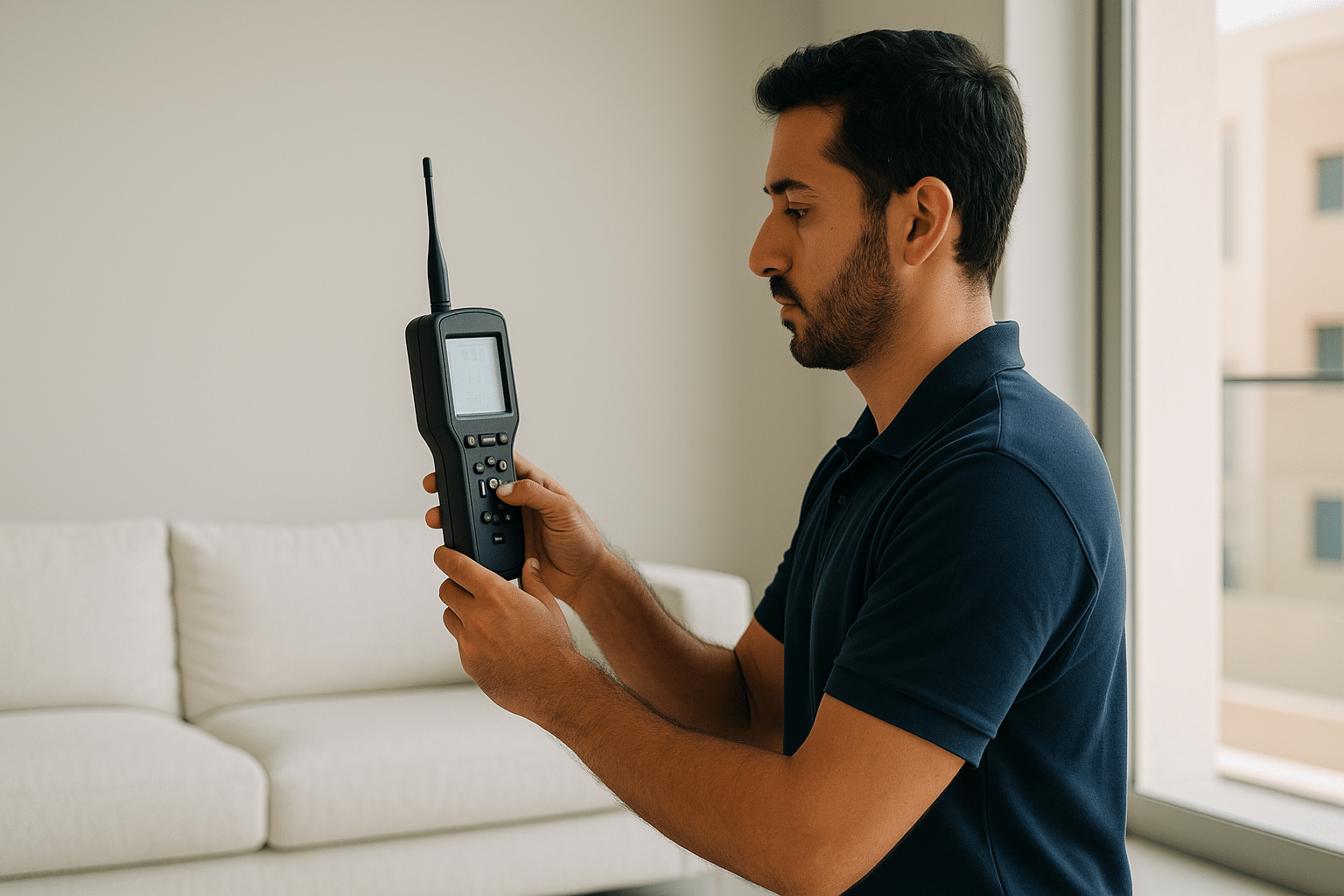
Comprehensive Air Quality Testing should include measurement of particulate matter (PM2.5 and PM10), VOC levels, carbon dioxide, temperature, humidity, and microbial contamination. Our standard assessment protocol combines air sampling, surface testing, and thermal imaging to identify hidden contamination sources that visual inspection alone would miss. This scientific approach ensures we address root causes rather than superficial symptoms.
Effective solutions typically involve a combination of source control, ventilation improvement, and air purification. For mold issues, this means identifying and eliminating moisture sources before remediation. For VOC reduction, we recommend replacing high-emission materials and increasing ventilation rates. HVAC system upgrades, including better filtration and UV-C light installation, can significantly improve overall air quality in UAE homes.
Expert Tips for Healthier Indoor Air
Based on my twelve years of experience addressing the hidden health risks of poor indoor air in UAE homes, here are five actionable tips for improving your home environment:
- Monitor humidity levels – Maintain indoor relative humidity between 40-60% using dehumidifiers if necessary, as this range inhibits mold growth while maintaining comfort
- Upgrade HVAC filters – Use MERV 13 rated filters and change them quarterly to capture finer particles and reduce allergen circulation
- Increase ventilation – Open windows during cooler hours when outdoor air quality permits, and consider installing energy recovery ventilators for constant fresh air exchange
- Control moisture sources – Fix leaks promptly, ensure proper drainage around your home, and use exhaust fans in bathrooms and kitchens
- Choose low-VOC products – Select building materials, furniture, and cleaning products with low chemical emissions to reduce indoor pollution sources
Frequently Asked Questions
How often should I test my home’s air quality in the UAE?
We recommend annual air quality testing for most UAE homes, with additional testing after any water damage, renovation projects, or if family members develop unexplained respiratory symptoms. Homes with known moisture issues or older HVAC systems may benefit from more frequent monitoring.
Can air purifiers eliminate all indoor air quality problems?
While high-quality air purifiers can significantly reduce airborne particles and some gases, they cannot address source contamination issues like hidden mold growth or VOC emissions from building materials. Comprehensive assessment and source control must accompany air purification for complete solutions.
What’s the most common air quality issue you find in Dubai homes?
Hidden mold contamination represents our most frequent finding, particularly in villas with construction defects that create condensation points. The combination of high outdoor humidity and aggressive air conditioning creates perfect conditions for microbial growth within wall cavities and under flooring.
Are new buildings safer than older homes for air quality?
New buildings often have higher VOC levels from construction materials, while older homes may have mold issues from aging infrastructure. Both require assessment, though the contamination profiles differ. We’ve found significant air quality issues in properties of all ages across the UAE.
The hidden health risks of poor indoor air in UAE homes represent a significant public health concern that deserves greater attention from residents, property managers, and health professionals. Through scientific assessment and targeted interventions, families can transform their living environments into health-promoting spaces rather than sources of invisible threats. Regular professional testing provides the evidence needed to make informed decisions about indoor environmental management and protection.

JV de Castro, IAC2
JV de Castro is the Chief Technology Officer at Saniservice, where he leads innovation in indoor environmental sciences, IT infrastructure, and digital transformation. With over 20 years of experience spanning architecture, building science, technology management, digital media architecture, and consultancy, he has helped organizations optimize operations through smart solutions and forward-thinking strategies. JV holds a Degree in Architecture, a Masters of Research in Anthropology, an MBA in Digital Communication & Media, along with certifications in mold, building sciences and advanced networking. Passionate about combining technology, health, and sustainability, he continues to drive initiatives that bridge science, IT, and business impact.