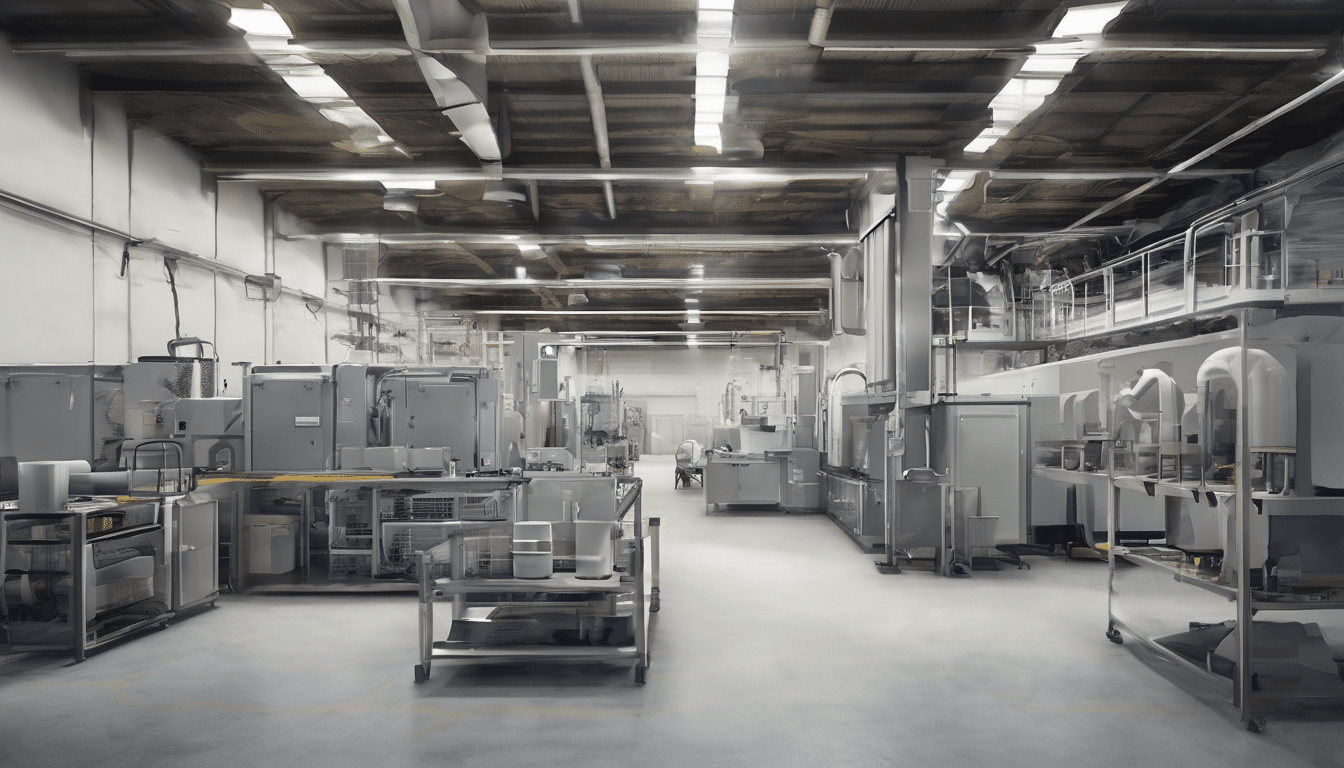
Case Studies Indoor Air Quality Manufacturing Facility
Manufacturing facilities across the UAE face unique indoor air quality challenges that directly impact worker health, equipment performance, and overall productivity. The combination of industrial processes, desert climate conditions, and rapid construction timelines creates complex environmental scenarios that require specialised expertise. Case Studies Indoor air quality manufacturing facility investigations reveal consistent patterns of contamination sources, ventilation deficiencies, and health impacts that can be systematically addressed through scientific assessment and targeted interventions.
Through our extensive work with manufacturing facilities throughout Dubai, Abu Dhabi, and the broader UAE region, we have documented numerous case studies indoor air quality manufacturing facility scenarios that demonstrate both the risks of poor air management and the transformative benefits of proper environmental control. These case studies indoor air quality manufacturing facility investigations provide valuable insights for facility managers, operations directors, and health and safety professionals seeking to protect their workforce while maintaining optimal production conditions.
Understanding Case Studies Indoor Air Quality Manufacturing Facility
Case studies indoor air quality manufacturing facility investigations provide critical insights into the complex interplay between industrial processes, building systems, and human health. These detailed examinations document specific scenarios where air quality issues have affected manufacturing operations, tracing contamination sources, measuring pollutant levels, and evaluating intervention effectiveness. Each case study follows a systematic approach that combines architectural assessment, environmental monitoring, and laboratory analysis to develop comprehensive solutions.
The value of case studies indoor air quality manufacturing facility documentation lies in their ability to demonstrate real-world applications of air quality science. Rather than theoretical models, these investigations show actual conditions in operational facilities, complete with the constraints of production schedules, budget limitations, and practical implementation challenges. For facility managers in Dubai and across the UAE, reviewing relevant case studies indoor air quality manufacturing facility examples provides actionable intelligence that can be applied to their own operations.
Our collection of case studies indoor air quality manufacturing facility investigations spans multiple industries and contamination scenarios. From metal fabrication shops experiencing welding fume issues to pharmaceutical facilities struggling with humidity control, each case study offers unique lessons about managing indoor environments in industrial settings. The desert climate of the UAE introduces additional complexities, with high outdoor particulate levels, extreme temperature differentials, and humidity control challenges that must be addressed in any comprehensive air quality strategy.
Common Air Quality Challenges in UAE Manufacturing
Manufacturing facilities throughout the UAE face several consistent air quality challenges that emerge repeatedly in case studies indoor air quality manufacturing facility investigations. The extreme desert climate creates unique conditions that amplify typical industrial air quality issues. High outdoor temperatures necessitate constant air conditioning, which can lead to humidity problems if not properly managed. Dust and sand from the environment infiltrate facilities, adding to particulate loads from manufacturing processes.
Chemical emissions represent another significant challenge documented in case studies indoor air quality manufacturing facility assessments. Solvents, cleaning agents, adhesives, and process chemicals release volatile organic compounds (VOCs) that can accumulate in poorly ventilated spaces. Many facilities constructed during Dubai’s rapid growth period prioritised speed over environmental performance, resulting in ventilation systems that cannot adequately handle the contaminant loads generated by manufacturing operations.
Process-specific contaminants vary by industry but consistently appear in case studies indoor air quality manufacturing facility evaluations. Welding fumes in metal fabrication, flour dust in food processing, plasticiser emissions in plastics manufacturing, and formaldehyde releases in wood products all require specialised control measures. The combination of these process emissions with UAE’s environmental conditions creates complex air quality scenarios that demand expert assessment and tailored solutions.
Methodology for Case Studies Indoor Air Quality Manufacturing Facility
Our approach to case studies indoor air quality manufacturing facility investigations follows a rigorous scientific methodology that ensures comprehensive assessment and accurate diagnosis. The process begins with detailed interviews with facility management and production staff to understand operational processes, historical issues, and specific concerns. This qualitative information guides the subsequent technical investigation, helping focus resources on areas of highest potential concern.
Environmental monitoring forms the core of any case studies indoor air quality manufacturing facility assessment. We deploy a range of instruments to measure particulate matter (PM2.5 and PM10), volatile organic compounds, carbon dioxide, temperature, humidity, and air movement patterns. Strategic sampling locations throughout the facility create a three-dimensional map of air quality conditions, identifying hotspots, dead zones, and contamination pathways. This data collection typically occurs over multiple days to capture variations across production schedules and environmental conditions.
Laboratory analysis provides definitive identification of contaminants in case studies indoor air quality manufacturing facility investigations. Air samples undergo microscopic examination to identify particulate composition, while chemical analysis quantifies VOC concentrations and identifies specific compounds. Surface sampling helps correlate air quality measurements with deposition patterns and contamination reservoirs. The integration of field measurements with laboratory results creates a comprehensive picture of air quality conditions and informs targeted intervention strategies.
Metal Fabrication Facility Case Study
One particularly instructive case studies indoor air quality manufacturing facility investigation involved a metal fabrication shop in Dubai Industrial City employing 85 workers. The facility reported persistent respiratory complaints among welding staff and visible haze in production areas during peak operations. Our assessment revealed welding fume concentrations exceeding OSHA permissible exposure limits by 300% in some work zones, with particularly high levels of manganese and hexavalent chromium compounds known to cause respiratory and neurological effects.
The case studies indoor air quality manufacturing facility investigation identified multiple contributing factors. Local exhaust ventilation at welding stations was inadequate for the volume of work being performed, and general ventilation systems were not designed to handle the particulate load. Building pressurisation was negative relative to outdoors, drawing in desert dust that mixed with welding fumes to create complex particulate mixtures. Workers reported frequent eye irritation, respiratory symptoms, and metallic taste sensations consistent with fume overexposure.
Our solution for this case studies indoor air quality manufacturing facility scenario involved a multi-tiered approach. We specified high-efficiency local exhaust systems for each welding station, designed to capture fumes at source before they entered the breathing zone. We reconfigured the HVAC system to maintain positive building pressure, preventing infiltration of outdoor dust. Administrative controls included job rotation to limit individual exposure duration and implementation of respiratory protection during high-fume operations. Post-intervention monitoring showed particulate reductions of 85% and complete resolution of worker symptoms.
Pharmaceutical Manufacturing Case Study
Another compelling case studies indoor air quality manufacturing facility example comes from a pharmaceutical production facility in Abu Dhabi experiencing product contamination issues and employee comfort complaints. The cleanroom environment required precise temperature and humidity control, but operators reported inconsistent conditions across production areas. Our investigation revealed significant spatial variations in temperature (±3°C) and relative humidity (±15%), exceeding the tight tolerances required for pharmaceutical manufacturing.
The case studies indoor air quality manufacturing facility assessment identified several design flaws in the HVAC system. Air distribution patterns created stagnant zones where humidity accumulated, while other areas experienced excessive air movement that disrupted delicate processes. Particle counting revealed elevated levels in supposedly clean areas, traced to filter bypass issues and personnel movement patterns. Environmental monitoring data showed that conditions frequently drifted outside specification ranges, risking product stability and manufacturing consistency.
Our intervention for this case studies indoor air quality manufacturing facility situation involved reengineering the air distribution system to achieve more uniform conditions throughout the cleanroom. We installed additional sensing points for better environmental monitoring and implemented automated control adjustments based on real-time data. Personnel flow patterns were modified to minimise disruption to critical areas, and filter maintenance protocols were enhanced to prevent bypass issues. The improvements resulted in consistent environmental conditions within specification ranges and elimination of product contamination incidents.
Food Processing Plant Case Study
A food manufacturing facility in Sharjah provided another insightful case studies indoor air quality manufacturing facility scenario involving both product quality and worker health concerns. The plant produced baked goods and reported issues with product consistency, employee respiratory complaints, and persistent odours throughout the facility. Our investigation revealed elevated levels of flour dust, yeast particles, and volatile organic compounds from baking processes, with particulate concentrations exceeding recommended limits in mixing and packaging areas.
The case studies indoor air quality manufacturing facility assessment identified several systemic issues. Local exhaust ventilation at mixing stations was ineffective due to poor hood design and inadequate airflow rates. The general ventilation system recirculated air without sufficient filtration, allowing contaminants to spread throughout the facility. Humidity control was inadequate for the moisture loads generated by cooking processes, leading to condensation issues in some areas and excessive dryness in others. Workers reported increased asthma symptoms and allergic reactions consistent with organic dust exposure.
Our solution for this case studies indoor air quality manufacturing facility challenge involved comprehensive ventilation upgrades and process modifications. We designed new capture hoods for mixing stations with appropriate airflow characteristics for flour dust control. The HVAC system was modified to increase fresh air intake and improve filtration efficiency, with dedicated exhaust for high-contamination areas. Process changes included enclosed transfer points for flour handling and modified cleaning protocols to reduce dust generation. Post-implementation monitoring showed particulate reductions of 92% and complete resolution of product quality issues.
Plastic Manufacturing Facility Case Study
Plastics manufacturing presents unique air quality challenges documented in our case studies indoor air quality manufacturing facility investigations. A injection moulding facility in Dubai Investment Park reported persistent chemical odours, employee headaches, and visible haze in production areas. Our assessment identified elevated levels of volatile organic compounds including styrene, formaldehyde, and plasticiser compounds, with concentrations exceeding occupational exposure limits during certain operations.
The case studies indoor air quality manufacturing facility investigation revealed several contributing factors. Process ventilation was inadequate for the volume of emissions generated during heating and moulding operations. Building ventilation rates were insufficient for the chemical load, allowing VOCs to accumulate to concerning levels. The facility layout placed administrative offices adjacent to production areas without adequate separation, exposing non-production staff to process emissions. Employees reported headache, nausea, and respiratory irritation consistent with VOC exposure.
Our intervention for this case studies indoor air quality manufacturing facility situation involved both engineering and administrative controls. We designed enhanced local exhaust systems for each moulding machine, capturing emissions at source before they entered the workspace. General ventilation rates were increased with emphasis on contaminant dilution and removal. Physical barriers were installed between production and administrative areas, with separate ventilation systems to prevent cross-contamination. Air purification systems with activated carbon were installed in sensitive areas to provide additional protection. Post-implementation monitoring showed VOC reductions of 88% and elimination of employee health complaints.
Textile Factory Case Study
Textile manufacturing involves multiple processes that generate airborne contaminants, as documented in our case studies indoor air quality manufacturing facility investigations. A textile factory in Ajman reported widespread employee respiratory issues, excessive dust accumulation, and product contamination problems. Our assessment revealed elevated levels of cotton dust, synthetic fibres, and processing chemicals throughout the facility, with particularly high concentrations in spinning and weaving areas.
The case studies indoor air quality manufacturing facility investigation identified several systemic issues. Dust collection systems were undersized for the production volume, allowing fibres to escape into the workspace. Ventilation system design created cross-contamination between dirty processes and clean areas. Humidity control was inadequate for textile processing requirements, affecting both product quality and dust control effectiveness. Employees reported increased respiratory symptoms, eye irritation, and skin reactions consistent with textile dust exposure.
Our solution for this case studies indoor air quality manufacturing facility challenge involved comprehensive dust control measures and ventilation improvements. We specified high-efficiency dust collection systems for each process area, designed to capture fibres at source. Ventilation patterns were reconfigured to create directional airflow from clean to dirty areas, preventing cross-contamination. Humidity control systems were upgraded to maintain optimal conditions for dust suppression and product quality. Administrative controls included enhanced cleaning protocols and personal protective equipment for high-exposure tasks. Post-implementation monitoring showed particulate reductions of 90% and significant improvement in employee health indicators.
Electronics Assembly Plant Case Study
Electronics manufacturing requires exceptionally clean environments, as demonstrated in our case studies indoor air quality manufacturing facility investigations. An electronics assembly plant in Dubai Silicon Oasis reported product failure issues, employee comfort complaints, and inconsistent production conditions. Our assessment revealed elevated levels of ionic contamination, particulate matter, and static electricity issues throughout the production area, with particular concerns in soldering and assembly operations.
The case studies indoor air quality manufacturing facility investigation identified several environmental control issues. Temperature and humidity fluctuations exceeded recommended ranges for electronics manufacturing, affecting solder joint quality and component performance. Air filtration was insufficient for the cleanliness requirements of modern electronics assembly, allowing particulate contamination that caused circuit failures. Static control measures were inadequate, leading to electrostatic discharge events that damaged sensitive components. Employees reported discomfort from dry air conditions and eye irritation from soldering fumes.
Our intervention for this case studies indoor air quality manufacturing facility situation involved comprehensive environmental control upgrades. We specified enhanced filtration systems to achieve Class 8 cleanroom conditions throughout the production area. Precision humidity control systems were installed to maintain optimal conditions for both static control and manufacturing processes. Local exhaust ventilation was improved at soldering stations to capture fumes effectively. Static control measures including ionisers and grounded work surfaces were implemented throughout the production area. These improvements resulted in a 75% reduction in product failures and significantly improved employee comfort.
Economic Impact of Case Studies Indoor Air Quality Manufacturing Facility
The economic implications of indoor air quality issues in manufacturing facilities are substantial, as demonstrated across our case studies indoor air quality manufacturing facility investigations. Poor air quality directly affects productivity through increased absenteeism, reduced work efficiency, and higher error rates. Employees working in contaminated environments typically show 10-15% reduced productivity due to discomfort, health symptoms, and cognitive impairment from pollutant exposure.
Product quality impacts represent another significant economic factor documented in case studies indoor air quality manufacturing facility assessments. Contamination from airborne particles, chemical vapours, or inappropriate humidity levels can cause product defects, batch failures, and customer rejections. The cost of quality issues often exceeds the investment required for proper air quality control, particularly in precision manufacturing industries where environmental conditions directly affect product performance.
Equipment maintenance costs also feature prominently in case studies indoor air quality manufacturing facility economic analyses. Airborne contaminants accelerate wear on machinery, clog filters, and cause corrosion that shortens equipment lifespan and increases maintenance requirements. Proper air quality management typically shows return on investment within 12-24 months through reduced maintenance costs, improved productivity, and higher product quality. These economic benefits make air quality improvements strategically valuable beyond simply addressing health and compliance requirements.
Implementing Solutions from Case Studies Indoor Air Quality Manufacturing Facility
Implementing effective solutions based on case studies indoor air quality manufacturing facility findings requires a systematic approach that addresses both immediate concerns and underlying causes. The first step involves prioritising interventions based on risk assessment, focusing on areas with highest exposure potential or most significant health impacts. Engineering controls typically provide the most reliable protection, with source capture systems representing the gold standard for contaminant control.
Ventilation system improvements form a core component of most case studies indoor air quality manufacturing facility interventions. This may involve increasing fresh air rates, improving air distribution patterns, enhancing filtration efficiency, or implementing local exhaust systems for specific processes. Each solution must be tailored to the specific contaminants, processes, and building characteristics identified during the assessment phase. Proper design requires understanding both the contaminant generation mechanisms and the airflow patterns within the facility.
Administrative controls and personal protective equipment provide additional layers of protection in case studies indoor air quality manufacturing facility solutions. Work practice modifications, job rotation schedules, and enhanced cleaning protocols can reduce exposure when engineering controls alone cannot achieve target protection levels. Respiratory protection programs ensure worker safety during maintenance activities or other situations where engineering controls may be temporarily ineffective. The combination of these approaches creates a comprehensive protection strategy that addresses all exposure scenarios.
Future Trends in Case Studies Indoor Air Quality Manufacturing Facility
The field of indoor air quality management in manufacturing facilities continues to evolve, with several emerging trends apparent in recent case studies indoor air quality manufacturing facility investigations. Real-time monitoring technology represents one significant advancement, allowing continuous assessment of air quality parameters rather than periodic sampling. These systems provide immediate feedback on intervention effectiveness and early warning of developing problems before they affect workers or products.
Computational fluid dynamics modeling is increasingly used in case studies indoor air quality manufacturing facility assessments to predict airflow patterns and contaminant dispersion before implementing physical changes. These digital simulations allow optimization of ventilation strategies and equipment placement without costly trial-and-error approaches. The integration of building information modeling with air quality assessment creates comprehensive digital twins that support ongoing facility management and future modifications.
Health-focused design represents another emerging trend in case studies indoor air quality manufacturing facility approaches. Rather than simply complying with exposure limits, progressive facilities are designing environments that actively promote worker health and cognitive performance. This includes attention to ventilation rates, pollutant removal efficiency, and environmental conditions that support optimal human performance. These approaches recognise that superior indoor environments provide competitive advantages through enhanced productivity, reduced absenteeism, and improved workforce retention.
Expert Tips for Manufacturing Facility Air Quality Management
Based on our extensive case studies indoor air quality manufacturing facility experience, we recommend these essential practices: First, implement regular air quality monitoring rather than waiting for problems to emerge. Second, prioritise source control over general dilution ventilation for more effective contaminant management. Third, maintain positive building pressure to prevent infiltration of outdoor contaminants. Fourth, establish clear maintenance protocols for ventilation systems and air cleaning equipment. Fifth, involve production staff in air quality initiatives as they often have valuable insights into process emissions and control opportunities.
Frequently Asked Questions
How often should manufacturing facilities conduct air quality assessments? We recommend comprehensive assessments annually, with more frequent monitoring if processes change or problems are suspected. High-risk operations may require continuous monitoring for critical parameters.
What are the most cost-effective air quality improvements for manufacturing facilities? Improving filtration efficiency, ensuring proper ventilation system maintenance, and implementing local exhaust at key processes typically provide the best return on investment for air quality improvements.
How does UAE climate affect manufacturing facility air quality? The desert climate introduces high particulate levels, extreme temperature differentials that challenge HVAC systems, and humidity control issues that can affect both products and worker comfort.
Case studies indoor air quality manufacturing facility investigations provide invaluable insights for protecting worker health and ensuring manufacturing quality. By learning from documented scenarios and implementing proven strategies, facilities throughout the UAE can achieve superior environmental conditions that support both human wellbeing and operational excellence.

JV de Castro, IAC2
JV de Castro is the Chief Technology Officer at Saniservice, where he leads innovation in indoor environmental sciences, IT infrastructure, and digital transformation. With over 20 years of experience spanning architecture, building science, technology management, digital media architecture, and consultancy, he has helped organizations optimize operations through smart solutions and forward-thinking strategies. JV holds a Degree in Architecture, a Masters of Research in Anthropology, an MBA in Digital Communication & Media, along with certifications in mold, building sciences and advanced networking. Passionate about combining technology, health, and sustainability, he continues to drive initiatives that bridge science, IT, and business impact.