


10 Essential Facts Comparing Reverse Osmosis vs. UV Filtration for Well Water Purification
When it comes to ensuring safe, clean drinking water from a private well, many homeowners face a critical decision: should they choose Reverse osmosis vs. UV filtration for well water purification? Both technologies are popular for treating well water but operate very differently and serve different purposes in water treatment. Understanding their characteristics, benefits, and limitations is essential to selecting the right system for your home in Dubai, Abu Dhabi, or across the Gulf region.
In this detailed article, we explore the mechanisms of reverse osmosis (RO) and ultraviolet (UV) filtration, compare their effectiveness against common well water contaminants, discuss costs and maintenance, and provide practical recommendations for well water purification strategies tailored to the unique needs of UAE and Saudi Arabian households.
Understanding Reverse Osmosis vs. UV Filtration for Well Water Purification
Reverse osmosis and ultraviolet filtration are two prominent technologies used in the treatment of well water. Despite their joint goal of improving water safety and quality, they differ widely in operational principles, scope of contaminant removal, and application focus.
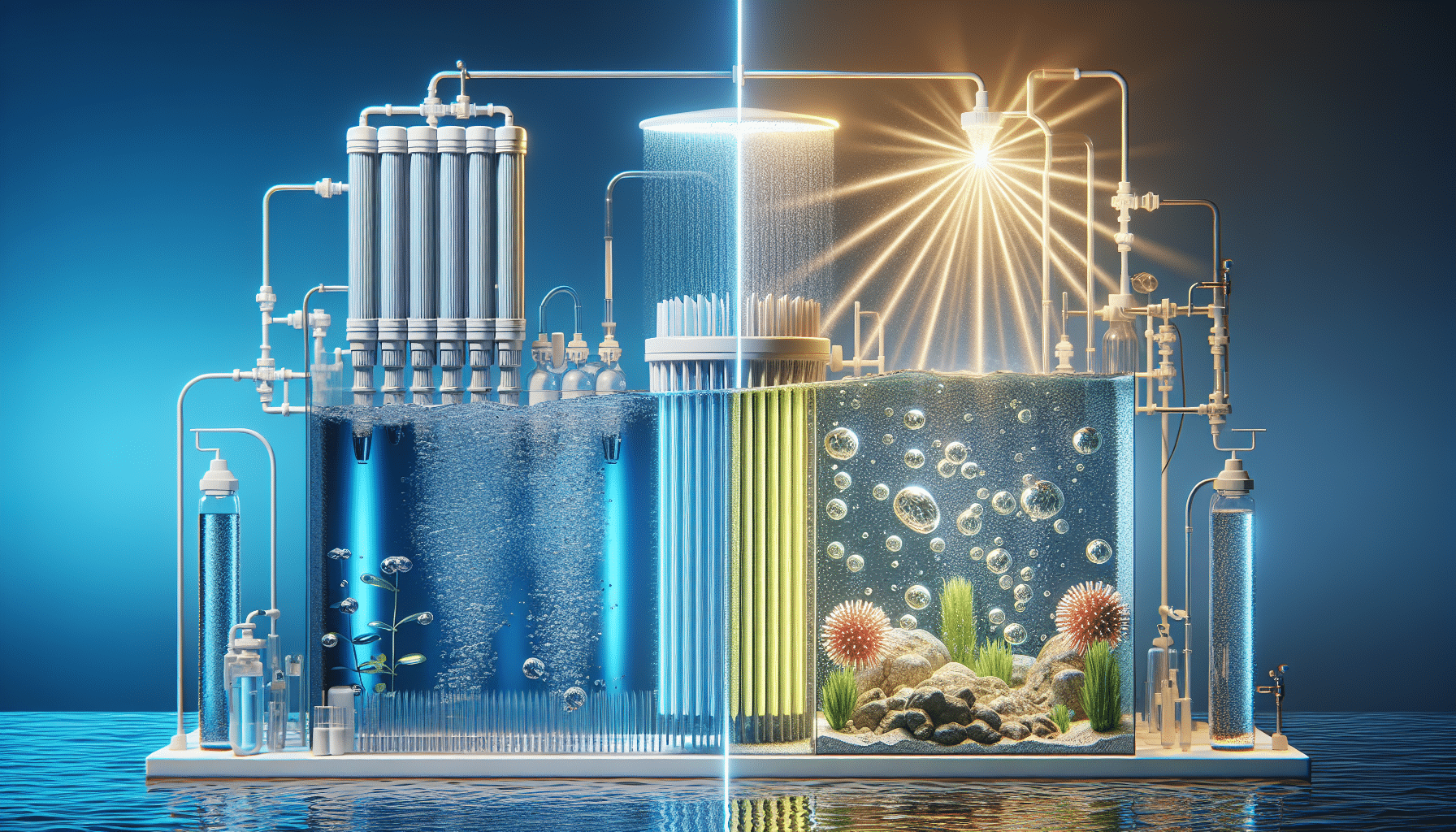
Reverse osmosis is a physical filtration process that removes a broad spectrum of dissolved and particulate contaminants by forcing water through a semipermeable membrane. Conversely, UV filtration uses ultraviolet light to neutralise harmful microorganisms like bacteria and viruses by disrupting their DNA, without removing chemical or physical impurities.
Choosing between these two depends on the specific contamination characteristics of your well water and your household’s water usage needs.
Mechanisms of Reverse Osmosis and UV Filtration
How Reverse Osmosis Works
Reverse osmosis systems apply high water pressure to push raw water through a semipermeable membrane. This membrane selectively blocks molecules larger than water, such as dissolved salts, heavy metals, pesticides, nitrates, pathogens, and other contaminants. Typical RO systems can remove up to 99% of total dissolved solids (TDS), producing purified water that is free of many inorganic and organic impurities.
How UV Filtration Works
Ultraviolet filtration systems expose water to a UV light source, usually a low-pressure mercury lamp emitting radiation at 254 nm wavelength. This exposure damages the DNA of bacteria, viruses, and protozoa in the water, rendering them incapable of reproduction and effectively disinfecting the water. UV systems do not remove physical or chemical contaminants, nor do they filter out dead microorganisms or sediments.
Common Well Water Contaminants and Health Implications
Well water, especially in arid regions like Dubai, Abu Dhabi, or Riyadh, may contain various impurities including:
- Microbial pathogens: Bacteria such as E. coli, viruses, and protozoa that can cause gastrointestinal illness.
- Dissolved solids: Minerals like calcium, magnesium (causing hardness), iron, and manganese, contributing to taste issues and plumbing problems.
- Heavy metals: Arsenic, lead, and other toxic metals posing long-term health risks.
- Organics and chemicals: Pesticides, herbicides, VOCs, and nitrates from agricultural or industrial sources.
Testing well water for these contaminants is critical to choosing the appropriate purification technology. Pathogens require disinfection, while dissolved solids and chemicals necessitate filtration or removal methods like RO.
Effectiveness Comparison: Reverse Osmosis vs. UV Filtration for Well Water Purification
| Feature | Reverse Osmosis (RO) | UV Filtration |
|---|---|---|
| Contaminant Removal Spectrum | Removes dissolved solids, heavy metals, chemicals, bacteria, viruses, and sediment (up to 99%+ of TDS). | Kills bacteria, viruses, and protozoa; does not remove chemicals, metals, or sediments. |
| Water Taste and Odour | Improves taste by removing minerals and chlorine; may produce flat taste due to mineral removal. | No impact on taste or odour as it doesn’t remove chemical impurities. |
| Water Wastage | Produces wastewater—typically wastes 3-4 litres per litre purified; may require plumbing modifications. | No water wastage, as it disinfection only. |
| Installation Complexity | More complex installation; usually under-sink or point-of-use system; needs water pressure and pre-filtration. | Relatively simple whole-house installation; requires electricity but minimal plumbing changes. |
| Operating Costs and Maintenance | Higher costs: membrane replacements (~every 2-3 years), pre-filters, pumps; water pressure monitoring needed. | Lower costs: UV lamp replacement typically annual; cleaning quartz sleeve; no filters required. |
| Effectiveness against Microorganisms | Removes microorganisms physically; membrane may be compromised by bacteria over time requiring maintenance. | Kills microorganisms efficiently but does not remove them from water; no post-treatment filtration. |
| Removal of Minerals and Hardness | Significantly removes minerals causing hardness; may require remineralisation to improve water quality. | No effect on minerals or water hardness. |
| Chemical Use | No chemicals needed; physical filtration process. | No chemicals needed; uses UV light for disinfection. |
| Limitations | Water pressure dependent; wastes water; slower output; requires pre-treatments for some contaminants. | Only effective for disinfection; does not improve physical or chemical quality of water. |
Cost, Installation, and Maintenance Considerations
Reverse Osmosis systems generally have higher upfront costs ranging from AED 3,000 to AED 7,000 for under-sink units, depending on capacity and features. Installation may require a plumber and ensuring adequate water pressure. Maintenance involves periodic replacement of membranes and pre-filters and monitoring for bacterial growth in storage tanks.
UV filtration systems are typically less expensive, with whole-house UV units costing between AED 1,200 and AED 3,000 including installation. Maintenance is limited mainly to annual UV lamp replacement and cleaning quartz sleeves to maintain efficiency. UV systems require a power supply and consistent electricity.
Given Dubai’s and Saudi Arabia’s continuous electrical supply and typical water pressures, both installations can be accommodated but considerations for water wastage and maintenance schedules should be discussed with providers.
Integration of Reverse Osmosis and UV Filtration Systems
Many well water purification setups in the UAE and Saudi Arabia benefit from combining reverse osmosis vs. UV filtration for well water purification. UV filtration serves as an effective disinfection stage post-RO or as a standalone step for microbial control, while RO systems provide comprehensive contaminant removal.
This dual approach ensures that chemical and microbial contaminants are addressed: RO removes dissolved chemicals and particles, and UV guarantees disinfection, mitigating risks of bacteria that may proliferate if membranes or storage tanks are compromised.
Furthermore, pre-filtration (sediment and carbon filters) ahead of both RO and UV units is often recommended to protect membranes, reduce chlorine (harmful to membranes), and improve performance.
Testing Well Water Quality for Filtration Selection
Prior to choosing between reverse osmosis and UV filtration for well water purification, comprehensive water testing is essential. Testing should assess:
- Microbiological contaminants (total coliforms, E. coli)
- Dissolved solids and hardness (TDS, calcium, magnesium)
- Heavy metals and chemicals (arsenic, lead, pesticides)
- Physical parameters (pH, turbidity, iron concentration)
Many local UAE labs offer well water testing services, with sample collection kits and analysis. Test results should guide system choice — for instance, high microbial contamination suggests UV or RO with disinfection; high hardness or iron requires RO with additional filters.
Expert Tips for Well Water Filtration Maintenance
- Regularly monitor water quality: Schedule annual well water testing to detect new contamination.
- Replace filters and membranes as recommended: For RO, membranes generally last 2-3 years; pre-filters change more often.
- Maintain UV systems: Replace UV lamps annually and clean sleeves to prevent buildup affecting disinfection.
- Protect against water pressure fluctuations: Use pressure tanks or pumps to maintain adequate RO membrane operation.
- Ensure electrical safety: UV systems require consistent, safe electricity; install surge protection where needed.
- Understand water wastage: RO systems produce waste water; consider greywater recycling or water-saving devices.
Final Verdict on Reverse Osmosis vs. UV Filtration for Well Water Purification
Choosing between reverse osmosis vs. UV filtration for well water purification fundamentally depends on your well water’s contamination profile and household water needs.
RO systems offer the broadest contaminant removal — effective for dissolved solids, heavy metals, chemicals, and pathogens. They provide near-pure water but are more costly, require maintenance, and produce wastewater. For families seeking comprehensive purification including mineral removal and improved taste, RO is often the superior choice.
UV filtration systems excel at disinfecting water by killing bacteria, viruses, and protozoa without altering mineral content or taste. They are more affordable, easier to maintain, and environmentally friendly with no water waste. However, UV alone cannot address chemical or mineral contaminants.
For most well water users in Dubai, Abu Dhabi, or Riyadh facing microbial contamination plus dissolved solids or minerals, an integrated approach combining UV and RO delivers optimal safety and quality. Start with thorough water testing to identify contaminants, then tailor a multi-stage treatment system accordingly.
Ultimately, understanding the strengths and limits of reverse osmosis vs. UV filtration for well water purification empowers homeowners to invest wisely in water solutions that protect health, fit budgets, and suit regional water challenges.
Expert Tips for Well Water Filtration
- Always perform detailed water analysis before installation to ensure the system targets your water’s specific contaminants.
- Consider combining UV filtration with whole-house filtration or RO systems for comprehensive protection.
- Maintain system components proactively to extend lifespan and safeguard water quality.
- Consult local water treatment professionals familiar with Gulf water conditions to optimise system performance.

JV de Castro, IAC2
JV de Castro is the Chief Technology Officer at Saniservice, where he leads innovation in indoor environmental sciences, IT infrastructure, and digital transformation. With over 20 years of experience spanning architecture, building science, technology management, digital media architecture, and consultancy, he has helped organizations optimize operations through smart solutions and forward-thinking strategies. JV holds a Degree in Architecture, a Masters of Research in Anthropology, an MBA in Digital Communication & Media, along with certifications in mold, building sciences and advanced networking. Passionate about combining technology, health, and sustainability, he continues to drive initiatives that bridge science, IT, and business impact.



Leave a Reply