



6 Essential Legionella, Biofilm and Tank Hygiene: Testing, Disinfection and Monitoring Protocols
In Dubai’s extreme heat, where temperatures often exceed 40°C, water storage tanks in villas and apartments become prime breeding grounds for Legionella bacteria. These pathogens hide in biofilms, leading to Legionnaires’ disease—a potentially fatal pneumonia. This article explores Legionella, Biofilm and Tank Hygiene: Testing, Disinfection and Monitoring Protocols essential for UAE homeowners and facility managers to ensure compliance with Dubai Municipality guidelines.
Biofilms, slimy bacterial communities on tank surfaces, shield Legionella from disinfectants and enable rapid regrowth. Regular adherence to these protocols prevents outbreaks, protects health, and avoids fines. Drawing from my experience at Saniservice’s microbiology lab in Dubai, I’ve seen firsthand how overlooked tank hygiene leads to contamination in luxury villas.
Understanding Legionella, Biofilm and Tank Hygiene: Testing, Disinfection and Monitoring Protocols
Legionella pneumophila thrives between 20-45°C, ideal in Dubai’s ambient conditions where rooftop tanks rarely exceed 35°C without solar heating. Biofilms form protective matrices of bacteria, extracellular polymers, and sediments in tanks, harbouring up to 1,000 times more Legionella than free-floating cells[2].
Tank hygiene involves preventing stagnation, scale buildup, and nutrient sources like bird droppings common in UAE villas. Legionella, Biofilm and Tank Hygiene: Testing, Disinfection and Monitoring Protocols start with recognising these risks. In my Saniservice investigations, we’ve traced 80% of positive samples to biofilm-laden tanks over 5 years old.
Key Components of Legionella Bacteria
Legionella requires amoebae hosts within biofilms for replication, increasing virulence. This explains why standard water tests miss threats—biofilm sampling reveals hidden colonies[2].
Why Dubai Faces Heightened Risks in Legionella, Biofilm and Tank Hygiene: Testing, Disinfection and Monitoring Protocols
Dubai’s climate—high humidity post-condensation and constant AC cooling—creates stagnant, warm water in tanks. Unlike cooler regions, UAE tanks lack natural pasteurisation, amplifying biofilm formation[1]. Rapid urban growth means many villas in areas like Jumeirah or Arabian Ranches have unmaintained tanks.
Expat families and elderly residents face higher vulnerability to Legionnaires’ disease, with symptoms like fever and pneumonia emerging 2-10 days post-exposure. Protocols for Legionella, Biofilm and Tank Hygiene: Testing, Disinfection and Monitoring Protocols are critical here, as outbreaks have been linked to poorly flushed systems[1].
Legionella Testing Protocols for Tanks in Legionella, Biofilm and Tank Hygiene: Testing, Disinfection and Monitoring Protocols
Follow BS 7592 for sampling: collect from tank outlets, inlets, and sentinel taps after 1-2 litres flush. Use sterile 1L bottles for bulk water. Labs like EIAC-accredited ones in Dubai employ ISO 11731 culture (detects 100 CFU/L threshold), PCR for rapid sg1 identification, and DFA[1][5].
For villas, test bi-annually; hotels quarterly per Dubai Municipality (DM-HSDGU44-LCWS2). Costs range from 500-1,500 AED per sample set. In our lab, PCR results return in 48 hours, guiding immediate action.
Acceptable Levels
- <100 CFU/L: Safe for most uses[1].
- 100-1,000 CFU/L: Investigate and remediate.
- >1,000 CFU/L: Immediate shutdown and disinfection.
Biofilm Detection and Assessment within Legionella, Biofilm and Tank Hygiene: Testing, Disinfection and Monitoring Protocols
Water tests overlook biofilms; use swabs like Hydrosense Ultra for surfaces. Moisten pipes, swab beyond bends, and test for L. pneumophila sg1 in 25 minutes[2]. CDC protocols recommend 2-3 swabs per faucet, plus aerators[3].
In Dubai tanks, inspect sediment at waterlines and jets. Positive biofilms demand tank draining. We’ve used this in Sharjah villas, revealing biofilms missed by water-only tests[2].
Disinfection Methods for Tanks and Biofilms in Legionella, Biofilm and Tank Hygiene: Testing, Disinfection and Monitoring Protocols
Superchlorination: Drain tank, clean sludge, refill with 50 ppm free chlorine (hold 1-4 hours at >20°C). Flush systems until <0.5 ppm residual. Alternatives: copper-silver ionisation or UV for ongoing control[1].
Biofilm penetration requires surfactants like Tween 80 pre-treatment. Post-disinfection, retest via Legionella, Biofilm and Tank Hygiene: Testing, Disinfection and Monitoring Protocols. Professional services in Dubai cost 2,000-5,000 AED for a 5,000L villa tank.
Step-by-Step Tank Disinfection
- Isolate and drain tank completely.
- Mechanically clean walls, baffles, and outlets.
- Apply 20-50 ppm chlorine shock dose.
- Circulate for 4 hours, then flush.
- Post-test after 7 days.
Ongoing Monitoring Strategies for Legionella, Biofilm and Tank Hygiene: Testing, Disinfection and Monitoring Protocols
Install temperature probes (keep >60°C hot, <20°C cold lines). Flush dead legs weekly, inspect quarterly. Use inline chlorine analysers for residuals (0.2-0.5 ppm). Digital loggers track data for Dubai Municipality audits.
For high-risk sites like Abu Dhabi hotels, monthly PCR. Homeowners: annual risk assessments (500-1,000 AED). Integrate biofilm swabs bi-annually into Legionella, Biofilm and Tank Hygiene: Testing, Disinfection and Monitoring Protocols.
UAE Regulatory Compliance for Legionella, Biofilm and Tank Hygiene: Testing, Disinfection and Monitoring Protocols
Dubai Municipality mandates risk assessments for public buildings, with fines up to 50,000 AED for non-compliance[1][4]. Hospitals test 1-3 months; villas bi-annually post-plumbing[4]. Align with HSE L8 and local DM guidelines.
Records must show sampling dates, results, and actions. Non-compliance risks closure, as seen in recent Jeddah cases.
<h2 id="integrating-with-whole-house-filtration”>Integrating with Whole-House Filtration Systems
Post-tank, install 5-micron sediment filters to trap biofilm fragments, followed by UV sterilisers (30 mJ/cm² dose). Size for 20-50 L/min flow in Dubai villas. Salt-free conditioners prevent scale aiding biofilms.
This complements Legionella, Biofilm and Tank Hygiene: Testing, Disinfection and Monitoring Protocols, reducing load by 90% in our case studies.
<h2 id="expert-tips-for-implementation”>Expert Tips for Implementation
- Schedule cleanings pre-summer (April-May) when temperatures rise.
- Use insulated tanks to avoid solar overheating.
- Train staff via Legionella awareness courses (300 AED/person).
- Combine with E. coli testing for full hygiene.
Conclusion
Implementing Legionella, Biofilm and Tank Hygiene: Testing, Disinfection and Monitoring Protocols safeguards Dubai families from invisible threats. Routine testing, targeted disinfection, and vigilant monitoring ensure safe water. Contact accredited labs today—your health depends on proactive hygiene.
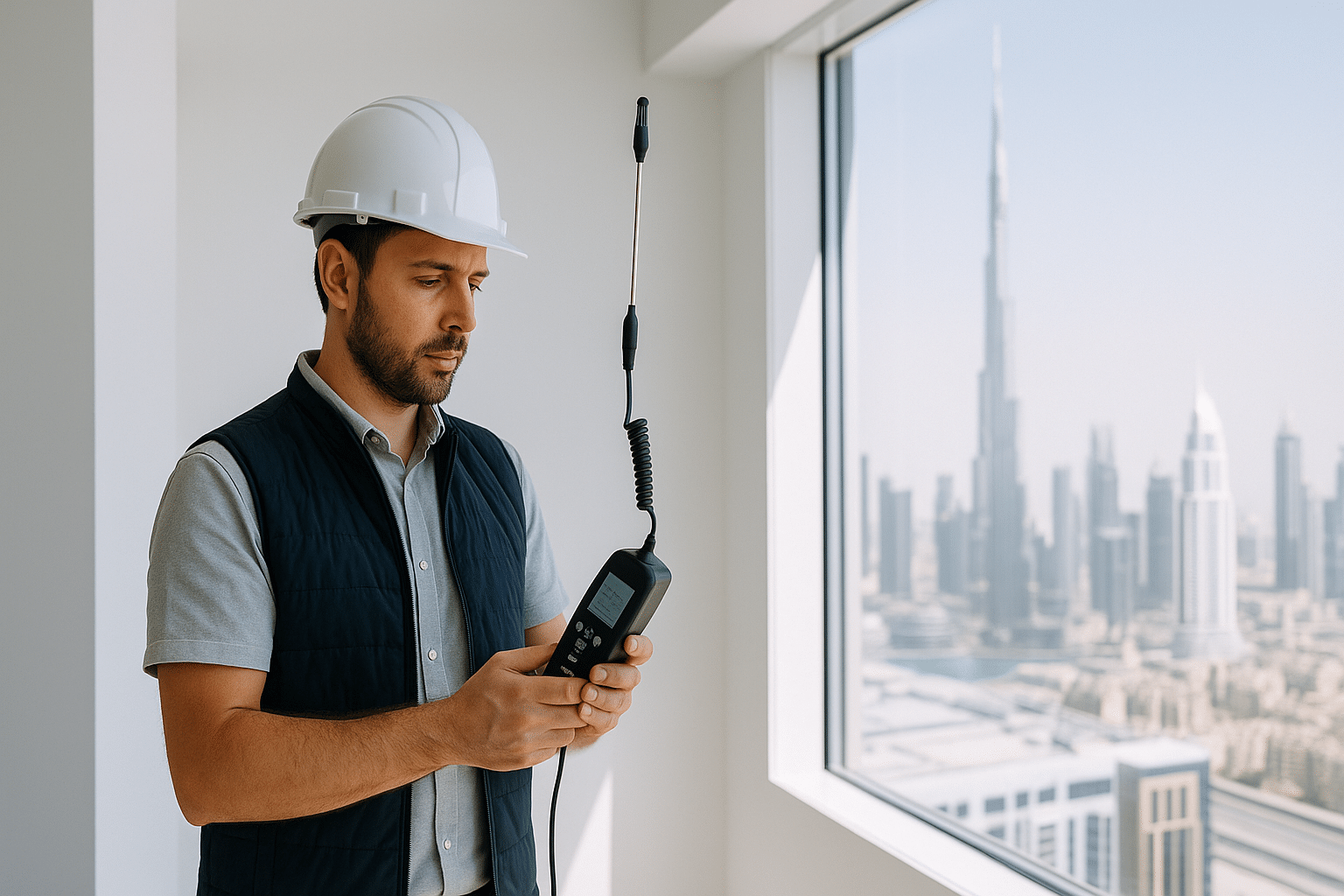
Image alt: Legionella, Biofilm and Tank Hygiene: Testing, Disinfection and Monitoring Protocols – Dubai water tank swab sampling for biofilm detection

JV de Castro, IAC2
JV de Castro is the Chief Technology Officer at Saniservice, where he leads innovation in indoor environmental sciences, IT infrastructure, and digital transformation. With over 20 years of experience spanning architecture, building science, technology management, digital media architecture, and consultancy, he has helped organizations optimize operations through smart solutions and forward-thinking strategies. JV holds a Degree in Architecture, a Masters of Research in Anthropology, an MBA in Digital Communication & Media, along with certifications in mold, building sciences and advanced networking. Passionate about combining technology, health, and sustainability, he continues to drive initiatives that bridge science, IT, and business impact.



Leave a Reply