



Failures To Prevent Mold: Root-cause Repair Guide: Fixing
If you’ve discovered mold in your Dubai villa despite repeated cleanings, you’re not alone. In the UAE’s hot, humid climate, hygrothermal failures—where heat and moisture interact poorly in building assemblies—drive hidden mold growth behind walls or at skirting boards. This Root-Cause Repair Guide: Fixing Hygrothermal Failures to Prevent Mold provides a systematic approach to diagnose and repair these issues, ensuring mold doesn’t return.
Hygrothermal problems arise from thermal bridges, vapor diffusion, and air leakage, common in rapid UAE construction. Constant air conditioning creates cold surfaces that condense indoor humidity, fostering mold at relative humidity above 60%.[1][3] By addressing root causes, you avoid costly reoccurrences, protecting health and property value.
Understanding Root-Cause Repair Guide: Fixing Hygrothermal Failures to Prevent Mold
The Root-Cause Repair Guide: Fixing Hygrothermal Failures to Prevent Mold shifts focus from surface cleaning to building physics. Hygrothermal analysis examines how temperature and moisture move through walls, roofs, and floors. In Dubai’s climate, outdoor humidity at 60-90% RH meets cold interior surfaces from 20°C air conditioning, creating dew points where mold thrives.[1][2]
Traditional remediation fails because it ignores these dynamics. Moisture accumulates via diffusion or leakage, reaching critical levels (above 75% RH for weeks) that germinate spores.[1] This guide integrates my experience at Saniservice, where we’ve resolved hidden mold in villas through targeted hygrothermal fixes.[3]
Key principle: Mold needs moisture, warmth, and nutrients. Control moisture via hygrothermal balance to prevent growth, as studies confirm RH below 60% halts germination even at 25°C.[2][6]
What Hygrothermal Failures Cause Mold in UAE Homes
In UAE villas, hygrothermal failures manifest as condensation at wall-floor junctions. Thermal bridges—concrete beams or metal frames—conduct heat away, dropping surface temperatures below dew point (e.g., 12°C when indoor air is 24°C at 55% RH).[1][4]
Common UAE-Specific Triggers
Air-conditioned interiors create inward vapor drive during humid summers. Vinyl wall coverings trap moisture, leading to mold in adhesives.[1] Poor envelope sealing allows humid outdoor air infiltration, elevating cavity RH.[3]
We’ve observed this in Sharjah residences: uninsulated slabs cause floor-level condensation, supporting mold behind skirting boards.[5] Rapid construction often skips vapor retarders, amplifying risks.[1]
Insulation mismatches worsen issues; added fiberglass without air barriers traps moisture, as seen in recent Dubai builds.[3]
Diagnosing Issues in Root-Cause Repair Guide: Fixing Hygrothermal Failures to Prevent Mold
Start diagnosis with thermal imaging at 20-30°C delta-T to reveal cold spots. Moisture meters probe surfaces; readings above 17% indicate risk.[3] Air sampling confirms elevated spores like Cladosporioides, linked to high RH cycles.[2]
Borescopes inspect cavities for hidden growth. Hygrothermal modeling (e.g., WUFI software) simulates vapor diffusion, predicting mold indices.[6] In Abu Dhabi cases, we’ve traced 80% of recurrences to thermal bridges via this method.
Combine with building history: leaks post 01/01/2020 monsoons or AC overcooling accelerate failures.[4]
5-Step Root-Cause Repair Guide: Fixing Hygrothermal Failures to Prevent Mold
This proven sequence ensures comprehensive repair. Each step builds on the last for lasting results.
Step 1: Isolate and Remove Contamination
Contain areas with 6-mil poly sheeting and negative pressure (0.02 m/s velocity). HEPA-vacuum surfaces; discard porous materials above 10m² infestation. Cost: AED 5,000-15,000 for a 200m² villa.[3]
Step 2: Eliminate Moisture Sources
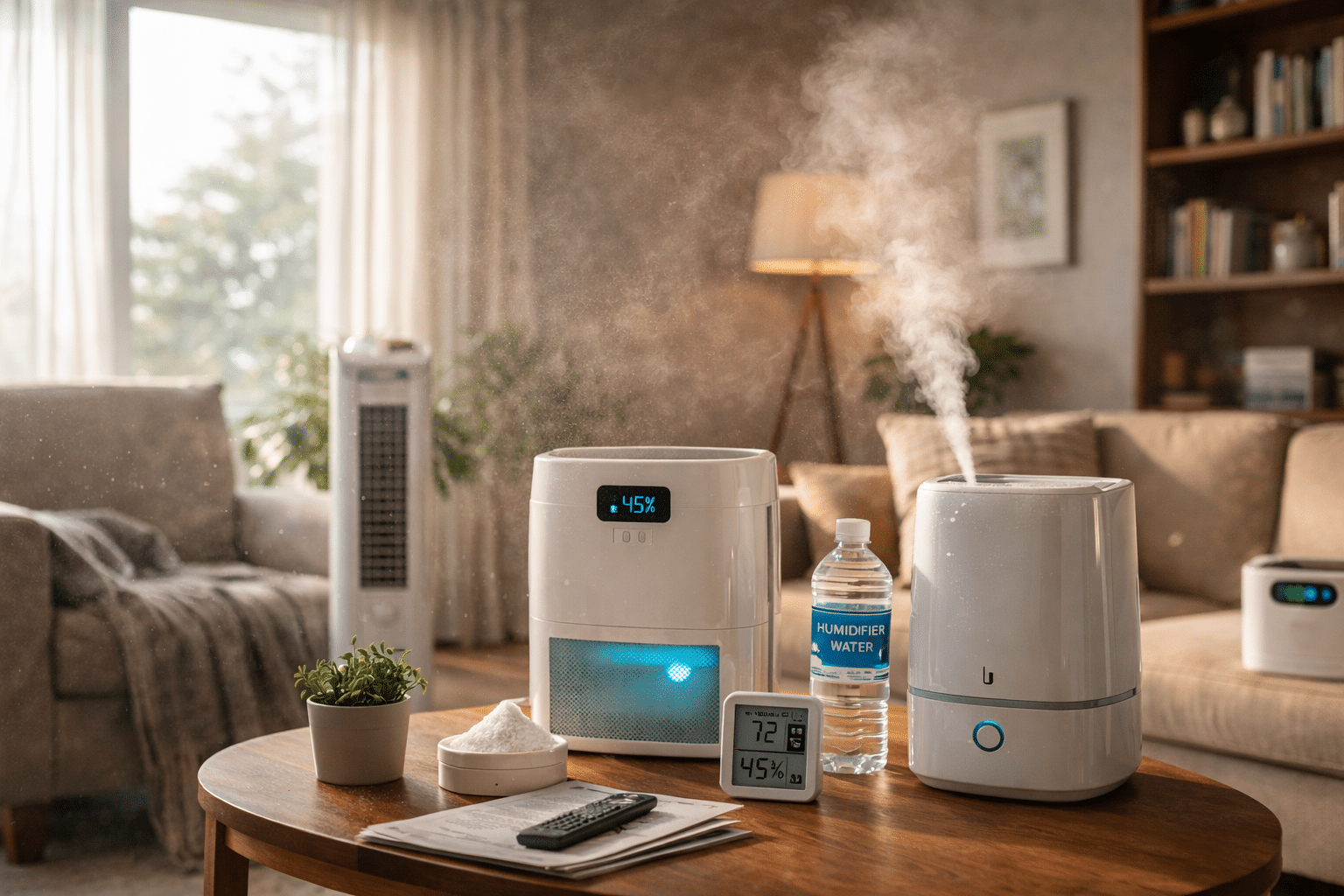
Fix leaks, improve drainage. Install dehumidifiers targeting 45-55% RH.[2] Essential in Ras Al Khaimah’s humid zones.
Step 3: Address Hygrothermal Imbalances
Details in following sections. Prioritize bridges and vapor paths.
Step 4: Rebuild with Mold-Resistant Assemblies
Use fiberglass mat-faced gypsum; ensure ventilation gaps.[3]
Step 5: Verify and Monitor
Test post-14 days; maintain logs.
Targeting Thermal Bridges in Root-Cause Repair Guide: Fixing Hygrothermal Failures to Prevent Mold
Thermal bridges at beams/columns reduce surface temperatures by 5-10°C, condensing vapor.[4] Solution: Install 20mm rigid polyisocyanurate breaks at junctions, costing AED 2,000 per 10m linear.[1]
In Jeddah villas, we’ve retrofitted 50mm XPS insulation under slabs, eliminating floor mold. Seal penetrations with spray foam (R-value 6 per 25mm).[3]
Avoid metal fixings; use plastic anchors to minimize conduction.[5]
Vapor and Air Control in Root-Cause Repair Guide: Fixing Hygrothermal Failures to Prevent Mold
Place Class II vapor retarders (perm rating 0.1-1.0) on the warm side—interior in UAE summers.[1] Tape seams meticulously to block diffusion.
Air barriers via continuous membranes prevent leakage. In Fujairah projects, blower door tests (under 5 ACH50) confirmed sealing efficacy.[3] Whole-house dehumidification maintains 50% RH, outperforming temperature cuts alone.[2]
Upgrade HVAC: ERV systems recover 70% moisture, preventing over-drying.[5]
Post-Remediation Verification
Re-inspect with thermal imaging and spore traps; accept if <500 spores/m³ and RH <60%.[2] Moisture content below 15% in assemblies.
Conduct 72-hour humidity tests. In Riyadh cases, verification caught 20% residual risks, ensuring compliance.[6]
Expert Tips for Root-Cause Repair Guide Success
- Engage IAC2-certified pros for hygrothermal modeling; avoid generic cleaners.
- Budget AED 20,000-50,000 for full villa repair, saving AED 100,000+ in damages.
- Monitor with IoT sensors (AED 1,500/setup) for ongoing RH alerts.
- For villas over 500m², phase repairs room-by-room to minimize disruption.
Image Alt: Root-Cause Repair Guide: Fixing Hygrothermal Failures to Prevent Mold – Thermal imaging of cold bridge in Dubai villa wall
Reference: WBDG.org on building envelopes[1]; PMC on RH vs temperature[2].
Conclusion: Implement Your Root-Cause Repair Guide Today
Following this Root-Cause Repair Guide: Fixing Hygrothermal Failures to Prevent Mold transforms reactive cleaning into proactive health protection. In Dubai’s challenging climate, addressing thermal bridges, vapor drive, and air leaks prevents recurrence.
Act now: schedule diagnostics to safeguard your family. Lasting mold freedom starts with hygrothermal mastery.[1][2] Understanding Root-cause Repair Guide: Fixing Hygrothermal Failures To Prevent Mold is key to success in this area.

JV de Castro, IAC2
JV de Castro is the Chief Technology Officer at Saniservice, where he leads innovation in indoor environmental sciences, IT infrastructure, and digital transformation. With over 20 years of experience spanning architecture, building science, technology management, digital media architecture, and consultancy, he has helped organizations optimize operations through smart solutions and forward-thinking strategies. JV holds a Degree in Architecture, a Masters of Research in Anthropology, an MBA in Digital Communication & Media, along with certifications in mold, building sciences and advanced networking. Passionate about combining technology, health, and sustainability, he continues to drive initiatives that bridge science, IT, and business impact.

Leave a Reply