



Indoor Air Quality Assessment: Expert : 6 Critical Steps
Indoor air quality assessment has become increasingly essential for homeowners and facility managers across the UAE and Gulf region. The air inside your home or office can be two to five times more polluted than outdoor air, yet most people spend 90% of their time indoors. Understanding how to conduct a proper Indoor air quality assessment is the first step toward creating a healthier living and working environment for your family, employees, and visitors.
In my work as Director of Indoor Sciences at Saniservice, I have investigated hundreds of indoor environmental problems across Dubai and the surrounding emirates. What I have consistently observed is that poor indoor air quality rarely announces itself with obvious symptoms. Instead, occupants report subtle issues: persistent headaches, fatigue, difficulty concentrating, eye irritation, or respiratory discomfort. By the time they seek help, the problem has often been present for months or years. A comprehensive indoor air quality assessment catches these problems early, identifies root causes, and prevents serious health consequences.
This guide provides a complete overview of indoor air quality assessment methodology, the specific parameters professionals measure, the equipment required, and how to interpret results in the context of UAE’s unique climate and building challenges.
Planning Your Indoor Air Quality Assessment
A successful indoor air quality assessment begins long before any measurements are taken. The planning phase establishes the foundation for meaningful results and ensures that the assessment addresses the specific concerns and symptoms you have observed.
Gathering Background Information
The first step in planning an indoor air quality assessment is collecting comprehensive information about your building. This includes the building’s age, construction type, renovation history, and specific uses. In Dubai and Abu Dhabi, the age of your property significantly influences potential indoor air quality issues. Older villas constructed before modern building codes often have different ventilation characteristics than newer buildings, which are typically designed for maximum air conditioning efficiency with minimal outdoor air exchange.
Document any water damage events, flooding, or persistent moisture problems. These historical factors are crucial indicators of potential mould growth and microbial contamination. Additionally, record the types of building materials used in recent renovations, as new paints, flooring, and furnishings off-gas volatile organic compounds (VOCs) that can affect air quality for months after installation.
Understanding Occupant Symptoms and Patterns
Interview all building occupants about their experiences. Ask specifically about symptoms such as headaches, fatigue, eye irritation, throat discomfort, or respiratory issues. Document when symptoms occur—do they worsen in certain rooms? Are they more pronounced during specific times of day or seasons? In my experience conducting indoor air quality assessment investigations, these symptom patterns often reveal the source of contamination more effectively than initial visual inspection.
Establish a timeline of when problems began. Did symptoms appear suddenly after renovations? Did they develop gradually over months? Did they coincide with seasonal changes? These patterns guide where and what to test during your formal indoor air quality assessment.
Defining Assessment Objectives
Clearly define what you want to achieve through your indoor air quality assessment. Are you investigating specific health complaints? Evaluating a property before purchase? Verifying that remediation was successful? Different objectives require different testing approaches. For example, an indoor air quality assessment for a suspected mould problem focuses on biological sampling and moisture measurement, whilst assessment following renovation prioritises VOC testing.
Understanding Key Parameters in Indoor Air Quality Assessment
Professional indoor air quality assessment measures multiple parameters simultaneously. Each parameter provides different information about your indoor environment and potential health risks.
Carbon Dioxide (CO₂) and Ventilation
Carbon dioxide serves as a proxy for ventilation adequacy during indoor air quality assessment. As occupants breathe, they exhale CO₂, which accumulates in poorly ventilated spaces. Elevated CO₂ levels (above 1,000 ppm) indicate inadequate fresh air intake, which allows other pollutants to accumulate as well. In Gulf region buildings, where air conditioning systems are sealed tightly to maintain thermal efficiency, elevated CO₂ is common despite perfect temperature control.
During indoor air quality assessment, CO₂ is measured in parts per million (ppm) using electronic sensors. Outdoor baseline CO₂ is approximately 400 ppm. Levels between 400–1,000 ppm indicate adequate ventilation, whilst levels exceeding 1,500 ppm suggest serious ventilation deficiency requiring HVAC system modifications.
Temperature and Relative Humidity
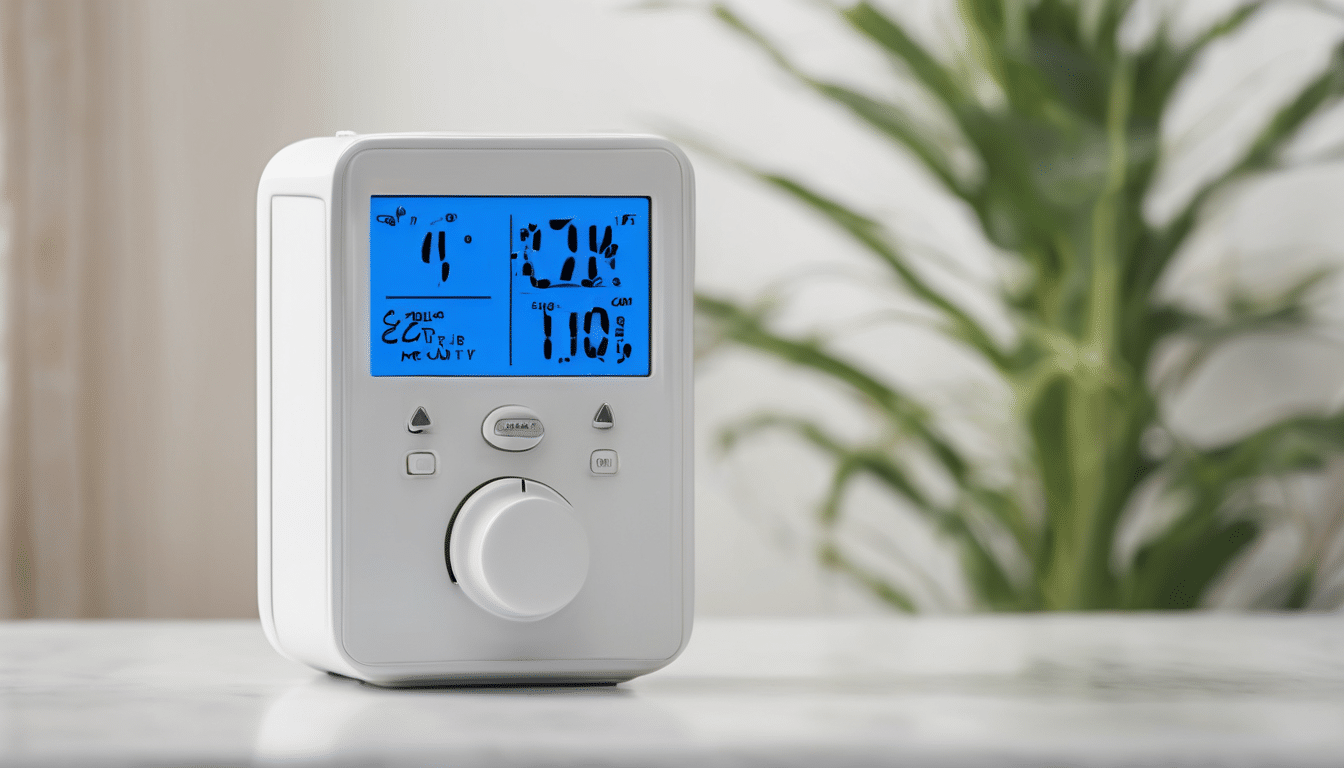
Temperature and relative humidity are fundamental measurements in any indoor air quality assessment. These parameters directly influence occupant comfort, but more importantly, they determine conditions favourable for mould growth and dust mite proliferation. Relative humidity above 60% creates an environment where mould spores can germinate and grow. In the UAE, maintaining humidity below 50% requires effective air conditioning and dehumidification, which many older systems struggle to achieve.
During indoor air quality assessment, temperature and humidity are measured throughout the building, not just in central locations. Temperature variations between different rooms reveal thermal bridging and building envelope problems. Humidity variations indicate moisture sources—areas with consistently elevated humidity despite air conditioning suggest plumbing leaks, condensation issues, or inadequate ventilation.
Carbon Monoxide (CO)
Carbon monoxide is a colourless, odourless, toxic gas produced by incomplete combustion of fossil fuels. Sources include gas appliances, car exhaust entering buildings, and combustion heating systems. During indoor air quality assessment, CO is measured in parts per million. The EPA guideline is 9 ppm as an 8-hour average. Levels exceeding this indicate dangerous exposure, particularly for infants, elderly individuals, and those with respiratory or cardiovascular conditions.
In Gulf properties, CO sources are less common than in northern climates—heating systems are minimal. However, indoor garages, proximity to busy roads, and improperly maintained gas cooking appliances can elevate CO levels, making measurement during indoor air quality assessment important.
Volatile Organic Compounds (VOCs)
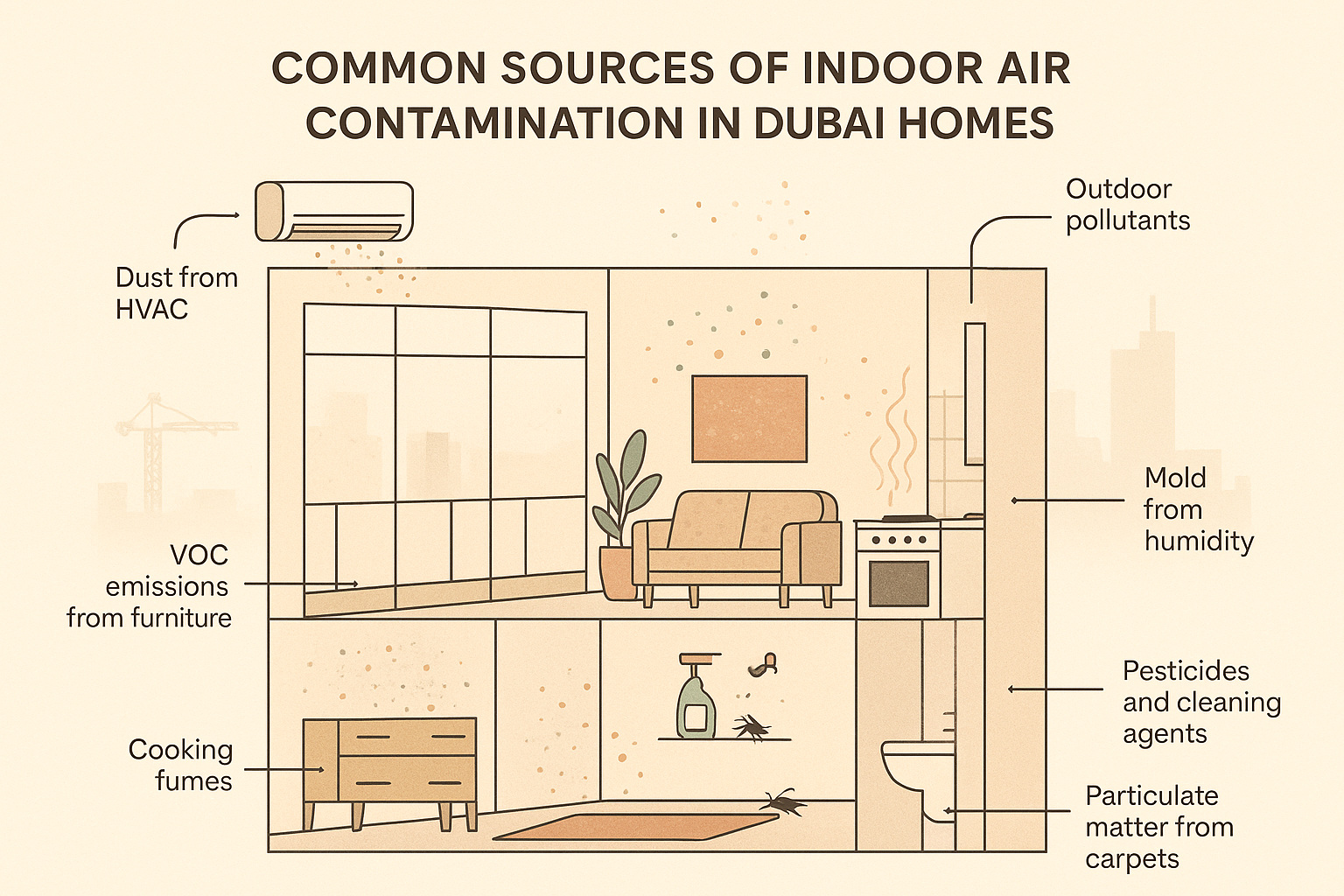
Volatile organic compounds are carbon-containing chemicals that evaporate at room temperature. Common sources include paints, adhesives, cleaning products, furnishings, and building materials. During indoor air quality assessment, total volatile organic compounds (TVOCs) are measured using photoionisation detectors. Elevated TVOC concentrations during and immediately after renovation are normal, but they should decline over weeks as materials off-gas.
Chronic TVOC exposure can cause eye irritation, headaches, and respiratory discomfort. In my indoor air quality assessment investigations, I have found that post-renovation indoor air quality problems are almost always attributable to inadequate ventilation during the off-gassing period, not the VOCs themselves.
Airborne Particulate Matter
Airborne particulate matter includes dust, pollen, pet dander, skin cells, and other microscopic particles. During indoor air quality assessment, particulates are measured by size: PM₁₀ (particles smaller than 10 micrometres) and PM₂.₅ (particles smaller than 2.5 micrometres). Finer particles penetrate deeper into the respiratory system, making PM₂.₅ particularly significant for indoor air quality assessment in health-conscious facilities.
Sources of indoor particulates include outdoor air entering through ventilation systems, occupant activities (cooking, vacuuming, walking on carpets), and building material deterioration. In Dubai’s dusty climate, outdoor air is a significant particulate source. During indoor air quality assessment, comparing indoor and outdoor PM levels reveals whether your HVAC filtration is effective.
HVAC System Evaluation in Indoor Air Quality Assessment
The heating, ventilation, and air conditioning (HVAC) system is the primary mechanism controlling indoor air quality. During indoor air quality assessment, the HVAC system receives detailed evaluation because system design, condition, and operation directly determine air quality outcomes.
System Design Assessment
Modern indoor air quality assessment requires understanding how HVAC systems are designed and configured. In the UAE, most systems are designed for cooling efficiency rather than air quality optimisation. Many sealed buildings have minimal outdoor air intake, which reduces cooling load but can allow indoor pollutants to accumulate. During indoor air quality assessment, professionals evaluate whether the system brings in adequate fresh air—typically 15–20 cubic feet per minute (cfm) per occupant for residential spaces.
System zoning is also important. Buildings with poor air distribution have areas of stagnant air where humidity rises, temperatures become uncomfortable, and contaminants accumulate. During comprehensive indoor air quality assessment, airflow patterns throughout the building are mapped to identify dead zones.
Filter Condition and Efficiency
HVAC filters are the primary defence against airborne contaminants. During indoor air quality assessment, filter condition is visually inspected. Heavily soiled filters restrict airflow, reducing system efficiency and potentially causing moisture accumulation and mould growth. Filter efficiency is rated using MERV (Minimum Efficiency Reporting Value) ratings. MERV 8 filters capture particles down to 3 micrometres with 70% efficiency, whilst MERV 13 filters capture smaller particles with greater efficiency.
For indoor air quality assessment purposes, filters should be changed every 1–3 months, depending on occupancy and outdoor air quality. In dusty Gulf climates, more frequent changes are necessary.
Ductwork Cleanliness and Integrity
Dirty ductwork compromises the results of any indoor air quality assessment. Accumulated dust, mould growth inside ducts, and debris circulate contaminants throughout the building. During professional assessment, ductwork is visually inspected using borescopes. Significant contamination reveals that duct cleaning is necessary before other improvements can be effective.
Duct integrity is equally important. Leaks in supply ducts allow unfiltered outdoor air to enter the system. Leaks in return ducts allow unconditioned air from attics and crawlespaces to enter, potentially introducing mould spores and other contaminants. During indoor air quality assessment, duct sealing is often recommended alongside filter upgrades and ventilation improvements.
Moisture, Mould and Biocontaminants in Indoor Air Quality Assessment
Moisture and biological contamination represent the most serious indoor air quality challenges in the Gulf region. Unlike temperate climates where moisture problems are seasonal, the UAE’s humid climate creates year-round mould growth risks.
Visual Mould Inspection
The first step in assessing biological contamination during an indoor air quality assessment is systematic visual inspection. Look for visible mould growth, water stains, discolouration, and areas of material deterioration. Common locations include air conditioning condensate drain pans, window sills where condensation accumulates, bathroom walls and ceilings, and areas near plumbing penetrations.
During our indoor air quality assessment investigations at Saniservice, I have discovered that the most problematic mould growth is often hidden behind finished surfaces. Visible mould indicates a problem that has progressed significantly; the real contamination may be extensive and concealed.
Moisture Mapping and Detection
Moisture meters measure moisture content within building materials during indoor air quality assessment. Elevated moisture readings (above 16% in most materials) indicate conditions favouring mould growth. Thermal imaging cameras reveal moisture patterns by identifying cold surfaces where condensation occurs. In the UAE, thermal bridges at building corners and where the concrete structure meets exterior walls consistently create condensation surfaces—a critical finding in any indoor air quality assessment.
Air Sampling for Biological Contaminants
Professional indoor air quality assessment includes air sampling for mould spores, bacteria, and other bioaerosols. Spore traps collect airborne particles on adhesive surfaces, which are then analysed under microscopes to identify species and count spore concentrations. Elevated indoor spore counts—particularly if one species dominates—indicate active mould contamination.
Culture-based sampling grows bacteria and fungi on nutrient media, revealing viable (living) organisms that pose health risks. During indoor air quality assessment, culture samples often reveal species present at very low spore concentrations but high viability—indicating recent contamination from nearby hidden growth.
Surface Sampling
Swab and tape-lift sampling of suspect surfaces is an essential component of detailed indoor air quality assessment. These methods directly identify the organisms colonising surfaces. In my experience, surface sampling during indoor air quality assessment has revealed mould growth on apparently clean surfaces—growth visible only under magnification but actively producing allergenic spores.
Testing Equipment Used in Professional Indoor Air Quality Assessment
Proper equipment is essential for accurate indoor air quality assessment. Different instruments measure different parameters, and quality results require appropriate selection and correct operation.
Handheld Metres and Sensors
Portable, battery-operated metres are the workhorses of field indoor air quality assessment. CO₂ metres use infrared sensors to measure carbon dioxide concentration in real-time. Temperature and humidity metres (hygrometers) provide simultaneous readings of both parameters. CO sensors detect carbon monoxide using electrochemical cells. These handheld devices provide immediate on-site results during indoor air quality assessment, allowing investigators to identify problem areas and decide where detailed testing is necessary.
Quality matters significantly. Professional-grade metres provide accuracy within ±50 ppm for CO₂, ±0.5°C for temperature, and ±3% for relative humidity. Consumer-grade metres may deviate considerably from actual values, producing misleading indoor air quality assessment results.
Particle Counters
Optical particle counters measure airborne particulates by size and concentration. During indoor air quality assessment, these devices provide real-time data on PM₂.₅ and PM₁₀ levels. Light-scattering technology counts individual particles and sizes them based on light-scattering characteristics. Results are displayed as particles per cubic centimetre or as mass concentration (microgrammes per cubic metre).
Real-time particle counting during indoor air quality assessment reveals how activities affect air quality. For example, vacuuming or cooking produces immediate spikes in particulate concentration, demonstrating the effectiveness of source control.
Photoionisation Detectors for VOCs
Photoionisation detectors (PIDs) measure volatile organic compounds by ionising gas molecules and measuring the resulting current. During indoor air quality assessment, PIDs provide real-time TVOC concentration in parts per million. Different PID models have different ionisation potentials, detecting different compound ranges. However, PIDs cannot identify specific chemicals—only that organic compounds are present.
For more detailed chemical identification, air samples during indoor air quality assessment are collected in canisters or on absorbent cartridges and sent to laboratories for analysis using gas chromatography-mass spectrometry (GC-MS), which identifies specific compounds.
Thermal Imaging Cameras
Infrared thermal imaging is invaluable during indoor air quality assessment because it reveals temperature patterns indicating moisture accumulation and thermal bridging. Areas where the building envelope is poorly insulated or where structural elements create thermal bridges appear cold on thermal images. These cold surfaces are where condensation forms and mould subsequently grows. During thorough indoor air quality assessment investigations, thermal imaging often reveals the source of seemingly mysterious mould problems.
Moisture Metres
Pin-type moisture metres measure moisture content within building materials up to approximately 30 mm depth. During indoor air quality assessment, these metres confirm whether materials are at risk of mould growth. Moisture content exceeding 16% in most building materials indicates conditions favouring microbial growth. Pinless (electromagnetic) metres provide non-destructive measurement, useful when you want to assess moisture without damaging finished surfaces.
Laboratory Analysis Equipment
Organisations conducting comprehensive indoor air quality assessment often maintain in-house microbiology laboratories. At Saniservice, our laboratory includes microscopes with magnification up to 1000× for mould identification, incubators for culturing samples, and equipment for mycotoxin testing. Laboratory analysis transforms field samples collected during indoor air quality assessment into actionable information about contamination type, viability, and potential health hazards.
Data Analysis and Actionable Recommendations
Data collection during indoor air quality assessment is only the beginning. The real value emerges through careful analysis and interpretation of results in context of building conditions and occupant symptoms.
Establishing Baselines and Comparisons
During indoor air quality assessment, measurements must be interpreted relative to appropriate baselines. Outdoor air quality varies by location and time of day. Indoor measurements should be compared to outdoor values to determine whether contamination is internal or external in origin. For example, if PM₂.₅ levels are elevated both indoors and outdoors, outdoor air is the source, and HVAC filtration improvements are the solution. If indoor levels exceed outdoor levels significantly, internal sources (cooking, off-gassing, mould spores) are the problem.
Similarly, CO₂ levels should be compared to occupancy patterns. Elevated CO₂ in an unoccupied room indicates poor air exchange; in a fully occupied room, it may be within acceptable limits despite inadequate ventilation for the number of people present.
Identifying Root Causes
Competent indoor air quality assessment synthesis connects measured parameters to building conditions and occupant activities. Elevated humidity in a specific room coupled with visible mould and thermal imaging showing condensation surfaces identifies thermal bridging and condensation as the root cause. The solution is neither air purification nor antimicrobial treatment—it is architectural correction (thermal breaks) combined with improved ventilation.
This distinction between symptoms and root causes is critical. In my indoor air quality assessment investigations, I have found that treating symptoms without addressing root causes inevitably fails. Mould returns, humidity rises again, and occupants remain unwell.
Health Risk Assessment
Measured parameters are evaluated against health-based standards. CO levels are compared to EPA guidelines. TVOC levels are evaluated against health advisory levels from organisations like the German Environmental Agency (typically 300–1,000 ppm for acceptable indoor air quality assessment results). Mould spore counts are interpreted relative to outdoor baseline counts—indoor levels significantly exceeding outdoor levels indicate indoor contamination requiring remediation.
However, indoor air quality assessment data must be interpreted cautiously regarding health effects. Occupants with mould sensitivity may experience symptoms at spore concentrations others tolerate. Asthma, allergies, and respiratory conditions increase sensitivity to all indoor contaminants. Effective indoor air quality assessment recommendations account for occupant health status, not just measured concentrations.
Prioritisation of Interventions
After comprehensive indoor air quality assessment, numerous potential improvements often emerge. Effective remediation requires prioritisation. Addressing root causes (e.g., fixing moisture problems, improving ventilation) takes priority over symptom treatment (air purification, antimicrobial spraying). Quick wins (filter upgrades, duct cleaning) should be implemented immediately; structural improvements (thermal bridge elimination, ventilation system modifications) require planning and investment.
UAE Climate Considerations for Indoor Air Quality Assessment
The UAE’s unique climate creates specific indoor air quality challenges that any assessment must address. Generalised approaches developed for temperate climates often fail in Gulf conditions.
Humidity Management in Sealed Buildings
The combination of extreme outdoor heat (frequently exceeding 45°C in summer) and high humidity (often 70–90%) forces buildings to be sealed tightly for air conditioning efficiency. This sealing minimises outdoor air infiltration, which reduces cooling load but allows indoor humidity and pollutants to accumulate if mechanical ventilation is inadequate.
During indoor air quality assessment in UAE properties, elevated humidity is nearly universal. The challenge is maintaining humidity below 50% (where mould cannot grow) whilst providing adequate fresh air without excessive cooling load. This balance requires properly designed HVAC systems with dehumidification capability and adequate outdoor air intake.
Dust and Particulate Contamination
Saharan and Arabian dust events increase outdoor particulate matter to hazardous levels multiple times annually. During indoor air quality assessment, these dust events create measurement challenges. Indoor PM levels spike when dust storms occur, regardless of building quality. Assessment should account for seasonal patterns and avoid interpreting short-term spikes as chronic problems requiring filtration upgrades.
However, dust also indicates HVAC filtration effectiveness. Buildings with proper filtration show minimal indoor particulate increase during dust events, whilst buildings with poor filters show dramatic indoor-outdoor differences during storms. This differential response during indoor air quality assessment reveals filter effectiveness.
Thermal Bridging in Concrete Construction
Gulf buildings typically use reinforced concrete construction, which creates significant thermal bridges. Concrete’s high thermal conductivity means that structural elements conduct exterior heat directly indoors, creating interior surfaces that become cold (in air-conditioned spaces) where condensation forms. During indoor air quality assessment using thermal imaging, these thermal bridge locations consistently reveal condensation risk and mould growth.
This is why my approach to indoor air quality assessment in the UAE combines architecture and microbiology. Understanding concrete construction and thermal dynamics is essential to solving air quality problems in Gulf buildings.
Water Quality and Storage Issues
The UAE relies on desalinated water, which is stored in large tanks before distribution. During indoor air quality assessment for residential properties, water storage tank condition is often overlooked despite its importance. Contaminated water tanks introduce bioaerosols (aerosolised bacteria) when water is used, affecting indoor air quality. Assessment should include water system evaluation alongside air quality measurement.
Implementing Improvements Based on Assessment Results
Indoor air quality assessment is only valuable if results lead to effective improvements. Implementation depends on the specific findings and building characteristics.
HVAC System Improvements
If indoor air quality assessment reveals inadequate ventilation, HVAC modifications are the priority. This may include installing fresh air intake dampers (if the system lacks them), upgrading filters to higher MERV ratings, installing ventilation fans in specific areas, or completely replacing undersized systems. In the UAE, these improvements must balance air quality benefits against increased cooling load and operating costs.
Energy recovery ventilators (ERVs) represent an effective solution in Gulf climates. ERVs exchange heat and moisture between exhaust and intake air, allowing fresh air intake without excessive cooling load increase. Implementation following indoor air quality assessment significantly improves both air quality and energy efficiency.
Moisture and Mould Remediation
If indoor air quality assessment reveals mould or elevated moisture, addressing root causes is essential. This may involve repairing leaking plumbing, installing thermal breaks to eliminate condensation surfaces, improving ventilation in moisture-prone areas (kitchens, bathrooms), or waterproofing exterior walls. Mould remediation alone, without addressing the moisture source identified during indoor air quality assessment, inevitably fails.
Source Removal and Substitution
If indoor air quality assessment identifies specific contamination sources—off-gassing materials, poorly maintained equipment, or pest infestations—removing or replacing these sources is the most effective solution. New paints and furnishings off-gassing VOCs can be replaced with lower-emitting alternatives. Gas appliances producing CO or combustion byproducts can be serviced or replaced. Pest infestations can be eliminated through professional treatment.
Behaviour Modification
Indoor air quality assessment often reveals that occupant activities significantly affect air quality. Cooking without range hood ventilation, inadequate bathroom ventilation during showers, and moisture-producing activities without appropriate ventilation all contribute to indoor air quality problems. Educating occupants about proper HVAC operation and ventilation practices supports improvements identified during assessment.
Monitoring and Verification
After implementing improvements based on indoor air quality assessment recommendations, follow-up testing verifies effectiveness. Post-remediation indoor air quality assessment confirms that measured parameters have improved and that health symptoms have resolved. This verification step ensures accountability and provides documentation that improvements were successful.
In my experience, organisations that implement indoor air quality assessment results and conduct follow-up verification consistently achieve the greatest health and satisfaction improvements. Those that address only the most obvious findings without systematic follow-up typically experience recurring problems.
Key Takeaways from Indoor Air Quality Assessment
Effective indoor air quality assessment requires a systematic approach combining multiple measurement techniques, building science knowledge, and health expertise. The process begins with careful planning and background information gathering, continues through comprehensive measurement of key parameters, and concludes with root cause identification and targeted remediation recommendations.
In the UAE climate, assessment must account for specific challenges: sealed buildings prone to humidity accumulation, thermal bridging in concrete construction, desert dust infiltration, and water system contamination risks. Professional assessment typically requires one full day for residential properties, with additional time for laboratory analysis of samples.
The most important principle in indoor air quality assessment is distinguishing symptoms from root causes. A building with elevated humidity and mould growth may need antimicrobial treatment, but it definitely needs moisture control. A building with poor ventilation and occupant symptoms may benefit from air purification, but it absolutely needs improved fresh air intake. Assessment that identifies and addresses root causes produces lasting improvements; assessment that focuses only on symptoms produces temporary relief.
Whether you are a homeowner concerned about your family’s health, a facility manager responsible for employee wellbeing, or a property owner evaluating an investment property, professional indoor air quality assessment provides the scientific foundation for informed decisions. In a region where indoor environments are artificially controlled and health hazards are often invisible, assessment transforms guesswork into evidence-based action.

JV de Castro, IAC2
JV de Castro is the Chief Technology Officer at Saniservice, where he leads innovation in indoor environmental sciences, IT infrastructure, and digital transformation. With over 20 years of experience spanning architecture, building science, technology management, digital media architecture, and consultancy, he has helped organizations optimize operations through smart solutions and forward-thinking strategies. JV holds a Degree in Architecture, a Masters of Research in Anthropology, an MBA in Digital Communication & Media, along with certifications in mold, building sciences and advanced networking. Passionate about combining technology, health, and sustainability, he continues to drive initiatives that bridge science, IT, and business impact.


Leave a Reply