


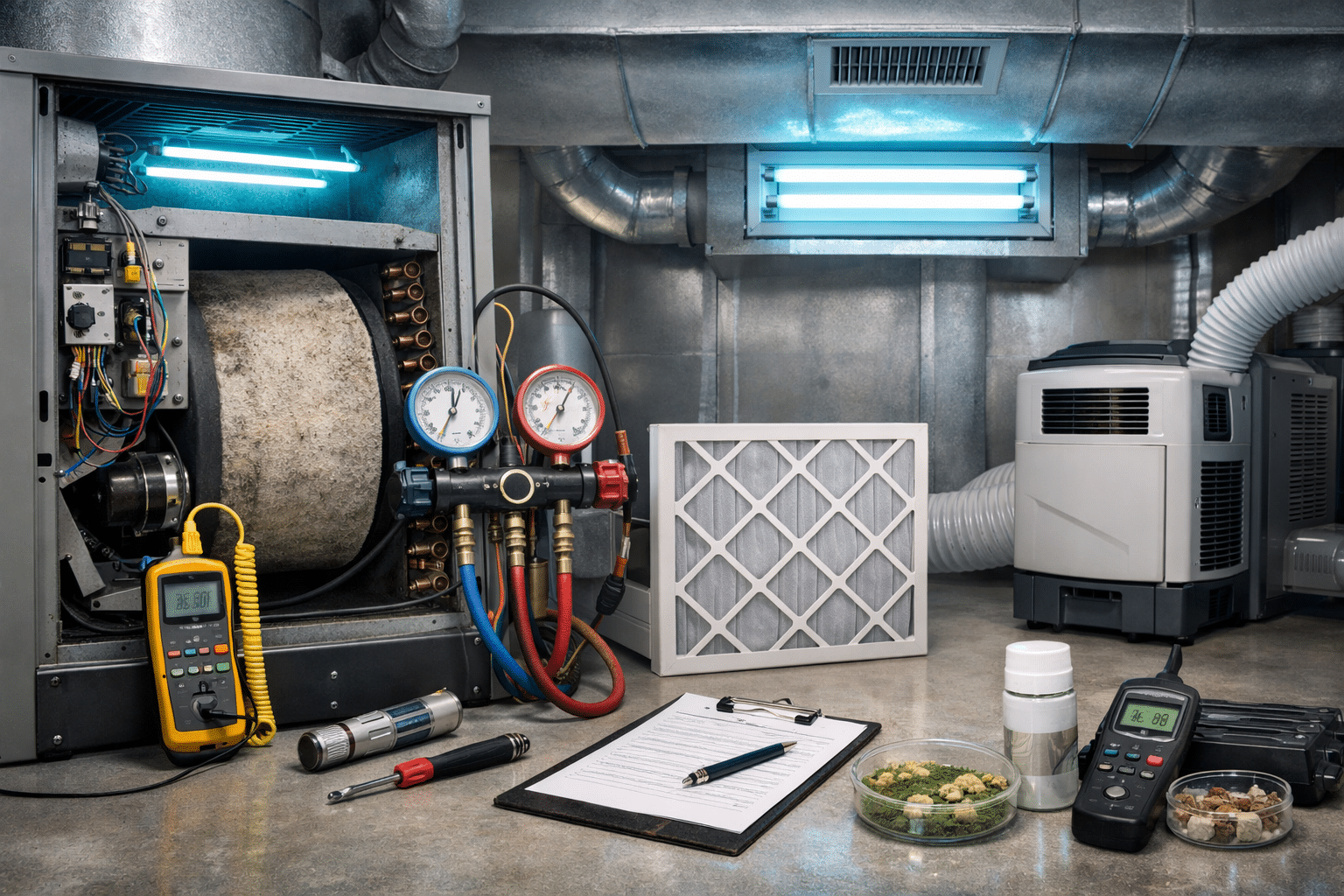
Managing Mycotoxin Risk Through HVAC Maintenance
Introduction
Managing mycotoxin risk through HVAC maintenance is critical for maintaining healthy indoor environments. Mycotoxins are toxic metabolites produced by certain fungi, and they can pose serious health risks when present in buildings. This article delves into the importance of HVAC systems in managing these risks and offers practical tips to ensure effective management.
Understanding Managing Mycotoxin Risk Through HVAC Maintenance
Managing mycotoxin risk through HVAC maintenance involves a comprehensive approach to addressing the sources and spread of these harmful substances in indoor environments. HVAC systems play a critical role in air circulation, temperature control, and humidity management—all factors that can influence the growth of mold and the subsequent production of mycotoxins.
Managing Mycotoxin Risk Through HVAC Maintenance – How Mycotoxins Spread Through Air in Homes
Mycotoxins spread through the air via spores, which can be released into the indoor environment when mold colonies grow and deteriorate. These airborne particles can then be inhaled by occupants, leading to a range of health issues such as respiratory problems, allergic reactions, and even more severe conditions like immunosuppression or neurological damage.
Sources of Mycotoxin Spores
- Wet or damp areas in buildings, especially if they have been affected by water damage
- Natural ventilation and air movement that can disperse mold spores throughout the indoor environment
- Poorly maintained HVAC systems that fail to filter out airborne contaminants effectively
Managing Mycotoxin Risk Through HVAC Maintenance – Top Sources of Mycotoxin Contamination in Indoor Air
The sources of mycotoxin contamination can vary widely, but some common culprits include:
- Walls and ceilings affected by water damage or leaks
- Floors with dampness issues, especially if they are made from porous materials like concrete or wood
- Roofs that have not been properly sealed, allowing rainwater to seep in
- Insulation materials that can retain moisture and provide a substrate for mold growth
Why Airborne Sampling is Crucial for Accurate Testing
Airborne sampling provides a more accurate representation of the mycotoxin levels present in an indoor environment. Unlike surface sampling, which only captures spores that have settled on surfaces, airborne sampling can detect active mold spores and other airborne contaminants.
Airborne Sampling Methods
- Spore traps: These devices capture airborne spores for subsequent analysis in a laboratory setting.
- Air collection samplers: Designed to collect air samples over extended periods, providing a more comprehensive picture of mycotoxin presence.
- Aerobiology kits: Used to assess the concentration and types of mold spores present in the indoor environment.
Comparison of HVAC Maintenance Options
To effectively manage mycotoxins through HVAC maintenance, it is essential to consider different strategies and their respective advantages and disadvantages. Below is a comparison of three common options:
- Option 1: Frequent Filter Replacement
- Option 2: Regular System Inspections
- Option 3: Installation of Air Cleaning Devices
Option 1: Frequent Filter Replacement
Regularly replacing HVAC filters is a straightforward method to reduce the presence of mycotoxins in indoor environments. Filters trap airborne particles, including mold spores, before they can circulate through the air.
Pros:
- Easy to implement and monitor
- Cost-effective compared to other maintenance strategies
Cons:
- May not address deeper issues like mold growth in HVAC systems
- Requires regular scheduling and adherence by building management or occupants
Option 2: Regular System Inspections
Regular inspections of the HVAC system can identify potential issues such as mold growth, water damage, or improper ventilation. These inspections should be conducted by certified professionals who can assess the overall health and functionality of the system. This relates directly to Managing Mycotoxin Risk Through Hvac Maintenance.
Pros:
- Catch and address underlying causes of mycotoxin production
- Ensure that all components of the HVAC system are functioning properly
Cons:
- Costlier than simple filter replacement
- Necessitates regular professional intervention and documentation
Option 3: Installation of Air Cleaning Devices
The installation of air cleaning devices such as ultraviolet germicidal irradiation (UVGI) systems, electrostatic precipitators, and high-efficiency particulate air (HEPA) filters can significantly reduce the presence of mycotoxins in indoor environments.
Pros:
- Multifunctional approach that addresses both filtration and disinfection
- Long-term solution for maintaining clean air quality
Cons:
- High initial installation costs compared to other options
- Necessitates ongoing maintenance and energy consumption
Expert Tips for Managing Mycotoxins Through HVAC Maintenance
- Regularly inspect and clean HVAC systems to prevent mold growth.
- Replace filters according to manufacturer’s recommendations or more frequently if conditions are poor.
- Ensure proper ventilation to reduce humidity levels that promote mold growth.
- Install air cleaning devices like HEPA filters for additional protection against mycotoxins.
- Conduct airborne sampling periodically to monitor mycotoxin levels and adjust maintenance practices as needed.
FAQ Section
-
Q: How often should HVAC filters be replaced?
- A: Filters should typically be replaced every one to three months, depending on the manufacturer’s recommendations and local conditions. More frequent replacement may be necessary in environments with high humidity or poor air quality.
Q: What are the signs that my HVAC system needs a thorough inspection?
A: Signs include unusual noises during operation, reduced airflow, musty odors, visible mold growth, and water damage. Regular inspections can help catch these issues early.
Q: Can I manage mycotoxin risk without professional assistance?
A: While some basic practices like regular filter replacement can be done by occupants, more complex issues such as hidden mold growth or system malfunctions may require the expertise of certified professionals. Professional assessments and inspections are recommended for comprehensive management.
Conclusion
Managing mycotoxin risk through HVAC maintenance is a multifaceted task that requires a combination of regular inspection, proper filtration, and air cleaning strategies. By implementing these practices, building owners and managers can create healthier indoor environments for their occupants. Regular airborne sampling and professional assessments are essential to ensure effective management and maintain the highest standards of indoor air quality.

JV de Castro, IAC2
JV de Castro is the Chief Technology Officer at Saniservice, where he leads innovation in indoor environmental sciences, IT infrastructure, and digital transformation. With over 20 years of experience spanning architecture, building science, technology management, digital media architecture, and consultancy, he has helped organizations optimize operations through smart solutions and forward-thinking strategies. JV holds a Degree in Architecture, a Masters of Research in Anthropology, an MBA in Digital Communication & Media, along with certifications in mold, building sciences and advanced networking. Passionate about combining technology, health, and sustainability, he continues to drive initiatives that bridge science, IT, and business impact.




Leave a Reply