


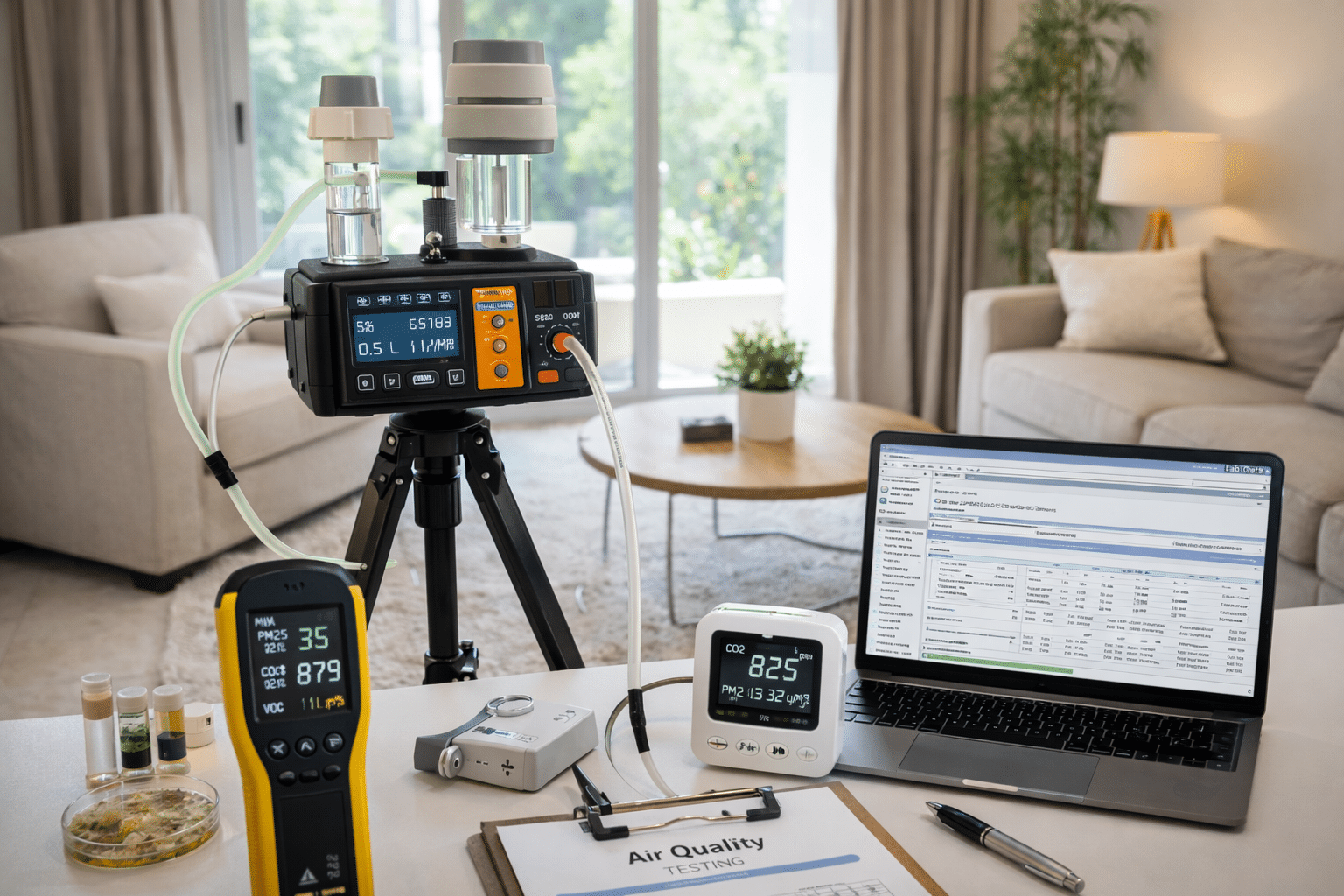
Indoor Air Quality Testing Protocols For Residential
EXCERPT: Indoor air quality testing protocols for residential properties are vital in Dubai’s challenging climate. From particulate matter to mold spores, understanding effective testing protocols for residential homes ensures healthy living environments. This complete guide reveals 9 essential indoor air quality testing protocols for residential properties in Dubai and the UAE.
Table of Contents
- Understanding Testing Protocols for Residential Homes
- Common IAQ Testing Methods
- Advantages and Disadvantages of Different Methods
- Best Practices for Testing Protocols for Residential Settings
- Expert Tips for Improving Indoor Air Quality
- Frequently Asked Questions
- Conclusion on Residential Testing
Understanding Testing Protocols for Residential Homes
Indoor air quality (IAQ) refers to the condition of air within and around buildings, especially as it relates to health and comfort of occupants. IAQ can be compromised by contaminants such as particulate matter, volatile organic compounds (VOCs), mold spores, bacteria, and allergens. Testing protocols for residential environments are essential tools for identifying these pollutants and ensuring Dubai homes remain healthy.
Common IAQ Testing Methods
Several methods can be employed for testing protocols for residential settings in Dubai. Each method has unique advantages and limitations, making it essential to choose the most appropriate one based on specific needs.
Particulate Matter Testing
Description: Particulate matter (PM) refers to tiny particles suspended in air. These can include dust, pollen, pet dander, and mold spores. Testing protocols for residential homes must include PM testing as it can have significant health impacts in Dubai.
Tools Used: Air samplers like spore traps or particulate counters.
Advantages: Provides detailed information on presence of various particles, allowing for targeted remediation efforts.
Disadvantages: Can be expensive and requires professional interpretation to understand results accurately.
Volatile Organic Compound Testing
Description: VOCs are gases released from products such as paints, cleaning supplies, glues, and materials used in homes. High levels of VOCs can cause respiratory issues in Dubai properties.
Tools Used: Air quality monitors or gas chromatography-mass spectrometry (GC-MS).
Advantages: Identifies specific sources of contamination, enabling precise mitigation strategies as part of testing protocols for residential homes.
Disadvantages: Can be costly and requires specialized knowledge to interpret results accurately.
Mold Testing
Description: Mold growth can occur due to excess moisture in Dubai homes. It poses significant health risks, including respiratory issues and allergic reactions.
Tools Used: Air sampling using spore traps or tape lifts, surface samples for microscopic analysis.
Advantages: Identifies mold species present and their potential impact on occupants’ health through testing protocols for residential properties.
Disadvantages: Can be time-consuming and requires professional training to ensure accurate identification of species.
Carbon Dioxide Testing
Description: CO2 levels can indicate poor ventilation in Dubai homes. High concentrations can lead to headaches, fatigue, and other health issues.
Tools Used: Carbon dioxide sensors or monitors.
Advantages: Simple and cost-effective method for assessing air quality as part of testing protocols for residential settings, providing real-time data on ventilation effectiveness.
Disadvantages: Does not identify specific contaminants but indicates overall air quality issues related to poor ventilation.
Humidity and Temperature Testing
Description: Excessive humidity can lead to mold growth in Dubai, while extreme temperatures can affect comfort and health. Monitoring these factors helps maintain healthy indoor environments.
Tools Used: Hygrometers or thermometers.
Advantages: Easy to implement with minimal cost as part of testing protocols for residential homes, provides immediate feedback on environmental conditions.
Disadvantages: Does not detect specific pollutants but is crucial for overall IAQ management in Dubai.
Advantages and Disadvantages of Different Methods
| Testing Method | Advantages | Disadvantages |
|---|---|---|
| Particulate Matter Testing | Identifies wide range of particles, supports targeted remediation in Dubai homes | Expensive, requires professional interpretation |
| VOC Testing | Specific identification of contaminants, enables precise mitigation | Costly, specialized knowledge required |
| Mold Testing | Precise identification of mold species and health risks | Time-consuming, requires professional training |
| CO2 Testing | Simple and cost-effective for assessing ventilation | No detection of specific pollutants |
| Humidity & Temperature | Easy to implement, immediate feedback | Does not detect specific pollutants |
Best Practices for Testing Protocols for Residential Settings
To ensure accurate and effective testing protocols for residential homes in Dubai, follow these best practices:
- Engage Professional Services: Consider hiring certified professionals to conduct tests using advanced equipment in Dubai properties.
- Regular Monitoring: Schedule regular tests, especially after renovations or during Dubai’s extreme weather conditions.
- Comprehensive Testing: Test for multiple parameters including particulate matter, VOCs, mold spores, CO2 levels, and humidity.
- Compare Results: Compare results from different tests to identify trends and potential issues in Dubai homes.
- Incorporate Remediation Strategies: Develop a plan based on test findings to address identified problems promptly.
Expert Tips for Improving Indoor Air Quality
Here are expert tips to improve indoor air quality using testing protocols for residential properties in Dubai:
- Regular Cleaning and Maintenance: Dust, vacuum, and clean regularly to reduce allergens and pollutants in Dubai homes.
- Proper Ventilation: Ensure adequate ventilation by opening windows or using exhaust fans, especially in bathrooms and kitchens.
- Use Low-VOC Products: Choose building materials and household products with low volatile organic compound content.
- Install Air Purifiers: Use HEPA filters or ionizers to remove airborne particles, including mold spores and allergens.
- Manage Humidity Levels: Use dehumidifiers or humidifiers to maintain optimal humidity levels (30-50%) in Dubai’s climate.
- Monitor for Radon: Test your Dubai home for radon, a radioactive gas that can pose significant health risks.
- Regularly Check HVAC Systems: Ensure proper functioning of heating, ventilation, and air conditioning systems.
Frequently Asked Questions
Q: How often should I use testing protocols for residential homes in Dubai?
A: It is recommended to conduct tests at least twice a year, especially after significant renovations or during Dubai’s extreme weather conditions.
Q: What are signs of poor indoor air quality in Dubai residential homes?
A: Common signs include frequent headaches, eye irritation, respiratory issues, and allergic reactions. Persistent mold growth is also a red flag in Dubai properties.
Q: Can I do testing protocols for residential homes myself or should I hire professionals?
A: While DIY kits are available, professional services can provide more accurate results and offer comprehensive analysis and remediation strategies for Dubai homes.
Conclusion on Residential Testing
Indoor air quality testing protocols for residential properties are critical for maintaining health in Dubai homes. By understanding different testing methods and their advantages and disadvantages, Dubai homeowners can make informed decisions about improving IAQ. Regular testing, coupled with proactive measures to maintain healthy indoor environments, ensures families enjoy cleaner, safer living spaces in the UAE.

JV de Castro, IAC2
JV de Castro is the Chief Technology Officer at Saniservice, where he leads innovation in indoor environmental sciences, IT infrastructure, and digital transformation. With over 20 years of experience spanning architecture, building science, technology management, digital media architecture, and consultancy, he has helped organizations optimize operations through smart solutions and forward-thinking strategies. JV holds a Degree in Architecture, a Masters of Research in Anthropology, an MBA in Digital Communication & Media, along with certifications in mold, building sciences and advanced networking. Passionate about combining technology, health, and sustainability, he continues to drive initiatives that bridge science, IT, and business impact.



Leave a Reply