Check Air Quality At Home In Dubai: Complete Guide
Living in Dubai presents unique challenges when it comes to indoor air quality. The combination of extreme heat, constant air conditioning usage, and rapid construction practices creates specific environmental conditions that can affect your home’s air quality. Many residents experience unexplained allergies, respiratory issues, or persistent odours without understanding the root cause. Learning How to Check air quality at home in Dubai is essential for maintaining a healthy living environment for you and your family.
Based on my twelve years of experience with Saniservice’s Indoor Sciences division, I’ve developed comprehensive protocols for assessing residential air quality across Dubai’s diverse housing landscape. From luxury villas in Emirates Hills to modern apartments in Downtown Dubai, each property presents unique air quality challenges that require specific assessment approaches. This guide will walk you through both professional methods and practical DIY approaches for how to check air quality at home in Dubai effectively.
The process of how to check air quality at home in Dubai involves understanding the specific pollutants common in UAE homes, recognizing the signs of poor air quality, and implementing appropriate testing methodologies. Whether you’re dealing with mould growth from humidity issues, VOC off-gassing from new furnishings, or particulate matter from construction dust, this guide provides the knowledge you need to assess and address your home’s air quality concerns.
Check Air Quality At Home In Dubai – Understanding Air Quality Challenges in Dubai Homes
Dubai’s climate and building practices create unique air quality challenges that differ significantly from other regions. The extreme heat necessitates near-constant air conditioning operation for most of the year, which can lead to humidity control issues if systems aren’t properly maintained. Many older villas and apartments were constructed during rapid development phases where ventilation considerations sometimes took second place to rapid completion.
The process of how to check air quality at home in Dubai must account for these regional specificities. Construction materials commonly used in UAE buildings, including certain types of drywall, insulation, and finishing products, can off-gas volatile organic compounds (VOCs) for months after installation. The sealed nature of Dubai homes, designed to keep out heat and sand, can trap these pollutants inside, creating concentrated indoor air quality issues that require specific assessment approaches.
Water quality issues also impact air quality in Dubai homes. Many properties rely on storage tanks that can develop biofilm growth, which then circulates through HVAC systems and affects indoor air. The desert environment brings fine particulate matter into homes, while the coastal areas experience higher humidity levels that can promote mould growth. Understanding these regional factors is crucial when learning how to check air quality at home in Dubai effectively.
Check Air Quality At Home In Dubai – Recognizing Signs of Poor Air Quality in Your Home
Before delving into technical methods of how to check air quality at home in Dubai, it’s important to recognize the physical signs that indicate potential problems. Many residents dismiss early warning signs as minor irritations rather than indicators of underlying air quality issues. Common symptoms include persistent allergy-like reactions such as sneezing, coughing, or itchy eyes that improve when leaving the home and worsen upon return.
Physical symptoms often provide the first clues about how to check air quality at home in Dubai effectively. Headaches that develop after spending time in certain rooms, fatigue that isn’t explained by other factors, or respiratory issues that seem to correlate with being indoors can all indicate air quality problems. Musty or stale odours, particularly in areas like bathrooms, kitchens, or near HVAC vents, often signal microbial growth or ventilation issues that require professional assessment.
Visual indicators also play a crucial role in understanding how to check air quality at home in Dubai. Visible mould growth, excessive dust accumulation on surfaces shortly after cleaning, or condensation on windows and cold surfaces can all point to air quality issues. HVAC systems that show black dust around vents or produce musty smells when operating often indicate contamination within the ductwork that requires professional cleaning and assessment.
Check Air Quality At Home In Dubai – DIY Air Quality Assessment Methods for Dubai Residents
For residents beginning to learn how to check air quality at home in Dubai, several DIY methods can provide initial insights before committing to professional assessment. Simple observational techniques include the white tissue test—wiping surfaces with a white tissue to check for unusual dust colours that might indicate mould spores or other contaminants. The smell test in different rooms at different times of day can help identify patterns in odour development.
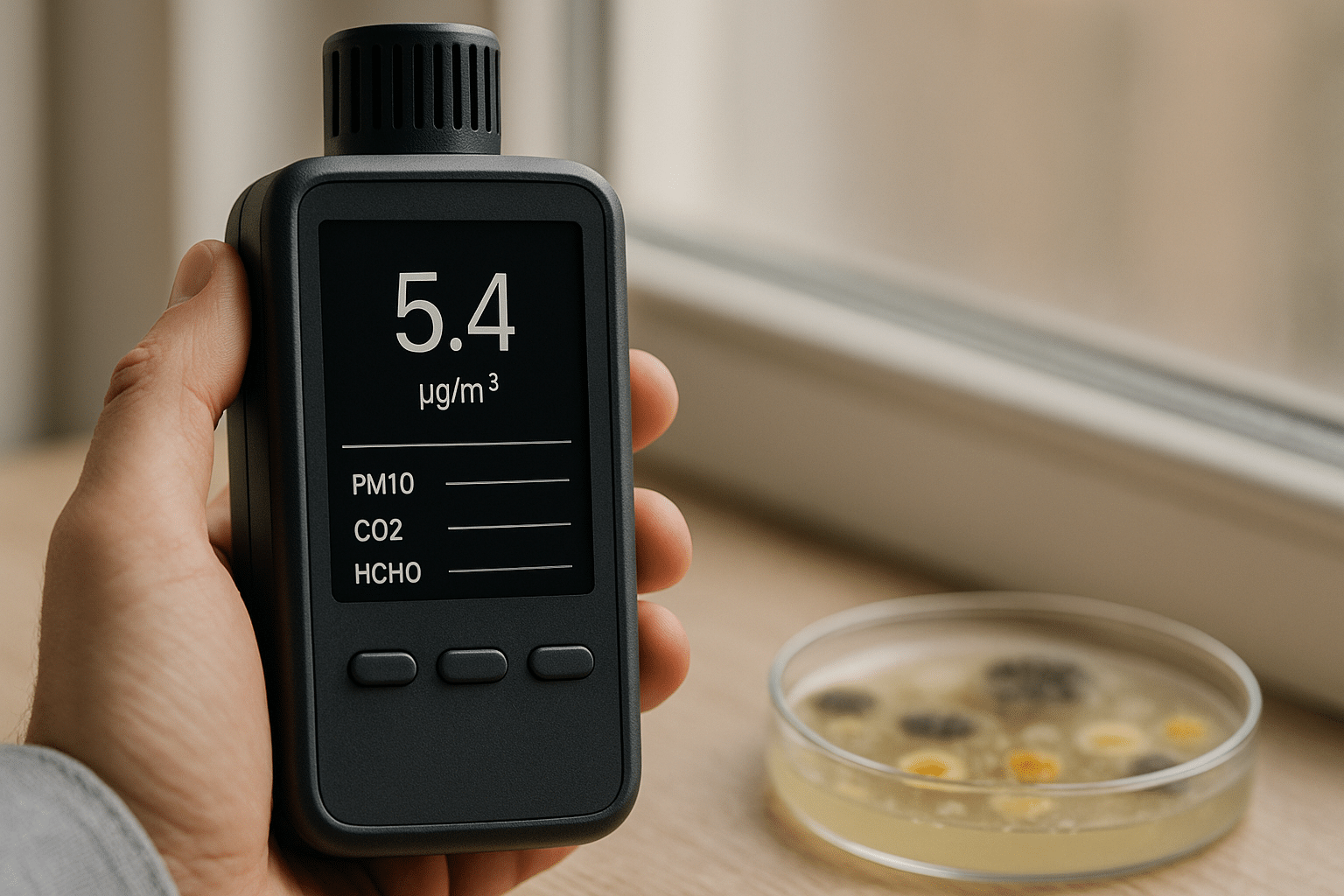
Affordable consumer devices now available on the UAE market can assist with how to check air quality at home in Dubai. Basic particle counters can measure PM2.5 and PM10 levels, while simple VOC sensors can detect elevated chemical levels. Humidity monitors costing around AED 200-500 can help identify areas with elevated moisture levels that might promote mould growth. These devices provide valuable baseline data but should be complemented with professional assessment for complete accuracy.
When considering how to check air quality at home in Dubai using DIY methods, it’s important to understand their limitations. Consumer-grade devices typically lack the calibration and precision of professional equipment, and they may not detect all pollutant types. They can, however, help identify patterns and problem areas that warrant further investigation. Keeping a log of measurements taken at different times and under different conditions (windows open/closed, HVAC on/off) provides valuable data for professional assessors.
Professional Air Quality Assessment Process in Dubai
Professional assessment represents the most comprehensive approach to how to check air quality at home in Dubai. At Saniservice’s Indoor Sciences division, our assessment process begins with a detailed interview to understand the property’s history, occupant concerns, and any recent renovations or water events. We then conduct a visual inspection of the entire property, looking for signs of moisture intrusion, mould growth, and ventilation issues.
The technical component of how to check air quality at home in Dubai involves sophisticated equipment that goes beyond consumer-grade devices. We use laser particle counters to measure particulate matter concentrations, photoionization detectors for VOC assessment, and moisture meters to identify hidden dampness. Thermal imaging cameras help detect thermal bridges and condensation risks that aren’t visible to the naked eye, while air sampling pumps collect samples for laboratory analysis.
Our comprehensive approach to how to check air quality at home in Dubai includes both air and surface sampling. Air samples are analyzed for mould spore types and concentrations, while surface samples can identify specific mould species and bacterial contamination. We assess ventilation effectiveness through carbon dioxide measurements and air exchange rate calculations. The entire process typically takes 2-4 hours for an average Dubai villa and provides a complete picture of the indoor environment’s health.
Common Air Pollutants Found in Dubai Homes
Understanding what to look for is crucial when learning how to check air quality at home in Dubai. The most common pollutants we encounter in UAE properties include mould spores, which thrive in the humidity created by air conditioning systems and plumbing leaks. Different mould species have different health implications, and identification is essential for effective remediation.
Volatile organic compounds represent another significant category when considering how to check air quality at home in Dubai. These chemicals off-gas from building materials, furnishings, cleaning products, and even air fresheners. Formaldehyde from pressed wood products, benzene from paints, and toluene from adhesives are common VOCs found in Dubai homes. Professional assessment can identify specific compounds and their concentration levels.
Particulate matter from desert dust, construction activities, and vehicle emissions frequently affects how to check air quality at home in Dubai. These fine particles can penetrate deep into lungs and cause respiratory issues. Biological contaminants including dust mites, pet dander, and bacteria from water systems complete the picture of common pollutants. Understanding these categories helps focus assessment efforts on the most likely issues affecting your specific property.
Interpreting Air Quality Test Results
Knowing how to check air quality at home in Dubai is only half the battle—understanding the results is equally important. Professional assessment reports typically include numerical data compared to established guidelines from organizations like WHO, EPA, or ASHRAE. For mould spores, we compare indoor levels to outdoor baseline measurements and consider the types of spores present.
When interpreting results from how to check air quality at home in Dubai, context matters greatly. Slightly elevated VOC levels in a newly renovated property might be expected and temporary, while the same levels in an older property could indicate ongoing emission sources. Particle count elevations during sandstorm events differ from consistently high levels that might indicate indoor generation sources. Professional assessors consider all these factors when making recommendations.
The most valuable aspect of professional assessment for how to check air quality at home in Dubai is the root cause analysis. Rather than just identifying pollutants, we determine why they’re present and how to prevent recurrence. This might involve identifying HVAC issues causing humidity problems, pinpointing building defects allowing moisture intrusion, or recommending changes to cleaning products contributing to VOC levels. The goal is sustainable improvement, not temporary fixes.
Improving Your Home’s Air Quality in Dubai
After completing assessment and understanding how to check air quality at home in Dubai, the next step is implementation of improvement strategies. Source control represents the most effective approach—removing or reducing emission sources rather than trying to clean already contaminated air. This might involve replacing VOC-emitting furnishings, repairing water leaks, or improving ventilation in moisture-prone areas.
Ventilation enhancement plays a crucial role in strategies for how to check air quality at home in Dubai and maintain healthy conditions. While opening windows might seem counterintuitive in Dubai’s climate, strategic ventilation during cooler periods can significantly improve air quality. Mechanical ventilation systems with heat recovery can provide fresh air without compromising cooling efficiency. Kitchen and bathroom exhaust fans should be used consistently to remove moisture and pollutants at source.
Air cleaning technologies complete the picture of how to check air quality at home in Dubai and maintain improvements. HEPA filters effectively remove particulate matter, while activated carbon filters address VOC concerns. UV-C light systems can control microbial growth in HVAC systems. The specific combination of technologies should be tailored to the pollutants identified during assessment, ensuring targeted and effective air quality management.
Expert Tips for Maintaining Healthy Indoor Air
Based on my experience with hundreds of air quality assessments across Dubai, I’ve developed specific tips for maintaining healthy indoor environments. First, maintain your HVAC system with regular professional cleaning and filter replacement—this single action addresses multiple air quality concerns. Second, control humidity levels between 40-60% using dehumidifiers if necessary, as moisture control prevents many biological issues.
Choose low-VOC products when renovating or furnishing your home, and allow proper off-gassing time before occupancy. Implement a no-shoes policy to reduce tracking in outdoor pollutants. Use exhaust fans in kitchens and bathrooms consistently, and ensure they vent to the outside rather than recirculating air. These practical measures complement the technical knowledge of how to check air quality at home in Dubai with daily maintenance practices.
Regular monitoring provides the foundation for understanding how to check air quality at home in Dubai over time. Simple humidity meters in problem areas, periodic visual inspections for mould growth, and attention to changes in occupant health can alert you to developing issues before they become serious problems. Consider professional reassessment every 2-3 years, or after significant renovations or water events, to ensure your air quality management remains effective.
Frequently Asked Questions
How often should I check air quality in my Dubai home?
For most Dubai homes, we recommend professional air quality assessment every 2-3 years, or after any significant event like renovations, water damage, or changes in occupant health. Regular DIY monitoring with simple devices can be done monthly to track basic parameters like humidity and particulate levels.
What’s the cost of professional air quality testing in Dubai?
Professional air quality assessment in Dubai typically ranges from AED 1,500 to AED 4,000 depending on property size, testing scope, and laboratory analysis requirements. Comprehensive assessments including mould, VOC, and particulate testing for a villa usually cost around AED 2,500-3,500.
Can air quality problems in Dubai homes cause health issues?
Yes, poor indoor air quality can contribute to various health issues including allergies, asthma exacerbation, respiratory infections, headaches, and fatigue. Certain mould species and chemical exposures have been linked to more serious health concerns, making regular assessment important for vulnerable individuals.
How long does air quality testing take in Dubai homes?
Most comprehensive air quality assessments take 2-4 hours on-site for an average Dubai villa or apartment. Laboratory analysis typically adds 3-5 working days before final results are available. Emergency assessments for immediate health concerns can sometimes be arranged within 24-48 hours.
Learning how to check air quality at home in Dubai is an essential skill for residents concerned about their family’s health and wellbeing. The unique environmental conditions in the UAE create specific air quality challenges that require tailored assessment approaches. By combining DIY monitoring with professional assessment when needed, Dubai residents can maintain healthy indoor environments that support rather than compromise their health.
The process of how to check air quality at home in Dubai involves understanding regional specificities, recognizing warning signs, implementing appropriate assessment methods, and taking targeted action based on results. Whether you choose DIY approaches or professional assessment, the goal remains the same: creating indoor environments where you and your family can breathe easily and live healthily amidst Dubai’s unique environmental conditions.

JV de Castro, IAC2
JV de Castro is the Chief Technology Officer at Saniservice, where he leads innovation in indoor environmental sciences, IT infrastructure, and digital transformation. With over 20 years of experience spanning architecture, building science, technology management, digital media architecture, and consultancy, he has helped organizations optimize operations through smart solutions and forward-thinking strategies. JV holds a Degree in Architecture, a Masters of Research in Anthropology, an MBA in Digital Communication & Media, along with certifications in mold, building sciences and advanced networking. Passionate about combining technology, health, and sustainability, he continues to drive initiatives that bridge science, IT, and business impact.