Smart Home Integration for Air Quality Monitoring Guide
Smart Home Integration for air quality monitoring represents the future of healthy living in Dubai’s unique climate. As someone who has spent over a decade investigating indoor environmental issues across UAE residences, I’ve witnessed how traditional standalone monitors often fail to provide the comprehensive protection families need. The extreme heat, constant air conditioning usage, and rapid construction practices in Dubai create specific challenges that demand integrated solutions.
Smart home integration for air quality monitoring connects multiple sensors, HVAC systems, and purification devices into a unified ecosystem that automatically responds to changing conditions. This technology moves beyond simple measurement to active management of your indoor environment. For Dubai residents dealing with sandstorms, high humidity, and urban pollution, these integrated systems provide unprecedented control over the air quality in their homes.
The real value of smart home integration for air quality monitoring lies in its ability to connect disparate elements into a cohesive system. From my experience conducting thousands of indoor environmental assessments across the Emirates, I’ve found that isolated data points rarely tell the complete story. Integrated systems provide context, trends, and automated responses that significantly improve indoor air quality management.
Understanding Smart Home Integration for Air Quality Monitoring
Smart home integration for air quality monitoring transforms standalone devices into interconnected systems that communicate and coordinate responses. Unlike traditional monitors that simply display readings, integrated systems can trigger automated actions when air quality parameters exceed safe levels. This approach addresses the dynamic nature of indoor environments, particularly in Dubai where conditions change rapidly due to external factors like sandstorms and internal factors like occupancy patterns.
The core principle of smart home integration for air quality monitoring involves creating feedback loops between sensors, controllers, and actuators. When particulate matter levels rise during a sandstorm, for example, an integrated system can automatically close motorised vents, increase air purification, and adjust HVAC settings to maintain healthy indoor conditions. This proactive approach prevents pollutant infiltration before it becomes a health concern.
From my architectural background, I appreciate how smart home integration for air quality monitoring considers the building as a complete system rather than isolated spaces. Proper integration accounts for air movement between rooms, varying occupancy patterns, and the specific ventilation characteristics of Dubai’s construction styles. This holistic approach ensures that air quality management addresses the entire living environment rather than just individual points of measurement.
Smart Home Integration For Air Quality Monitoring – Dubai Climate Challenges for Air Quality Monitoring
Dubai’s climate presents unique challenges that make smart home integration for air quality monitoring particularly valuable. The extreme outdoor temperatures reaching 45°C or higher during summer months force residents to keep windows closed and rely heavily on air conditioning. This creates sealed environments where indoor pollutants can accumulate rapidly without proper ventilation management.
The frequent sand and dust storms that affect the UAE introduce high levels of particulate matter that can infiltrate even well-sealed buildings. Smart home integration for air quality monitoring can detect these events in real-time and automatically activate enhanced filtration systems. I’ve documented cases where integrated systems reduced indoor PM2.5 levels by over 80% during sandstorm events compared to manual intervention.
High humidity levels, especially during the cooler months, create ideal conditions for mould growth if not properly managed. Integrated systems can monitor humidity levels and coordinate between dehumidification equipment, air conditioning, and ventilation to maintain optimal moisture levels. This proactive approach prevents the mould problems we frequently encounter in Dubai villas where humidity control is often inadequate.
Smart Home Integration For Air Quality Monitoring – Essential Smart Home Air Quality Monitoring Components
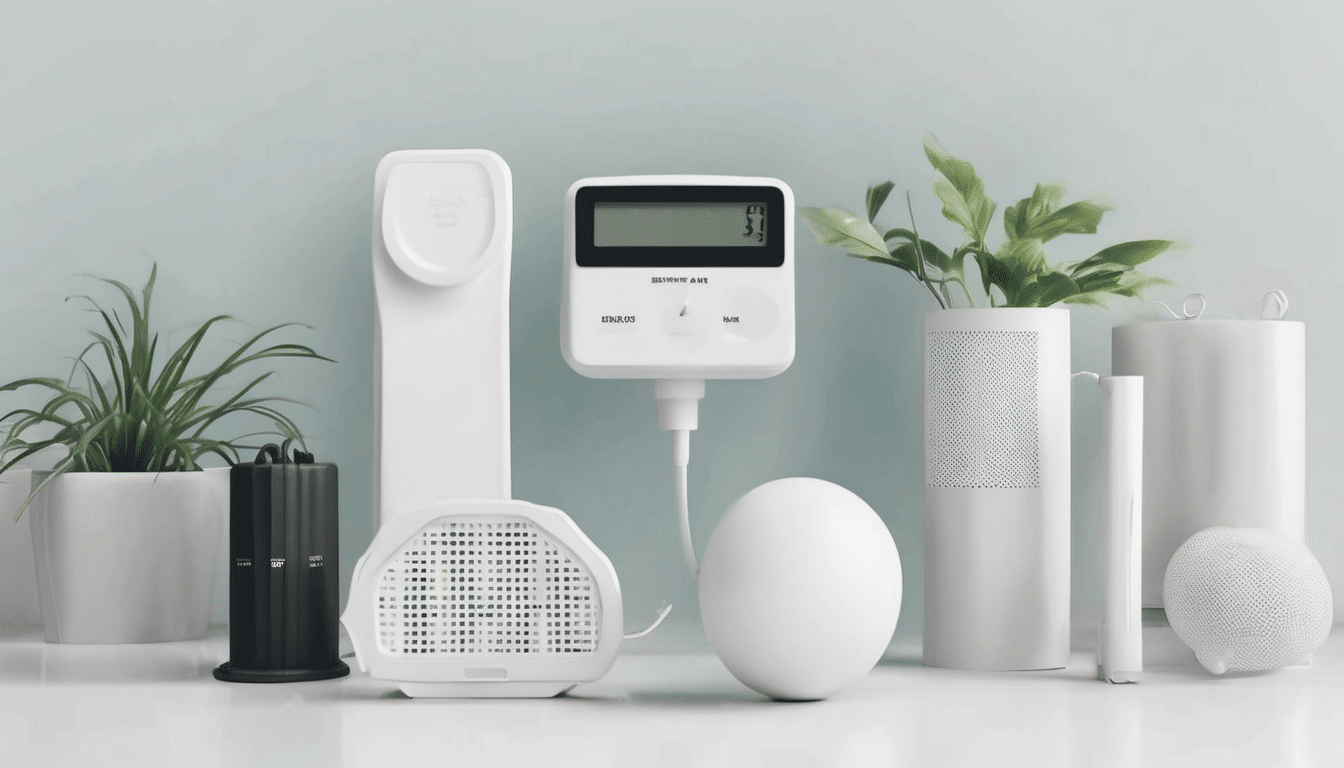
Effective smart home integration for air quality monitoring requires several key components working together seamlessly. Multi-parameter sensors form the foundation, measuring particulate matter (PM2.5 and PM10), volatile organic compounds (VOCs), carbon dioxide, temperature, and humidity. In Dubai environments, I recommend sensors with enhanced dust detection capabilities and rapid response times to address sudden sandstorm events.
Connectivity hubs serve as the central nervous system for smart home integration for air quality monitoring. These devices collect data from multiple sensors throughout the home and coordinate responses across various systems. For UAE installations, I prefer hubs with robust connectivity options including Zigbee, Z-Wave, and Wi-Fi to ensure reliable communication even in large villas with thick concrete walls that can interfere with wireless signals.
Actuation devices complete the smart home integration for air quality monitoring ecosystem by executing automated responses. Smart HVAC controllers, motorised vent systems, air purifiers with automation capabilities, and ventilation systems form the action components. In my experience designing integrated systems for Dubai homes, the most effective setups include redundant actuation options to ensure continuous operation even if one system fails.
Sensor Placement Strategies
Proper sensor placement significantly impacts the effectiveness of smart home integration for air quality monitoring. I recommend installing sensors in living areas, bedrooms, and near potential pollution sources like kitchens and garages. In multi-level Dubai villas, strategic placement on each floor ensures comprehensive coverage and accounts for the stack effect that can create air quality variations between levels.
Top Integration Platforms for Air Quality Monitoring
Several platforms excel at smart home integration for air quality monitoring in Dubai’s specific environment. The Apple HomeKit ecosystem offers robust integration with compatible air quality sensors and HVAC systems, providing seamless control through iOS devices. For technical users, Home Assistant provides unparalleled customization options for creating complex automation routines tailored to Dubai’s unique air quality challenges.
Google Nest integration platforms work well for smart home integration for air quality monitoring when combined with compatible third-party sensors. The ecosystem’s machine learning capabilities can predict air quality trends based on historical data and external factors like weather forecasts. This predictive capability is particularly valuable in Dubai where sandstorm events can often be anticipated hours in advance.
Amazon Alexa Smart Home offers increasingly sophisticated smart home integration for air quality monitoring through its growing ecosystem of compatible devices. The platform’s voice control capabilities provide convenient access to air quality information and manual overrides when needed. For multi-generational households common in UAE family villas, voice control can make the technology accessible to all family members regardless of technical proficiency.
Professional vs Consumer Monitoring Solutions
The choice between professional and consumer-grade systems for smart home integration for air quality monitoring depends on several factors including budget, technical requirements, and performance expectations. Professional systems typically offer higher accuracy sensors, more robust connectivity options, and advanced calibration capabilities. These systems often range from AED 15,000 to AED 45,000 for complete whole-house integration.
Consumer-grade smart home integration for air quality monitoring solutions provide accessible entry points starting around AED 2,000 to AED 8,000 for basic multi-room systems. While these systems may have slightly reduced accuracy compared to professional equipment, they still provide valuable insights and automation capabilities for most residential applications. I often recommend starting with consumer systems and upgrading components as needed.
Hybrid approaches to smart home integration for air quality monitoring combine professional-grade sensors with consumer automation platforms. This approach provides laboratory-grade measurement accuracy with affordable automation capabilities. In my consultancy work, I’ve designed several hybrid systems for Dubai clients that deliver professional performance at approximately 60% of the cost of fully professional installations.
Implementation Strategies for Dubai Homes
Successful implementation of smart home integration for air quality monitoring requires careful planning tailored to Dubai’s specific building characteristics. I recommend beginning with a comprehensive air quality assessment to identify priority areas and specific pollutants of concern. This assessment should consider the age of construction, ventilation systems, and occupant health concerns to guide system design.
Phased implementation approaches work well for smart home integration for air quality monitoring in existing homes. Starting with critical areas like bedrooms and main living spaces allows for gradual system expansion as budget and requirements evolve. This approach minimizes disruption while providing immediate benefits in the most important spaces. For new construction projects, I recommend incorporating integrated air quality management during the design phase.
Calibration and maintenance protocols are essential for effective smart home integration for air quality monitoring. Sensors require regular calibration to maintain accuracy, particularly in Dubai’s dusty environment where sensor contamination can affect readings. I recommend professional calibration every six months for critical sensors and quarterly validation checks using portable reference instruments.
Villa-Specific Considerations
Dubai villas present unique challenges for smart home integration for air quality monitoring due to their size, multiple levels, and varied room usage patterns. Whole-house systems should account for the different environmental conditions in ground floor areas versus upper floors. I typically recommend zoning approaches that allow different areas to operate independently based on occupancy and usage patterns.
Cost Analysis and ROI Considerations
The investment in smart home integration for air quality monitoring must be evaluated against both health benefits and potential cost savings. Basic consumer systems start around AED 2,000 for single-room monitoring with limited automation capabilities. Mid-range whole-house systems typically range from AED 8,000 to AED 20,000 depending on the number of sensors and complexity of automation.
Professional-grade smart home integration for air quality monitoring systems represent a significant investment ranging from AED 15,000 to AED 45,000 or more for large villas. However, these systems can generate substantial savings through optimized HVAC operation, reduced energy consumption, and prevention of moisture-related damage that commonly affects Dubai properties. The health benefits from improved Indoor Air Quality also contribute to reduced medical expenses and improved productivity.
The return on investment for smart home integration for air quality monitoring extends beyond financial considerations. Improved sleep quality, reduced allergy symptoms, and enhanced cognitive function represent significant quality-of-life improvements that many Dubai residents value highly. When evaluating costs, I encourage clients to consider both the tangible financial returns and the less quantifiable health and wellness benefits.
Future Trends in Air Quality Integration
The future of smart home integration for air quality monitoring includes several exciting developments that will enhance capabilities and accessibility. Artificial intelligence and machine learning algorithms will enable predictive air quality management that anticipates problems before they occur. These systems will analyse patterns in outdoor air quality, weather forecasts, and indoor occupancy to optimize environmental conditions proactively.
Integration with building management systems represents the next evolution of smart home integration for air quality monitoring. Future systems will coordinate across all building systems including lighting, security, and energy management to create truly holistic environmental control. This approach will optimize multiple parameters simultaneously to create ideal living conditions while minimizing energy consumption.
Advancements in sensor technology will drive the future of smart home integration for air quality monitoring through reduced costs, improved accuracy, and expanded measurement capabilities. Emerging sensors will detect additional pollutants including specific mould species, airborne bacteria, and ultrafine particles that current consumer devices cannot measure accurately. These advancements will provide even more comprehensive protection for Dubai residents.
Expert Tips for Effective Implementation
Based on my experience with hundreds of smart home integration for air quality monitoring installations across the UAE, I recommend these strategies for optimal results. Begin with a professional assessment to identify your specific air quality challenges and priorities. Choose sensors with appropriate detection ranges for Dubai’s environment, particularly for particulate matter during sandstorm seasons.
Implement zoning strategies that account for different usage patterns throughout your home. Bedrooms, living areas, and kitchens each have unique air quality requirements that benefit from customized automation rules. Establish regular maintenance schedules including sensor cleaning and calibration to ensure ongoing accuracy and reliability.
Integrate your air quality monitoring with other smart home systems for comprehensive environmental management. Coordination between air quality systems, lighting control, and window treatments can significantly enhance overall comfort while optimizing energy usage. Finally, ensure proper user education so all household members understand how to interpret data and when manual intervention might be necessary.
Frequently Asked Questions
How often should smart air quality sensors be calibrated in Dubai’s dusty environment? For optimal accuracy, I recommend professional calibration every six months and basic validation checks quarterly. The high dust levels in Dubai can affect sensor performance more quickly than in cleaner environments.
Can smart home air quality systems prevent mould growth in Dubai villas? While no system can completely prevent mould, integrated systems significantly reduce risk by maintaining optimal humidity levels and detecting moisture problems early. Combined with proper building maintenance, they provide powerful mould prevention capabilities.
What’s the minimum investment for effective whole-house air quality monitoring? A basic but effective system for a typical Dubai villa starts around AED 8,000-12,000. This investment provides multi-room monitoring and basic automation capabilities that significantly improve indoor air quality management.
Conclusion
Smart home integration for air quality monitoring represents a transformative approach to managing indoor environments in Dubai’s challenging climate. By connecting sensors, automation systems, and environmental controls, these integrated solutions provide proactive protection against the air quality issues that commonly affect UAE homes. The technology has matured to offer reliable, accessible options for homeowners seeking to protect their families’ health and wellbeing.
As Dubai continues to evolve as a global city, the importance of indoor air quality management will only increase. Smart home integration for air quality monitoring provides the tools needed to create healthier living environments while adapting to the unique challenges of desert living. Whether through consumer-grade systems or professional installations, this technology offers tangible benefits that justify the investment for health-conscious residents.

JV de Castro, IAC2
JV de Castro is the Chief Technology Officer at Saniservice, where he leads innovation in indoor environmental sciences, IT infrastructure, and digital transformation. With over 20 years of experience spanning architecture, building science, technology management, digital media architecture, and consultancy, he has helped organizations optimize operations through smart solutions and forward-thinking strategies. JV holds a Degree in Architecture, a Masters of Research in Anthropology, an MBA in Digital Communication & Media, along with certifications in mold, building sciences and advanced networking. Passionate about combining technology, health, and sustainability, he continues to drive initiatives that bridge science, IT, and business impact.