HVAC Maintenance for Better Dubai Office Air Quality
HVAC maintenance for better Dubai office air quality begins with understanding that air conditioning systems here function as the building’s respiratory system, constantly processing desert air with high particulate loads and managing extreme humidity differentials. The unique challenge in Dubai offices stems from 24/7 cooling requirements, sand infiltration, and condensation management within ductwork. Proper maintenance protocols address these climate-specific factors through filtration upgrades, coil cleaning, and humidity control measures that collectively determine indoor environmental quality. Unlike temperate climates where HVAC serves seasonal comfort, Dubai’s systems work year-round against environmental pressures that accelerate component wear and microbial growth.
What distinguishes effective HVAC maintenance for better Dubai office air quality is its evidence-based approach rather than calendar-based scheduling. Saniservice’s indoor environmental assessments consistently reveal that offices with identical maintenance contracts show dramatically different contamination profiles based on occupancy patterns, filter quality, and drainage performance. The goal isn’t merely clean components but optimised system performance that maintains relative humidity below 60%, manages particulate levels per Dubai Municipality standards, and prevents biological amplification in dark, damp duct environments.
Why HVAC Maintenance for Better Dubai Office Air Quality Matters
HVAC maintenance for better Dubai office air quality directly impacts cognitive function, absenteeism rates, and employee wellbeing in measurable ways. Dubai’s sealed building envelopes mean occupants breathe recirculated air 8-10 hours daily, with system deficiencies concentrating pollutants rather than diluting them. Common issues include elevated carbon dioxide from inadequate fresh air intake, volatile organic compounds from office furnishings, and biological contaminants from damp insulation or clogged drain pans.
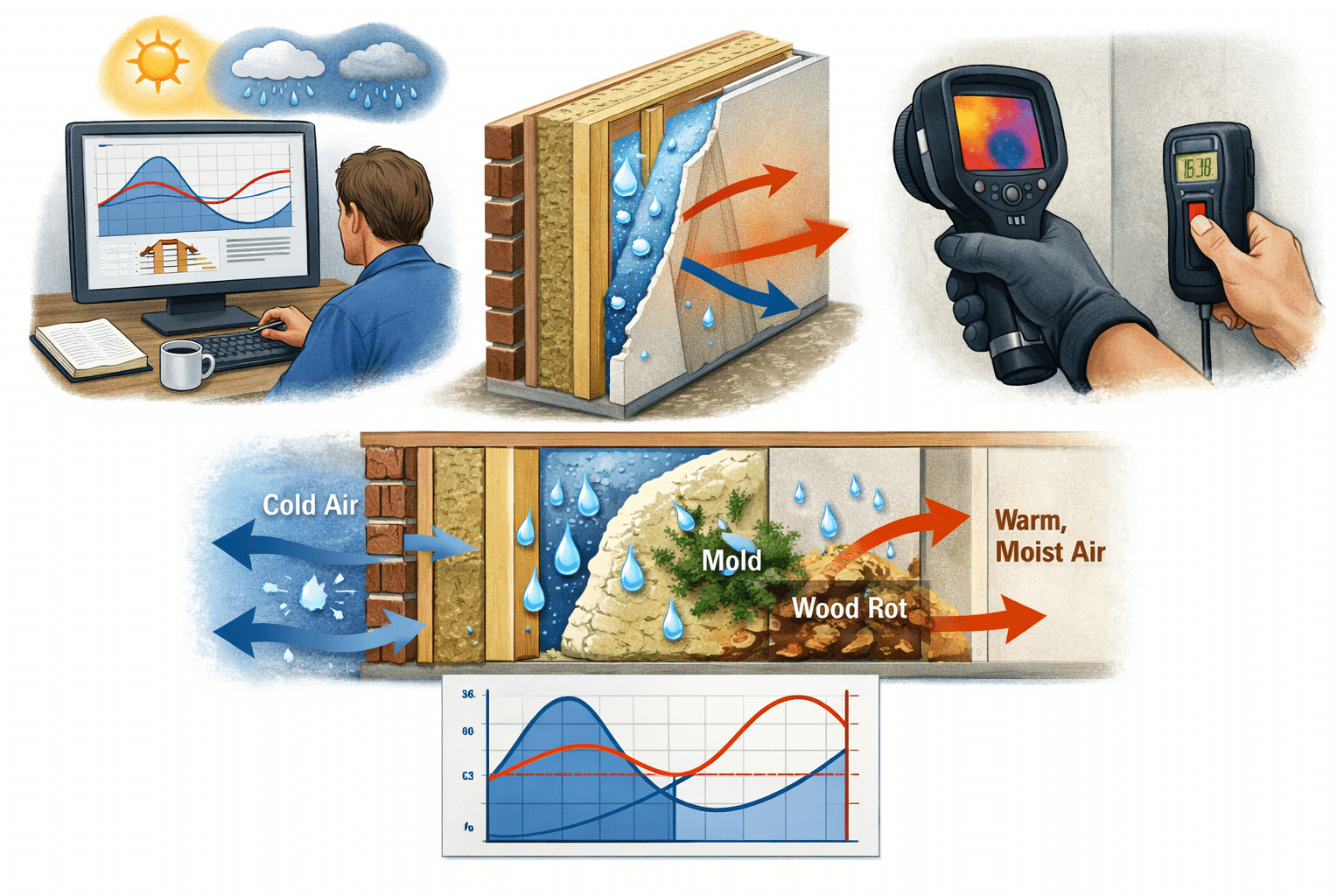
During thermal imaging inspections, we frequently identify temperature differentials indicating airflow restrictions, insulation gaps, or moisture accumulation within ceiling voids. These hidden defects compromise system performance long before occupants notice air quality symptoms. Proper HVAC maintenance for better Dubai office air quality addresses these underlying issues through comprehensive assessment rather than superficial cleaning, ensuring systems meet both comfort and health requirements simultaneously.
Key Components of HVAC Maintenance for Better Dubai Office Air Quality
Effective HVAC maintenance for better Dubai office air quality comprises four critical elements: filtration management, coil cleaning, drainage verification, and duct integrity assessment. High-efficiency particulate air filters rated MERV 13 or higher capture Dubai’s fine desert dust that standard filters miss, while regular coil cleaning prevents microbial growth on moist surfaces. Drain pan maintenance and trap priming ensure proper condensation removal, preventing the standing water that fosters Legionella and other pathogens.
Duct inspection via robotic cameras identifies contamination accumulation, insulation deterioration, or joint separations that compromise air quality. Unlike residential systems, commercial HVAC maintenance for better Dubai office air quality must account for complex zoning, variable air volume controls, and energy recovery ventilators that each introduce unique maintenance requirements. Professional assessment determines which components need attention based on actual condition rather than assumed schedules.
Filtration Systems and Particle Control
Proper filtration represents the first defense in HVAC maintenance for better Dubai office air quality, with most Dubai offices requiring upgraded filters beyond standard installations. Sand and construction dust contain silica particles that penetrate deep into respiratory systems, while paper-based filters themselves can become microbial food sources when moist. Our laboratory analysis frequently identifies filter bypass issues where air circumvents filtration media through gaps in filter racks or poorly sealed access panels.
Humidity Management Protocols
Humidity control forms the core of HVAC maintenance for better Dubai office air quality, with ideal relative humidity maintained between 40-60% to discourage microbial growth while preventing electrostatic discharge and respiratory irritation. Dubai’s external humidity spikes during summer months challenge even well-maintained systems, requiring precise coil temperature control and adequate drainage capacity. Infrared cameras often reveal condensation issues within supply ducts that appear dry externally but harbour moisture accumulation internally.
Professional Assessment for HVAC Maintenance for Better Dubai Office Air Quality
Professional HVAC maintenance for better Dubai office air quality begins with comprehensive assessment including air quality monitoring, thermal imaging, and visual inspection using robotic cameras. Temtop air quality monitors track particulate matter, volatile organic compounds, and carbon dioxide levels across work zones, identifying areas with inadequate ventilation or filtration. Thermal imaging reveals temperature anomalies indicating insulation failures, airflow restrictions, or moisture accumulation within building envelope components.
Visual inspection via flexible borescopes examines internal duct conditions, coil surfaces, and drain pan integrity without destructive testing. This diagnostic approach allows targeted maintenance addressing actual deficiencies rather than generic cleaning services. HVAC maintenance for better Dubai office air quality based on empirical data typically identifies 30-40% more issues than visual assessment alone, particularly in concealed spaces above ceiling tiles or within mechanical voids.
Common Deficiencies in Dubai Office HVAC Systems
HVAC maintenance for better Dubai office air quality consistently identifies several recurring issues in Dubai buildings: inadequate fresh air intake despite design specifications, filter bypass allowing unfiltered air circulation, and condensate drain blockages causing overflow into ductwork. Many buildings maintain negative pressure relationships that draw unfiltered air from parking garages or loading docks into occupied spaces through door gaps and elevator shafts.
Microbiological sampling often reveals thermophilic fungi species adapted to Dubai’s climate that thrive in HVAC components, particularly on evaporator coils where condensation provides constant moisture. These organisms differ from temperate-climate mould species and require specific identification for effective remediation. HVAC maintenance for better Dubai office air quality must address these unique biological challenges through appropriate cleaning protocols and humidity control measures.
Implementing Effective HVAC Maintenance for Better Dubai Office Air Quality
Implementing proper HVAC maintenance for better Dubai office air quality requires establishing baseline measurements, setting performance targets, and creating documentation protocols. Air quality monitoring before and after maintenance provides quantitative evidence of improvement, while particle counts and microbial samples establish cleanliness benchmarks. Maintenance records should include filter change dates, coil cleaning documentation, and drain pan inspections with photographic evidence.
Successful HVAC maintenance for better Dubai office air quality programmes incorporate staff training on symptom recognition, such as identifying musty odours indicating microbial growth or humidity issues. Facility managers learn to interpret air quality monitor readings and schedule maintenance based on performance degradation rather than fixed intervals. This proactive approach prevents minor issues from developing into major contamination events requiring extensive remediation.
HVAC Maintenance for Better Dubai Office Air Quality and Energy Efficiency
Proper HVAC maintenance for better Dubai office air quality delivers significant energy savings alongside health benefits, with clean systems requiring less energy to achieve desired temperature and humidity levels. Dirty coils increase compressor workload, clogged filters raise static pressure, and leaking ducts waste conditioned air. Energy efficiency improvements of 15-25% are common following comprehensive maintenance addressing these issues.
Smart building systems now integrate air quality sensors with building management systems to optimise fresh air intake based on occupancy and pollutant levels, reducing cooling load while maintaining indoor air quality. This integration represents the future of HVAC maintenance for better Dubai office air quality, where systems self-adjust based on real-time conditions rather than operating on fixed schedules regardless of actual need.
Frequently Asked Questions
How often should Dubai offices perform HVAC maintenance?
HVAC maintenance frequency for Dubai offices depends on system age, occupancy levels, and environmental factors. Quarterly inspections with semi-annual filter changes represent minimum recommendations, though high-occupancy spaces may require monthly assessments during peak summer months when systems operate continuously.
What are the signs that our office needs HVAC maintenance?
Visible dust emission from vents, persistent musty odours, fluctuating temperatures between zones, and increased allergy symptoms among staff indicate needing HVAC maintenance. Professional assessment using particle counters and thermal imaging often identifies issues before occupants notice symptoms.
Can HVAC maintenance reduce sick days in Dubai offices?
Proper HVAC maintenance consistently demonstrates reduced absenteeism by controlling pathogen transmission and reducing respiratory irritants. Studies show improved ventilation and filtration can reduce illness transmission by 30-50% in office environments through better air quality management.
Does Dubai have regulations for office HVAC maintenance?
Dubai Municipality establishes indoor air quality standards for commercial buildings, though specific maintenance requirements vary by building type and occupancy. Professional HVAC maintenance ensures compliance with these standards while optimising system performance and energy efficiency.
How long does professional HVAC maintenance take?
Comprehensive HVAC maintenance for typical Dubai offices requires 2-3 days for assessment, cleaning, and verification testing. Larger facilities or those with identified contamination issues may require longer timelines based on remediation scope determined during initial assessment.
Implementing Your HVAC Maintenance Programme
Establishing effective HVAC maintenance for better Dubai office air quality begins with baseline assessment to identify current conditions and prioritise interventions. Professional evaluation using particle counters, thermal imaging, and microbial sampling provides the evidence needed to develop targeted maintenance protocols rather than generic cleaning schedules. This evidence-based approach ensures resources address actual deficiencies rather than assumed needs.
Ongoing monitoring with air quality sensors allows facilities teams to track performance between maintenance cycles, identifying issues before they impact occupant health or system efficiency. The combination of professional assessment, targeted maintenance, and continuous monitoring creates sustainable HVAC maintenance for better Dubai office air quality that adapts to changing conditions and occupancy patterns.

JV de Castro, IAC2
JV de Castro is the Chief Technology Officer at Saniservice, where he leads innovation in indoor environmental sciences, IT infrastructure, and digital transformation. With over 20 years of experience spanning architecture, building science, technology management, digital media architecture, and consultancy, he has helped organizations optimize operations through smart solutions and forward-thinking strategies. JV holds a Degree in Architecture, a Masters of Research in Anthropology, an MBA in Digital Communication & Media, along with certifications in mold, building sciences and advanced networking. Passionate about combining technology, health, and sustainability, he continues to drive initiatives that bridge science, IT, and business impact.