Mold Prevention Strategies for Dubai’s Climate and AC Dubai
Mold prevention strategies for Dubai’s climate and AC systems begin with understanding that every building presents a unique environmental signature. The extreme desert conditions—45°C summers with 80% outdoor humidity—create a perfect storm for indoor microbial growth when combined with continuous air conditioning operation. Unlike temperate climates where mold follows seasonal patterns, Dubai’s year-round AC dependency creates persistent condensation cycles that demand specialised prevention approaches.
As an IAC2 Certified Indoor Air Consultant with over a decade of Dubai-specific field experience, I’ve documented how Mold Prevention Strategies for Dubai’s climate and AC systems must address both visible surfaces and hidden environments within building assemblies. The scope of prevention work varies significantly based on property variables that professional assessment must evaluate before determining appropriate strategies.
Mold Prevention Strategies for Dubai’s Climate and AC – Understanding Dubai’s Unique Mold Challenges
Mold prevention strategies for Dubai’s climate and AC systems must account for the region’s distinctive environmental conditions. The combination of extreme outdoor heat and indoor cooling creates constant thermal bridging at building envelopes, leading to condensation within walls and ceilings. This hidden moisture often goes undetected until microbial growth becomes established.
Dubai’s rapid construction history means many buildings lack proper vapour barriers or have insulation installed incorrectly. During professional assessment, we frequently identify interstitial condensation—moisture trapped between building layers—that requires specialised detection methods beyond visual inspection. Thermal imaging and moisture mapping become essential tools in these evaluations.
AC System Vulnerabilities
The continuous operation of air conditioning systems creates three primary risk factors: condensation drain pan failures, ductwork contamination, and filter bypass issues. Each requires different prevention approaches that affect the scope of work needed.
Mold Prevention Strategies for Dubai’s Climate and AC – Property Variables That Affect Prevention Scope
Effective mold prevention strategies for Dubai’s climate and AC systems depend heavily on specific property characteristics. Building age significantly influences prevention requirements—villas constructed before 2010 often lack modern moisture management systems, while newer high-rises may have complex pressurisation issues that require balancing.
Property size determines the scale of assessment needed. A 3-bedroom villa requires different prevention protocols than a 15-story residential tower. The number of AC units, ductwork complexity, and ventilation system design all factor into the professional assessment that determines appropriate prevention strategies.
Mold Prevention Strategies for Dubai’s Climate and AC – Occupancy Patterns and Usage Factors
How residents use their spaces dramatically impacts mold prevention strategies for Dubai’s climate and AC systems. Families with young children may maintain higher indoor humidity levels from frequent bathing and laundry. Home offices with multiple occupants generate more moisture through respiration than rarely-used guest rooms.
Professional assessment must evaluate occupancy schedules, cooking habits, and even furniture placement—bookcases against exterior walls can create cold spots where condensation forms. These human factors often determine whether basic maintenance suffices or more comprehensive prevention measures become necessary.
Contamination Levels and Condition Assessment
The existing contamination state directly influences mold prevention strategies for Dubai’s climate and AC systems. Properties with previous water damage require different approaches than those with only preventive needs. Laboratory analysis of surface and air samples provides the data-driven foundation for appropriate prevention planning.
During professional assessment, we document contamination signatures using ERMI (Environmental Relative Moldiness Index) testing and microbial speciation. This laboratory verification distinguishes between surface contamination that cleaning can address and established colonization requiring remediation before prevention measures can be implemented.
Certification and Standards Requirements
Professional mold prevention strategies for Dubai’s climate and AC systems must align with international standards including IICRC S520 for mold remediation and NADCA ACRA for HVAC cleaning. These certifications ensure that prevention methods meet industry best practices rather than temporary cosmetic solutions.
Building compliance with Dubai Municipality regulations and adherence to WELL Building Standard moisture management protocols (W07) may affect prevention scope. Properties seeking green building certifications often require more comprehensive documentation and verification procedures.
Assessment Process for Customised Prevention Plans
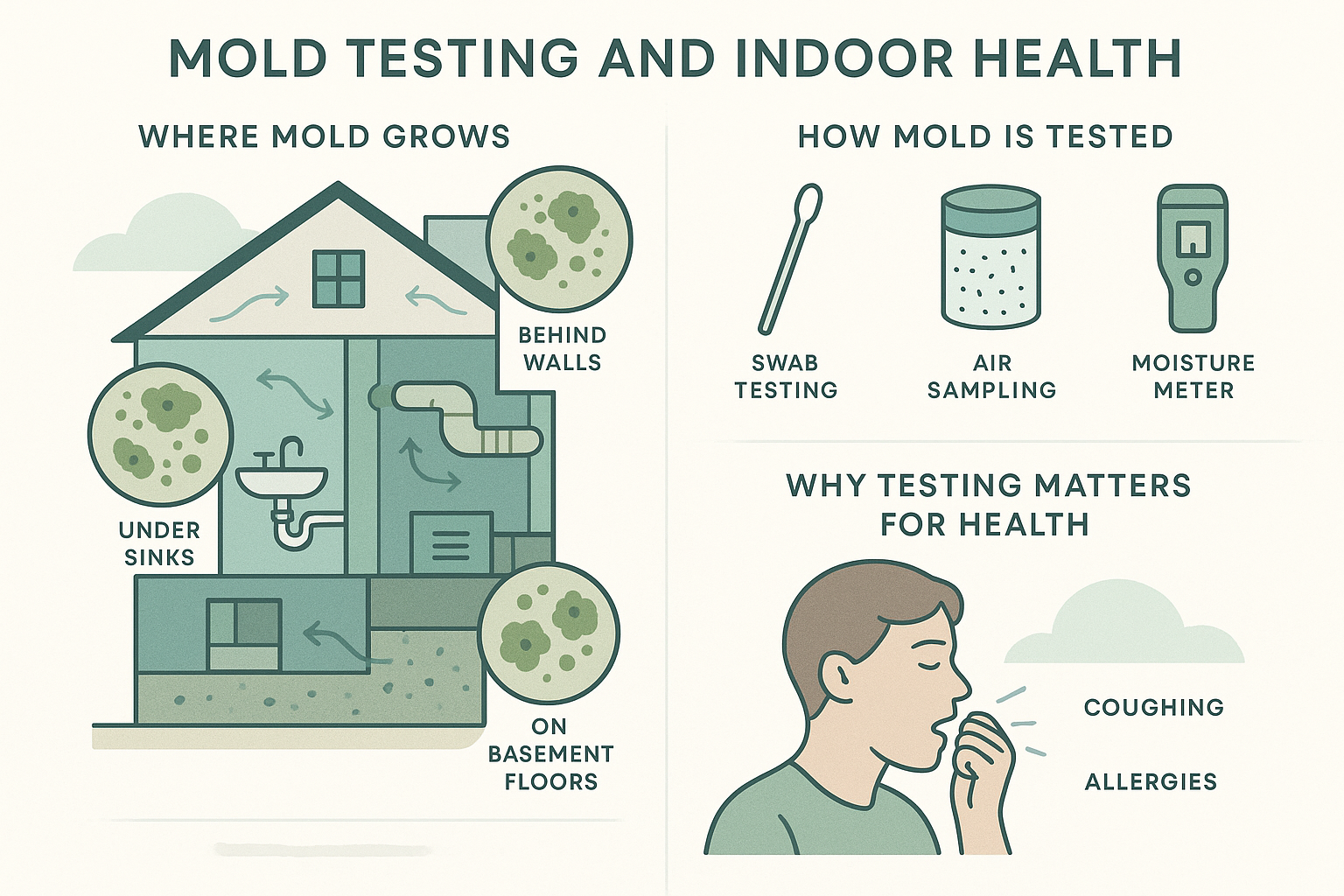
A proper professional assessment for mold prevention strategies for Dubai’s climate and AC systems includes visual inspection, moisture mapping, thermal imaging, and environmental sampling. This multi-method approach identifies both current issues and potential risk factors that could lead to future problems.
The assessment generates a property-specific report detailing recommended prevention measures, prioritised by urgency and effectiveness. This becomes the foundation for determining the actual scope of work needed—whether simple maintenance, system upgrades, or comprehensive moisture management solutions.
Implementation Variables Affecting Prevention Scope
The physical implementation of mold prevention strategies for Dubai’s climate and AC systems varies based on accessibility, system complexity, and material compatibility. Difficult-to-access ductwork or concealed building cavities may require specialised equipment and techniques that affect the scope of work.
Prevention measures range from basic maintenance (cleaning drain pans, replacing filters) to system modifications (adding UV lights, upgrading insulation) to architectural interventions (improving ventilation, installing vapour barriers). Each option carries different requirements for expertise, time, and verification procedures.
Expert Mold Prevention Tips for Dubai Homes
Maintain AC drain pans monthly with vinegar solutions to prevent organic buildup that leads to overflow and moisture issues. Check condensation lines quarterly for proper drainage—blockages cause water backup that damages systems and promotes mold growth.
Keep interior doors open to ensure proper air circulation throughout your home. Closed rooms develop stagnant air pockets with higher humidity levels that encourage microbial growth. Use exhaust fans during cooking and bathing to remove moisture at the source.
Monitor indoor humidity levels with hygrometers, maintaining between 45-55% relative humidity. Levels above 60% create ideal conditions for mold growth even in air-conditioned spaces. Consider standalone dehumidifiers in naturally damp areas like laundry rooms.
Arrange furniture至少15cm away from exterior walls to allow air circulation and prevent cold spots where condensation forms. Thermal bridging through concrete walls creates hidden moisture issues behind cabinets and bookcases.
Schedule professional AC coil cleaning annually to maintain efficiency and prevent microbial growth on cooling surfaces. Dirty coils reduce cooling capacity while increasing moisture retention—a perfect combination for mold development.
Frequently Asked Questions
How often should Dubai homes undergo professional mold assessment?
Annual professional assessment is recommended for most Dubai properties due to continuous AC operation and climate challenges. High-risk properties with previous water issues or vulnerable occupants may require semi-annual evaluation. Assessment frequency should match your property’s specific risk profile.
What certifications should I look for in mold prevention services?
Seek IAC2-certified professionals for assessment and IICRC-certified technicians for remediation work. NADCA certification ensures proper HVAC cleaning protocols. These certifications indicate training in industry standards rather than generic cleaning approaches.
Can I prevent mold with DIY methods in Dubai’s climate?
While basic maintenance helps, Dubai’s extreme climate requires professional assessment for comprehensive prevention. DIY methods often address surface issues while missing hidden problems in AC systems and building assemblies that require specialised detection equipment.
How does building age affect mold prevention strategies?
Older Dubai villas often lack modern vapour barriers and have different construction materials than newer towers. Prevention strategies must account for these differences—what works in a 2020 construction may be ineffective or even damaging in a 1990s building.
What’s the most common mistake in Dubai mold prevention?
Overlooking the AC system itself. Many homeowners focus on visible surfaces while neglecting the hidden environment where air circulates. Professional assessment should always include HVAC evaluation as contaminated systems redistribute spores throughout the property.
Conclusion
Effective mold prevention strategies for Dubai’s climate and AC systems require professional assessment to account for property-specific variables including building age, occupancy patterns, and existing conditions. The scope of prevention work ranges from basic maintenance to comprehensive system upgrades based on these factors.
Rather than applying generic solutions, successful prevention begins with understanding your property’s unique environmental signature through proper assessment. This evidence-based approach ensures that prevention measures address actual risk factors rather than perceived problems, creating sustainable protection for your indoor environment. Understanding Mold Prevention Strategies for Dubai’s Climate and AC is key to success in this area.

JV de Castro, IAC2
JV de Castro is the Chief Technology Officer at Saniservice, where he leads innovation in indoor environmental sciences, IT infrastructure, and digital transformation. With over 20 years of experience spanning architecture, building science, technology management, digital media architecture, and consultancy, he has helped organizations optimize operations through smart solutions and forward-thinking strategies. JV holds a Degree in Architecture, a Masters of Research in Anthropology, an MBA in Digital Communication & Media, along with certifications in mold, building sciences and advanced networking. Passionate about combining technology, health, and sustainability, he continues to drive initiatives that bridge science, IT, and business impact.