What Do Rooftop Water Tanks Accumulate Over Time?
What rooftop water tanks accumulate over time is not simply a question of visible dirt. In a professional assessment, the findings typically include biological contamination, inorganic sediment, chemical residues, and structural corrosion by-products — often all present simultaneously in the same tank. In Dubai and across the UAE, the combination of extreme heat, intermittent filling cycles, and central tank storage systems creates conditions that accelerate every form of accumulation known to building water science. The question is not whether your rooftop tank has accumulated something — it is what type, at what concentration, and what your laboratory results say.
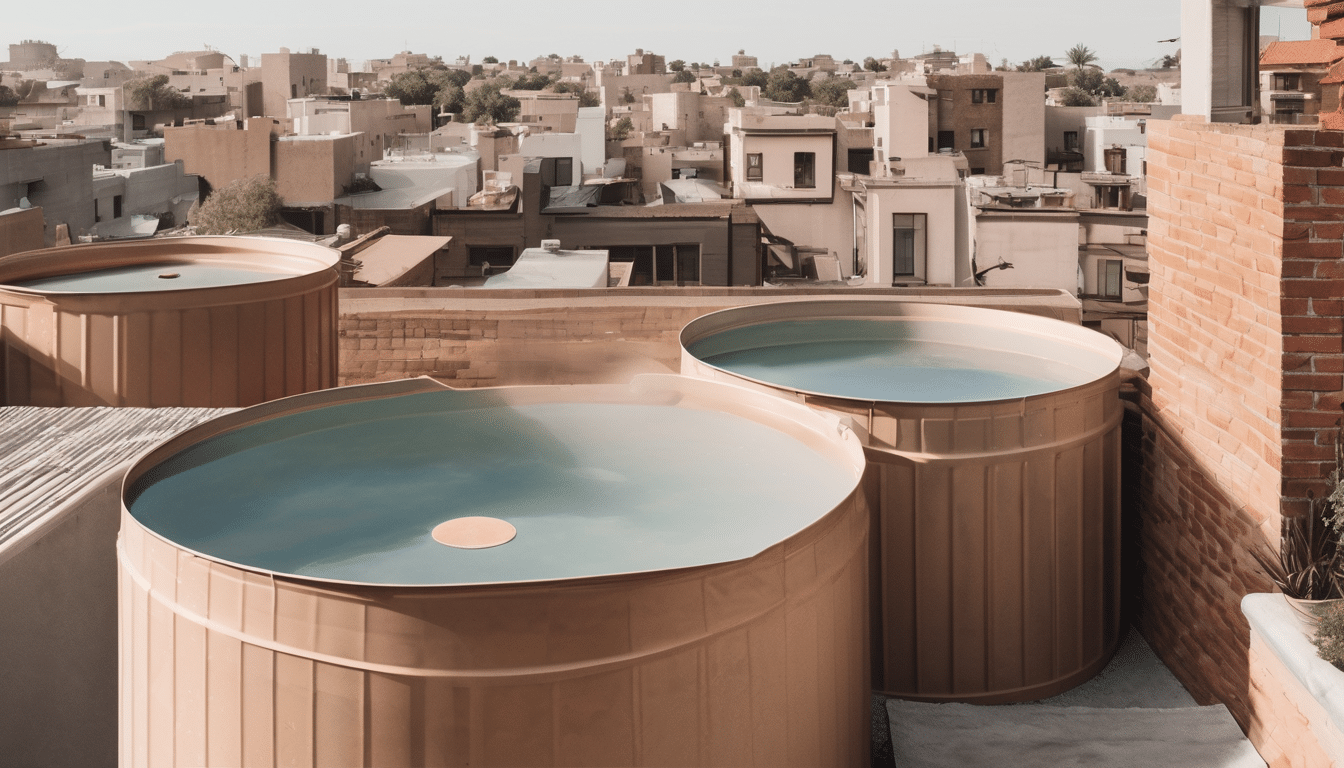
Rooftop tanks are a structural feature of virtually every residential and commercial building in the UAE. Water is pumped from ground-level storage, held in overhead tanks, and distributed by gravity to every tap, shower, and appliance in the building. That holding period — the time water spends sitting in a tank exposed to desert heat — is precisely where the problem compounds. The longer the water sits, the warmer it becomes, and the warmer it becomes, the more biological and chemical activity it supports.
This article documents what field investigation and laboratory analysis consistently find inside these tanks, and why the UAE climate makes rooftop tank hygiene a different problem from anything described in European or North American water quality literature.
Sediment and Particulate Matter
The first and most visible accumulation in any rooftop tank is sediment. This layer forms at the base of the tank and consists of inorganic mineral deposits — primarily calcium carbonate, magnesium compounds, and silica — that precipitate out of Dubai’s characteristically hard water supply. Dubai tap water hardness is well documented; when water sits in a warm tank, the dissolved minerals settle and concentrate over months and years.
Sediment is not merely cosmetic. It provides a substrate for biological growth, shelters bacteria from any residual disinfectant, and, when disturbed, becomes suspended in the water column and travels downstream to taps, showerheads, and appliances. A tank that has not been cleaned in two or more years will often have a measurable sediment layer that laboratory analysis can characterise for mineral composition and microbial load simultaneously.
Biofilm Formation on Tank Walls and Surfaces
Biofilm is the accumulation that most people do not see and most general cleaning misses. It is a structured community of microorganisms — predominantly bacteria — encased in a self-produced matrix of polysaccharides and proteins that adheres to the inner walls, base, lid underside, and inlet fittings of the tank.
Biofilm behaves differently from planktonic (free-floating) bacteria. It is significantly more resistant to disinfectants. Bacteria within a mature biofilm can withstand chlorine concentrations that would eliminate the same organisms in suspension. Once a biofilm establishes itself on a tank surface, routine chlorination of the water supply provides limited protection against it.
Why UAE Temperatures Accelerate Biofilm Growth
In Dubai summers, rooftop tank water temperatures commonly reach between 40°C and 55°C. Most textbook guidance on water tank contamination was written for temperate climates where tank temperatures rarely exceed 25°C. At UAE temperatures, thermophilic bacteria — organisms that thrive above 40°C — colonise rooftop tanks far more aggressively than psychrophilic or mesophilic species would in cooler climates.
This is a genuinely different microbial ecosystem from what European or American water quality guidelines anticipate. The organisms identified in Saniservice’s in-house indoor environmental microbiology laboratory from UAE rooftop tank samples frequently include heat-adapted species that would not survive in a London or Chicago water tank. The thermal profile of the UAE built environment creates a specific contamination signature that requires UAE-specific assessment methodology.
Bacterial Contamination and Pathogen Risk
Laboratory analysis of rooftop tank water in Dubai consistently identifies Total Coliforms, Heterotrophic Plate Count (HPC) bacteria, and, in cases where biofilm has been undisturbed for extended periods, Legionella species. Each of these has a different significance for human health and a different threshold under UAE regulatory standards.
Total Coliform presence indicates a breakdown in sanitary barriers — fecal contamination pathways, cracked lids, inadequate disinfection, or cross-contamination during filling. HPC counts measure the overall bacterial burden; elevated HPC in the absence of coliforms still indicates that a tank’s microbial environment is out of control. Legionella is the organism that water quality professionals take most seriously in any warm-water storage system, because the temperature range that UAE rooftop tanks regularly reach — between 25°C and 50°C — overlaps almost exactly with the temperature range at which Legionella pneumophila proliferates.
The Significance of Heterotrophic Plate Count
HPC is the measurement most commonly overlooked in basic water quality reports. It does not identify specific pathogens, but it gives a bacterial population density reading that indicates how effectively the tank’s environment is being managed. A high HPC in a rooftop tank tells the laboratory scientist that conditions are favourable for microbial growth — which means that if a pathogen enters that environment, it will find resources and shelter to establish itself.
Heavy Metals From Tank Materials and Ageing Infrastructure
What Rooftop Water tanks accumulate over time is not exclusively biological. Depending on the age, material, and installation quality of the tank itself, heavy metal contamination is a documented finding in UAE water quality investigations.
Older galvanised steel tanks contribute zinc and, in certain grades of galvanisation, lead. GRP (glass-reinforced plastic) tanks that have degraded or were manufactured with sub-standard resin formulations can leach styrene compounds and, in some cases, trace metals from fittings and reinforcement structures. The distribution pipework connecting the rooftop tank to building outlets — particularly older copper installations with soldered joints — can introduce lead and copper into the water column as the metal surfaces corrode over years of use.
Heavy metals testing of tap water in UAE properties frequently identifies elevated copper and zinc as the primary findings in ageing residential buildings. Lead, though less common, remains a concern in buildings constructed before stricter plumbing material standards became routine in UAE construction practice.
Chemical Residues and Disinfection By-Products
Dubai Municipal water supply is chlorinated before distribution. However, chlorine dissipates as water warms and ages. In a rooftop tank where water temperature exceeds 40°C, the residual chlorine that left the supply main may be significantly depleted by the time the water is drawn from a tap in the upper floors of the building.
Additionally, where tank operators attempt to compensate by adding chlorine directly to the tank, disinfection by-products (DBPs) can form. Trihalomethanes (THMs) and haloacetic acids (HAAs) are the most commonly monitored DBPs, and they form when chlorine reacts with organic matter present in the water. A tank with sediment, biofilm, and organic debris provides exactly the conditions for DBP formation. Professional water quality testing can quantify these by-products and compare them against WHO drinking water guidelines and UAE regulatory standards.
Algae and Organic Debris
Rooftop tanks that have inadequate lid sealing or compromised UV-blocking properties — particularly older white GRP tanks that have yellowed and become partially translucent — support algal growth. Algae require light and nutrients; a warm rooftop tank with trace mineral content and even minor light penetration provides both.
Algal presence introduces organic loading that feeds bacterial populations, alters taste and odour, and can produce secondary metabolites that standard disinfection does not address. Field inspection in Dubai villas and apartment buildings regularly identifies green or brown discolouration on tank walls and green sediment at the base — both indicative of algal accumulation that has been building over multiple seasons.
Structural Corrosion By-Products
Beyond the water chemistry itself, the tank structure contributes its own accumulation profile over time. GRP tanks develop micro-cracks in the gel coat that expose the underlying fibre matrix to water contact, introducing fibres and resin degradation products. Steel tanks corrode from the inside, producing iron oxide particles that discolour water and create rough surfaces where biofilm adheres more readily.
The fittings — inlet valves, ball valves, overflow connections — are particularly prone to accumulation because they are rarely cleaned or inspected during standard maintenance. Calcium scale builds on valve seats, restricting flow and creating turbulence zones where sediment preferentially deposits. Over time, these fitting failures contribute directly to the contamination profile found in the water below them.
How Accumulation Rate Varies by Building Type
The rate at which a rooftop tank accumulates contamination is not uniform across property types. Several factors specific to the UAE built environment accelerate accumulation beyond what generic maintenance schedules account for.
- Villa rooftop tanks are often smaller, receive less frequent professional attention, and sit under direct sun exposure for longer periods each day, driving higher water temperatures.
- High-rise apartment tanks hold larger volumes but typically serve more outlets with higher daily turnover — meaning residence time per litre is shorter, which slows some accumulation pathways but does not eliminate biofilm on static surfaces.
- Buildings with intermittent occupancy — holiday homes, seasonal rentals, long Ramadan closures — accumulate biological contamination at accelerated rates because stagnant water provides ideal conditions for biofilm maturation.
- Recently renovated properties introduce construction dust, pipe swarf, and sealant residues into the tank system that then combine with biological and mineral accumulation.
What a Professional Assessment Reveals
A professional water quality assessment in the UAE goes beyond a visual inspection of the tank. The Saniservice SaniH2O assessment protocol involves physical inspection of the tank interior, swab sampling of biofilm from internal surfaces, water sampling for microbiological culture, and, where indicated by property age or fitting type, chemical analysis for heavy metals and disinfection by-products.
Laboratory culture identifies organisms to species level where clinically significant, quantifies HPC loads, and checks for Legionella and coliform contamination. The results are compared against UAE regulatory benchmarks and WHO drinking water quality guidelines, and reported with specific remediation recommendations rather than generic advice.
Expert Takeaways for Dubai and UAE Property Owners
- Annual professional cleaning is a minimum standard for UAE rooftop tanks — not because of regulation alone, but because of what the UAE climate does to water sitting at rooftop temperatures for weeks at a time.
- Visual inspection of the water is not a reliable indicator of contamination. Biofilm, heavy metals, Legionella, and disinfection by-products are all invisible to the naked eye.
- Post-renovation water testing is advisable because construction activities routinely introduce particulate and microbial contamination into tank systems that are left connected during fit-out works.
- If a tank has not been cleaned or inspected in more than 12 months in a UAE climate, laboratory-based water testing should precede the next cleaning cycle so the contamination profile is documented before disturbance releases accumulated material into the distribution system.
- Tank material matters. GRP tanks older than 10 years should be physically inspected for gel coat degradation, UV embrittlement, and fitting integrity — not just cleaned.
What rooftop water tanks accumulate over time, in the specific context of Dubai and the wider UAE, is a multi-layered contamination profile that reflects the intersection of desert heat, hard water chemistry, ageing building materials, and biological activity. Each layer — sediment, biofilm, heavy metals, chemical residues, structural by-products — compounds the others. Professional assessment and laboratory analysis are the only reliable methods for characterising what is actually present and determining what remediation is required.
Frequently Asked Questions
How often should a rooftop water tank be cleaned in Dubai?
In Dubai’s climate, professional cleaning at minimum once per year is the standard practice recommended by water quality specialists. Properties with high occupancy, older tank materials, or direct sun exposure may require more frequent attention. Annual cleaning without laboratory testing still leaves the contamination profile unknown — combining cleaning with water sampling provides a verifiable baseline.
What does biofilm in a water tank actually mean for my health?
Biofilm is a structured microbial community that standard disinfection does not reliably penetrate. It provides shelter for bacteria including Legionella species, and it continuously sheds organisms into the water column. The health implications range from gastrointestinal upset to, in immunocompromised individuals or those exposed to aerosolised water, respiratory illness. Removal requires physical scrubbing combined with disinfection — not disinfection alone.
Can heavy metals be present in Dubai tap water even if the supply is treated?
Yes. Dubai Municipal supply water meets treatment standards at the point of distribution. However, heavy metals can enter the water between the supply main and the tap — through rooftop tank materials, ageing galvanised pipework, copper fittings with lead solder, or corroded ball valves. Heavy metals testing should be conducted at the point of use, not assumed to reflect supply water quality.
What is Legionella and why is it a concern in UAE rooftop tanks?
Legionella pneumophila is a waterborne bacterium that proliferates between approximately 25°C and 50°C — precisely the temperature range that UAE rooftop tank water reaches during summer months. Infection occurs through inhalation of contaminated aerosols from showers, taps, or air conditioning systems fed by contaminated water. In healthy adults it causes a severe pneumonia; in vulnerable populations the outcome can be serious. Laboratory culture is the only reliable detection method.
Is there a regulatory standard for rooftop water tank hygiene in the UAE?
Dubai Municipality and the UAE Ministry of Health reference WHO drinking water quality guidelines, which set microbiological and chemical thresholds for potable water. Dubai regulations require that building owners maintain water storage systems in a clean and hygienic condition. Professional assessment against these benchmarks — with documented laboratory results — provides the evidence trail that both regulatory compliance and responsible property management require.
How do I know if my rooftop tank needs testing versus just cleaning?
Cleaning removes physical accumulation; testing tells you what was present and whether the cleaning was effective. If the tank has not been tested in the past 12 months, if the building is more than five years old, if residents have reported taste or odour changes, or if the property has recently undergone renovation, laboratory water testing is the appropriate first step. A Saniservice water quality assessment determines what contaminants are present before any cleaning protocol is designed.
Does a new building in Dubai still need rooftop tank testing?
Yes. Newly constructed buildings in Dubai commonly experience post-construction contamination from construction dust, pipe swarf, biofilm from unused pipework, and tank interiors that were not properly sealed during the build phase. Several cases investigated by Saniservice’s Indoor Sciences team have identified significant microbial loads in tanks less than two years old. New construction is not equivalent to clean water storage. Understanding What Rooftop Water Tanks Accumulate over Time is key to success in this area.