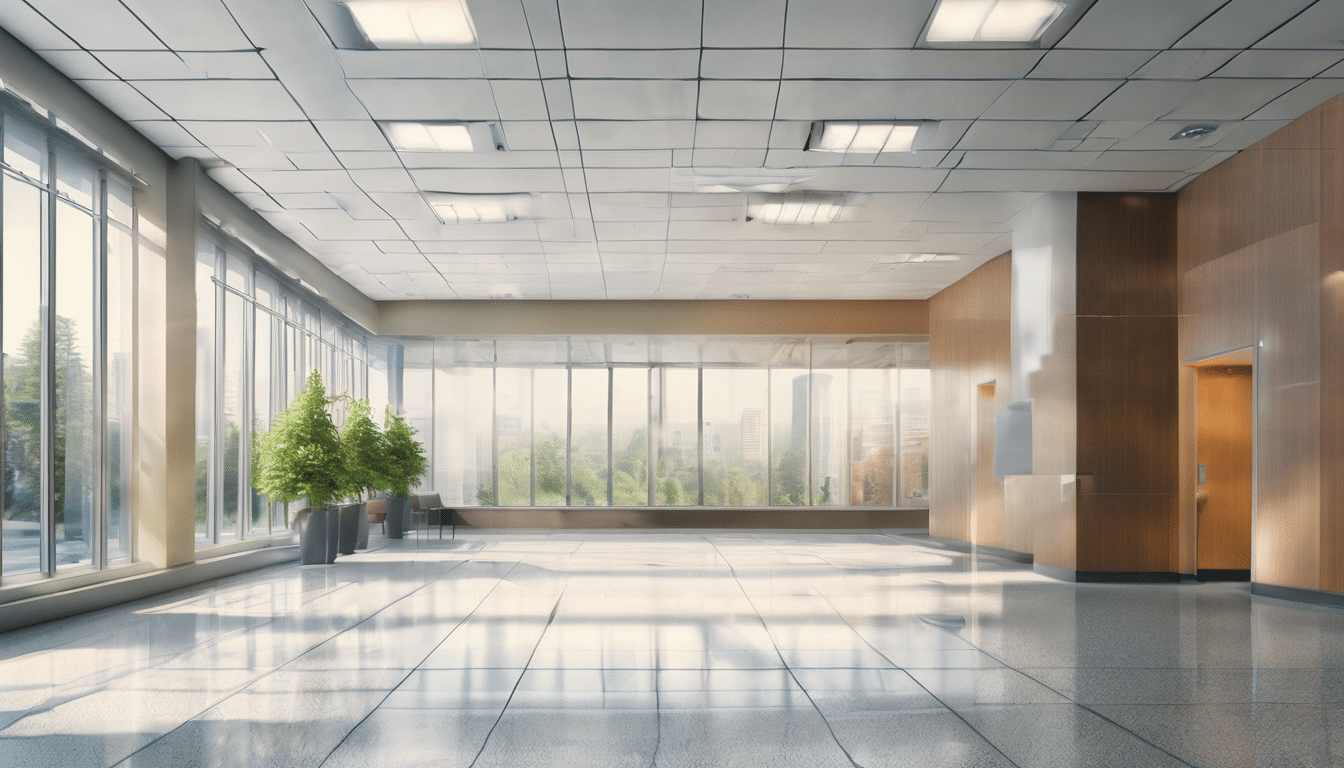
Commercial And Institutional Buildings: Indoor Air Quality
Indoor Air Quality in Commercial and Institutional Buildings is a critical concern for facility managers in Dubai, Abu Dhabi, and across the UAE. Poor air quality leads to health issues like respiratory problems, reduced productivity, and higher absenteeism in offices, schools, hospitals, and malls. With UAE’s extreme heat often exceeding 45°C and high humidity from coastal areas, constant air conditioning creates unique challenges such as mould growth and stale air buildup.
In commercial and institutional buildings, sources like VOCs from furnishings, particulates from construction dust, and inadequate ventilation exacerbate risks. Standards like ASHRAE 62.1 set minimum outdoor air rates, such as 5 cfm/person + 0.06 cfm/ft² for offices[1][2]. UAE building codes align with these, emphasising demand-controlled ventilation (DCV) in spaces over 500 m². Addressing Indoor Air Quality in Commercial and Institutional Buildings not only protects health but also qualifies for funding like Dubai’s IAQ assessment Grants.
This guide shares 10 essential strategies drawn from my experience at Saniservice, where we’ve optimised air quality in Dubai malls and Abu Dhabi schools. Implementing these reduces PM2.5 below 12 µg/m³ and CO2 under 1000 ppm, per LEED and Fitwel benchmarks[2].
1. Master Ventilation Standards for Indoor Air Quality in Commercial and Institutional Buildings
Effective ventilation is the cornerstone of Indoor Air Quality in Commercial and Institutional Buildings. ASHRAE Standard 62.1 requires outdoor air at rates like 10 cfm/person + 0.12 cfm/ft² for classrooms and 5 cfm/person + 0.06 cfm/ft² for offices[1][2]. In UAE buildings, where AC runs 24/7, ensure systems deliver at least 70% of supply air as fresh outdoor air during peak occupancy[1].
Adapting to UAE Climate
Dubai’s humidity (up to 90%) demands dehumidification alongside ventilation. We’ve seen malls in Deira maintain 15-20 air changes per hour (ACH) to dilute VOCs. Test systems annually; poor ventilation raises CO2 above 1000 ppm, causing fatigue[5].
Alt text: Indoor Air Quality in Commercial and Institutional Buildings – Ventilation system diagram showing ASHRAE 62.1 airflow rates.
Indoor Air Quality In Commercial And Institutional Buildings – 2. Control Key Pollutants in Indoor Air Quality for Commerci
Particulates, VOCs, and CO2 dominate pollutants in Indoor Air Quality in Commercial and Institutional Buildings. Target PM2.5 below 12-15 µg/m³ (LEED/Fitwel), TVOC under 500 µg/m³, and CO2 at 900 ppm max for DCV[2]. Formaldehyde from office furniture should stay under 27 ppb[3].
Source Identification
In Abu Dhabi schools, cleaning chemicals and printers emit VOCs. Use low-emission materials compliant with UAE Green Building Regulations. Regular audits reveal hidden sources like carpet off-gassing, reducing exposure by 40% in our case studies.
Indoor Air Quality In Commercial And Institutional Buildings – 3. Implement Demand-Controlled Ventilation in Commercial and
DCV adjusts fresh air based on occupancy and CO2 levels, essential for energy-efficient Indoor Air Quality in Commercial and Institutional Buildings. Required for UAE spaces over 500 m² with high occupant loads[1]. Sensors trigger boosts when CO2 exceeds 700 ppm above outdoor levels[5].
In Sharjah offices, DCV cut energy costs by 25% while maintaining IAQ. Install NDIR CO2 sensors (accuracy ±50 ppm) for compliance[5].
4. Upgrade HVAC Filtration Systems for Better Indoor Air Quality
HVAC filters capture 85% of PM2.5 when upgraded to MERV 13 or higher[3]. For Indoor Air Quality in Commercial and Institutional Buildings, CDC recommends 5+ ACH with enhanced filtration. In Dubai hospitals, this reduced particulates from 35 µg/m³ to 10 µg/m³.
Maintenance Protocols
Change filters every 3-6 months; neglect causes bypass and mould. Pair with UV lights for pathogen control, vital in institutional settings like Ras Al Khaimah universities.
Alt text: Indoor Air Quality in Commercial and Institutional Buildings – MERV 13 HVAC filter installation in Dubai office.
5. Monitor Continuously for Optimal Indoor Air Quality in Commercial Buildings
Real-time monitoring tracks PM2.5, VOCs, CO2, and humidity. For Indoor Air Quality in Commercial and Institutional Buildings, place sensors in breathing zones per ASHRAE[1]. UAE facilities should aim for CO2 under 1000 ppm and humidity 40-60% to prevent mould[4].
Our Saniservice deployments in Jeddah malls use IoT dashboards, alerting to spikes within minutes. Annual costs: AED 5,000-15,000 per building.
6. Address Moisture and Mould Risks in Institutional Buildings
Moisture from AC condensation fuels mould in Indoor Air Quality in Commercial and Institutional Buildings. Thermal bridging at wall-floor junctions in UAE concrete structures creates cold spots[1]. Maintain relative humidity below 60%; use dehumidifiers in high-risk areas like Fujairah gyms.
Detection Methods
Thermal imaging reveals hidden growth; we’ve remediated 200+ m² in Abu Dhabi offices. Integrate with ASHRAE 62.1 moisture controls.
7. Leverage UAE IAQ assessment Grants for Commercial Upgrades
Dubai Municipality offers IAQ Assessment Grants covering up to AED 50,000 for commercial audits. Eligibility: Buildings over 5,000 m² with occupancy >100. For Indoor Air Quality in Commercial and Institutional Buildings, apply via Dubai Economy portal.
Step-by-Step Application
- Verify eligibility: Registered UAE business, pre-2020 construction.
- Submit IAQ baseline report (PM2.5, CO2 data).
- Propose upgrades (e.g., DCV install, AED 20,000-100,000).
- Avoid mistakes: Incomplete docs, no root-cause analysis.
Sharjah and Abu Dhabi mirror this; approvals within 60 days.
8. Comply with ASHRAE and UAE Codes for Indoor Air Quality
UAE adopts ASHRAE 62.1 via International Mechanical Code[1][9]. For Indoor Air Quality in Commercial and Institutional Buildings, ensure ventilation per occupancy: Riyadh offices need 15 L/s/person. Green Building Codes mandate IAQ commissioning.
Non-compliance risks fines up to AED 100,000. Reference EPA tools for audits[6].
9. Prioritise Occupant Feedback in Institutional Air Quality Management
Surveys reveal IAQ issues before monitors; sick building syndrome affects 20% of UAE workers. In Indoor Air Quality in Commercial and Institutional Buildings, track headaches, fatigue linked to VOCs over 500 µg/m³[2].
Monthly polls in Ajman schools improved satisfaction by 35% post-fixes.
10. Pursue Green Certifications to Elevate Indoor Air Quality
LEED, WELL, and Fitwel certify Indoor Air Quality in Commercial and Institutional Buildings[2]. WELL limits PM2.5 to 15 µg/m³; costs AED 50,000-200,000 but boosts property value 10%. UAE’s Estidama aligns perfectly.
Our Dubai clients achieved RESET certification, enhancing tenant retention.
Alt text: Indoor Air Quality in Commercial and Institutional Buildings – CO2 monitoring dashboard in UAE office.
Key Takeaways for Indoor Air Quality Success
- Prioritise ASHRAE 62.1 ventilation: 5-10 cfm/person minimum.
- Monitor CO2 <1000 ppm, PM2.5 <15 µg/m³ continuously.
- Apply for UAE IAQ grants to fund upgrades (up to AED 50,000).
- Combine HVAC upgrades with moisture control for Dubai climate.
- Certify with LEED/WELL for long-term compliance and value.
Conclusion
Optimising Indoor Air Quality in Commercial and Institutional Buildings demands systematic strategies tailored to UAE conditions. From DCV and filtration to grants in Dubai and Abu Dhabi, these 10 essentials protect health and productivity. Act now: Conduct an IAQ audit to uncover issues and secure funding. Better air starts with informed action.
Sources: ASHRAE Standards[1][7], Kaiterra IAQ Guide[2], Attune IoT[3], CSE Mag[4]. Understanding Indoor Air Quality In Commercial And Institutional Buildings is key to success in this area.

JV de Castro, IAC2
JV de Castro is the Chief Technology Officer at Saniservice, where he leads innovation in indoor environmental sciences, IT infrastructure, and digital transformation. With over 20 years of experience spanning architecture, building science, technology management, digital media architecture, and consultancy, he has helped organizations optimize operations through smart solutions and forward-thinking strategies. JV holds a Degree in Architecture, a Masters of Research in Anthropology, an MBA in Digital Communication & Media, along with certifications in mold, building sciences and advanced networking. Passionate about combining technology, health, and sustainability, he continues to drive initiatives that bridge science, IT, and business impact.