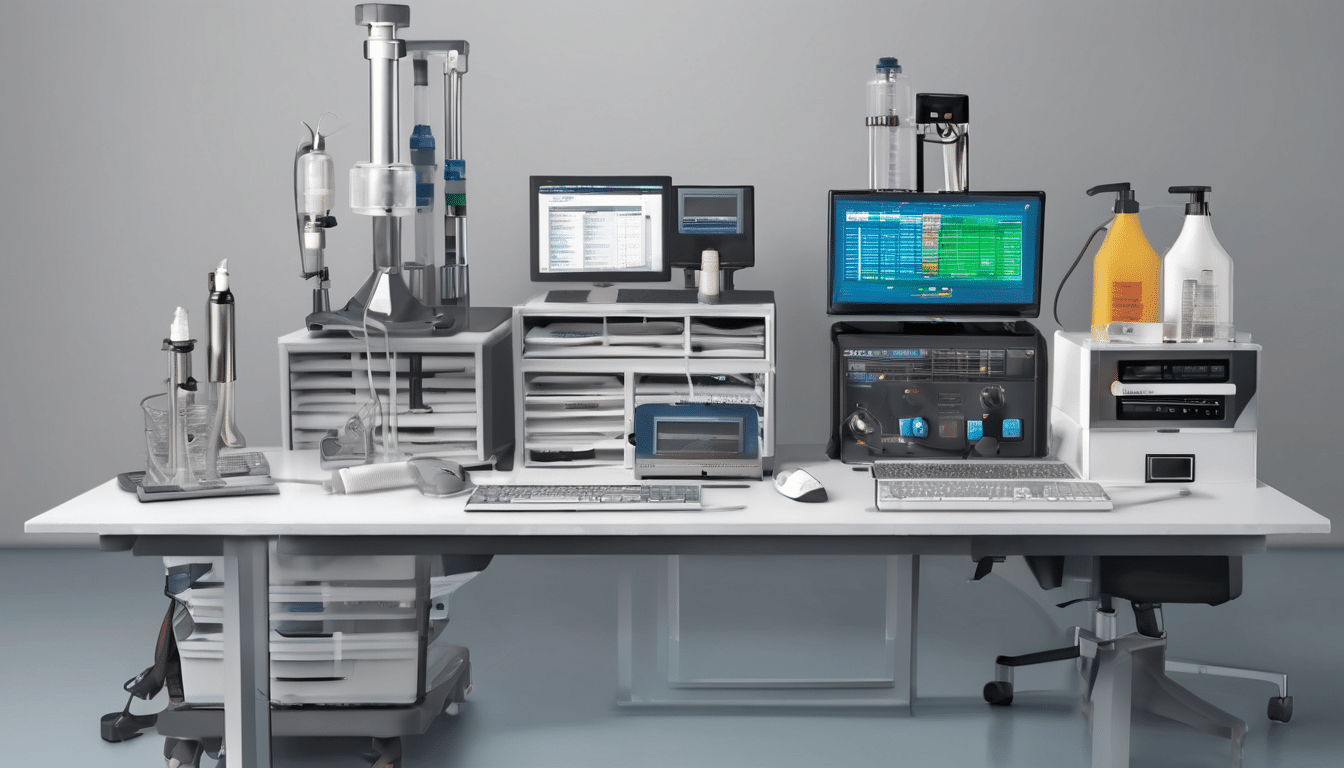
Choosing the Right VOC Testing Equipment Guide for Dubai
Volatile Organic Compounds represent one of the most complex indoor air quality challenges in modern UAE homes. From formaldehyde off-gassing from new furniture to benzene emissions from cleaning products, these invisible chemicals can significantly impact respiratory health and overall wellbeing. Choosing the Right VOC testing equipment becomes particularly critical in Dubai’s climate, where air conditioning systems recirculate indoor air constantly, potentially concentrating these compounds to problematic levels.
Through my experience establishing Saniservice’s Indoor Sciences division and microbiology laboratory, I’ve tested countless VOC detection devices across Dubai villas and apartments. The difference between accurate detection and misleading results often comes down to equipment selection. Proper choosing the right VOC testing equipment requires understanding detection technologies, measurement ranges, and environmental factors unique to our region.
This guide draws from twelve years of field experience investigating indoor air quality issues across the Emirates. We’ll explore the technical specifications that matter, common pitfalls to avoid, and how to match equipment capabilities to your specific testing needs. Whether you’re a homeowner concerned about new furniture emissions or a facility manager addressing occupant complaints, choosing the right VOC testing equipment is the foundation of effective indoor air quality management.
Choosing The Right Voc Testing Equipment – Understanding VOC Detection Technologies
Different VOC detection technologies offer varying levels of accuracy, specificity, and cost-effectiveness. Photoionization detectors (PIDs) represent the most common technology for general VOC screening, using ultraviolet light to ionize molecules and detect concentrations in parts per billion. These devices provide excellent sensitivity for a wide range of compounds but cannot differentiate between specific VOCs. They’re ideal for initial screening and continuous monitoring applications.
Metal oxide semiconductor (MOS) sensors offer a more affordable alternative but with significant limitations. These sensors change electrical resistance when exposed to VOCs, making them suitable for basic presence/absence detection. However, they lack precision, suffer from drift over time, and can be cross-sensitive to humidity changes—a particular concern in Dubai’s climate. For serious indoor air quality investigations, MOS sensors should be considered preliminary indicators rather than definitive measurement tools.
Gas chromatography-mass spectrometry (GC-MS) represents the gold standard for VOC identification and quantification. These laboratory instruments separate individual compounds and provide precise identification, making them essential for determining specific contamination sources. While traditionally confined to laboratories, portable GC-MS units now enable field analysis for comprehensive investigations. The investment of AED 45,000 to AED 120,000 makes them primarily suitable for professional use.
Emerging Detection Technologies
Recent advancements include proton transfer reaction mass spectrometry (PTR-MS) and cavity ring-down spectroscopy (CRDS), which offer exceptional sensitivity and real-time monitoring capabilities. While currently beyond most residential budgets, these technologies are becoming more accessible for professional environmental consultants serving the UAE market.
Key Features for Choosing the Right VOC Testing Equipment
Selecting appropriate VOC detection equipment requires careful consideration of several technical specifications. Detection range represents the most critical parameter, with quality instruments measuring from 0.1 parts per billion (ppb) to 10,000 parts per million (ppm). For residential applications in Dubai, equipment capable of detecting below 50 ppb is essential, as many VOCs cause health effects at these low concentrations. The difference between proper choosing the right VOC testing equipment and inadequate devices often lies in this sensitivity threshold.
Response time determines how quickly the equipment detects changing VOC levels. Instruments with response times under 30 seconds provide real-time feedback during investigations, allowing you to pinpoint emission sources by moving the detector around rooms and observing concentration changes. Delayed responses of 2-3 minutes make source identification challenging and less precise. This feature becomes particularly important when testing multiple areas in large Dubai villas.
Data logging capabilities transform basic detectors into valuable diagnostic tools. Equipment that records measurements with timestamps allows for trend analysis, identification of patterns related to occupancy or activities, and documentation of conditions before and after interventions. Look for devices that store at least 10,000 data points and offer USB or wireless data export for further analysis. This functionality supports proper choosing the right VOC testing equipment for ongoing indoor air quality management.
Choosing The Right Voc Testing Equipment: Accuracy Considerations in VOC Testing
Accuracy specifications separate professional-grade equipment from consumer devices. Reputable manufacturers provide accuracy statements backed by testing against reference standards, typically expressed as ±5% of reading or ±10 ppb, whichever is greater. Be wary of devices that lack clear accuracy specifications or make vague claims about detection capabilities. In my experience validating equipment in our Dubai laboratory, consumer-grade sensors often show误差 rates exceeding 30% under real-world conditions.
Cross-sensitivity represents a significant accuracy challenge, particularly in humid environments like the UAE. Many VOC sensors also respond to other gases, including carbon monoxide, methane, or humidity changes. Quality manufacturers provide cross-sensitivity charts showing how their equipment responds to common interferents. This information is crucial for interpreting readings accurately, especially when testing in kitchens (combustion gases) or humid areas like bathrooms.
Calibration requirements directly impact long-term accuracy. Electrochemical sensors typically require replacement every 1-2 years, while PID lamps last 1,000-2,000 hours of operation. Factor these ongoing costs into your choosing the right VOC testing equipment decision, as neglecting sensor replacement renders even expensive equipment unreliable. Professional calibration services in Dubai typically cost AED 800-1,500 per instrument annually.
Dubai-Specific Factors in Equipment Selection
UAE environmental conditions present unique challenges for VOC detection that must inform equipment selection. High temperatures can affect sensor performance and accuracy, with many consumer devices rated only for operation up to 40°C—a threshold frequently exceeded in outdoor measurements or unairconditioned spaces. Look for equipment rated to 50°C or higher for reliable performance during summer months.
Humidity compensation proves essential for accurate measurements in Dubai’s climate. Indoor relative humidity often ranges from 40-60% due to air conditioning, while outdoor humidity can exceed 90% during certain seasons. Quality VOC detectors incorporate humidity sensors and algorithms to compensate for these effects, while budget devices may show artificially elevated readings in humid conditions. This technical consideration is non-negotiable for proper choosing the right VOC testing equipment in our region.
Power requirements and battery life deserve special attention given Dubai’s frequent power fluctuations and the need for extended monitoring periods. Equipment with dual power options (AC adapter and rechargeable battery) provides flexibility, while instruments offering 8+ hours of battery operation enable all-day monitoring without interruption. For professional use, consider devices with external battery packs for extended deployment in locations without convenient power access.
Common Mistakes When Choosing VOC Testing Gear
One frequent error involves prioritizing price over performance, particularly when choosing the right VOC testing equipment for residential use. Inexpensive consumer devices costing AED 300-500 often lack the sensitivity to detect VOCs at concentrations that actually affect health. Based on our laboratory validation tests, these devices typically cannot reliably detect below 500 ppb total VOCs, while many compounds cause symptoms at 50-100 ppb. The false reassurance provided by inadequate equipment can be more dangerous than no testing at all.
Another common mistake involves neglecting manufacturer support and service availability in the UAE. Equipment requiring calibration or repair must often be shipped internationally, resulting in downtime of weeks or months. Before purchasing, verify that local service options exist or that the manufacturer provides prompt international support. This consideration becomes particularly important for professional-grade equipment investments exceeding AED 10,000.
Overlooking data management capabilities represents a third frequent error. VOC testing generates valuable information about indoor air quality patterns, source identification, and intervention effectiveness. Equipment that lacks data export functionality or companion software for analysis severely limits its utility. For comprehensive choosing the right VOC testing equipment, prioritize devices that support data extraction and visualization for informed decision-making.
Professional vs DIY VOC Testing Options
The decision between professional equipment and consumer devices depends largely on your testing objectives and budget. DIY VOC detectors in the AED 400-1,200 range serve adequately for basic screening and awareness building. These devices can indicate general VOC presence and relative changes over time, making them suitable for checking if new furniture or renovations are emitting noticeable compounds. However, they lack the accuracy for health-based decisions or compliance assessments.
Professional-grade equipment ranging from AED 8,000 to AED 25,000 provides the accuracy and specificity needed for health-related investigations and problem-solving. These instruments typically feature PID technology with calibrated detection ranges, interference compensation, and proper data logging. They’re essential for identifying specific VOC sources, assessing health risks, and verifying the effectiveness of remediation efforts. For facility managers or homeowners dealing with persistent air quality issues, this level of equipment proves necessary for effective choosing the right VOC testing equipment.
Laboratory analysis represents the highest tier of VOC assessment, with comprehensive air sampling and GC-MS analysis costing AED 1,200-2,500 per sample. This approach provides definitive identification and quantification of individual compounds, making it invaluable for complex investigations, legal proceedings, or health-related concerns. While not equipment purchase advice, understanding this option completes the spectrum of available VOC testing methodologies.
Maintenance and Calibration Requirements
Regular calibration maintains measurement accuracy over time. PID-based instruments typically require calibration every 6-12 months using isobutylene or another standard gas, with calibration kits costing AED 600-1,200. Some manufacturers offer automated calibration reminders and procedures built into the equipment, simplifying this critical maintenance task. Neglecting calibration schedules represents one of the most common reasons for inaccurate readings in field equipment.
Sensor replacement constitutes another ongoing requirement that must factor into choosing the right VOC testing equipment decisions. PID lamps typically last 1,000-2,000 hours of operation, with replacement costs ranging from AED 800-1,500 depending on the instrument. Electrochemical sensors may require annual replacement at similar costs. Factor these recurring expenses into your total cost of ownership calculations, particularly for equipment intended for regular use.
Cleaning and storage procedures significantly impact equipment longevity in Dubai’s dusty environment. Regular cleaning of air inlets and sensors prevents dust accumulation that can affect performance. Proper storage in controlled environments (avoiding extreme heat or humidity) preserves sensor integrity between uses. These maintenance considerations complete the comprehensive approach to choosing the right VOC testing equipment for reliable long-term operation.
Budget Considerations for VOC Testing Equipment
Budget allocation for VOC detection equipment should reflect your testing objectives and frequency of use. Basic awareness devices costing AED 300-800 suffice for occasional checks and educational purposes. Mid-range instruments between AED 2,000 and AED 8,000 offer improved accuracy and data logging for more serious homeowners or small businesses. Professional-grade equipment from AED 10,000 to AED 25,000 serves environmental consultants, facility managers, and health professionals requiring definitive measurements.
Remember to factor in ongoing costs when choosing the right VOC testing equipment. Annual calibration expenses of AED 800-1,500, sensor replacement costs every 1-2 years, and potential repair costs should all inform your budgeting decisions. For occasional use, renting professional equipment at AED 400-800 per day may represent a more cost-effective approach than purchasing.
Consider the value of accurate information when evaluating equipment costs. Inaccurate VOC measurements may lead to unnecessary concerns or, worse, failure to identify genuine health risks. The investment in proper choosing the right VOC testing equipment often pays dividends through correct identification of issues, targeted interventions, and peace of mind regarding indoor air quality.
Expert Tips for Choosing VOC Testing Equipment
Based on twelve years of indoor environmental investigation across the UAE, I recommend these practical tips for selecting VOC detection equipment:
- Verify detection range covers below 50 ppb for health-relevant measurements
- Choose equipment with humidity compensation for accurate readings in Dubai’s climate
- Prioritize devices with data logging and export capabilities for trend analysis
- Check for local service and support availability before purchasing expensive equipment
- Consider rental options for occasional testing needs before committing to purchase
- Factor in ongoing calibration and maintenance costs when evaluating total expense
- Select equipment with appropriate response time (under 30 seconds) for source identification
- Look for manufacturers that provide detailed cross-sensitivity information
Frequently Asked Questions
What is the minimum detection range needed for home VOC testing?
For health-relevant measurements, choose equipment capable of detecting below 50 ppb total VOCs. Many compounds cause symptoms at these concentrations, and higher detection limits may miss significant contamination.
How often should VOC testing equipment be calibrated?
Professional-grade equipment requires calibration every 6-12 months, while consumer devices may need more frequent verification. Follow manufacturer recommendations based on usage frequency and environmental conditions.
Can VOC detectors differentiate between different chemicals?
Most field detectors measure total VOCs rather than individual compounds. Only GC-MS instruments can provide specific compound identification, though some advanced field units offer limited compound differentiation.
Conclusion
Choosing the right VOC testing equipment requires balancing technical capabilities, environmental considerations, and budget constraints. In Dubai’s unique climate, factors like temperature stability, humidity compensation, and local service availability become critical selection criteria. Whether opting for basic awareness devices or professional-grade instruments, prioritize equipment with appropriate detection ranges, data management capabilities, and reliable performance characteristics.
Remember that VOC testing represents just one component of comprehensive indoor air quality management. The data gathered should inform targeted interventions, whether addressing specific emission sources, improving ventilation, or modifying occupant activities. By selecting appropriate equipment and interpreting results knowledgeably, you can make informed decisions that genuinely improve your indoor environment and protect occupant health. Understanding Choosing The Right Voc Testing Equipment is key to success in this area.

JV de Castro, IAC2
JV de Castro is the Chief Technology Officer at Saniservice, where he leads innovation in indoor environmental sciences, IT infrastructure, and digital transformation. With over 20 years of experience spanning architecture, building science, technology management, digital media architecture, and consultancy, he has helped organizations optimize operations through smart solutions and forward-thinking strategies. JV holds a Degree in Architecture, a Masters of Research in Anthropology, an MBA in Digital Communication & Media, along with certifications in mold, building sciences and advanced networking. Passionate about combining technology, health, and sustainability, he continues to drive initiatives that bridge science, IT, and business impact.