DIY vs Professional Air Quality Assessment Dubai Guide
In Dubai’s unique desert climate with year-round air conditioning dependency, the DIY vs Professional Air Quality Assessment decision hinges on accuracy requirements, contamination complexity, and health concerns. Professional assessment delivers laboratory-verified data through calibrated instruments and certified methodologies, while DIY approaches provide initial screening capabilities for basic awareness. The choice ultimately depends on whether you need preliminary indicators or definitive, actionable data for health protection.
Diy vs Professional Air Quality Assessment – Understanding Air Quality Assessment Fundamentals
Air quality assessment involves measuring multiple parameters that affect indoor environmental health. Professional assessment examines particulate matter (PM2.5 and PM10), volatile organic compounds (VOCs), carbon dioxide levels, humidity ratios, microbial contamination, and temperature gradients. In Dubai properties, additional factors include airborne dust infiltration from construction activities, microbial growth in AC systems, and chemical off-gassing from synthetic building materials common in rapid construction.
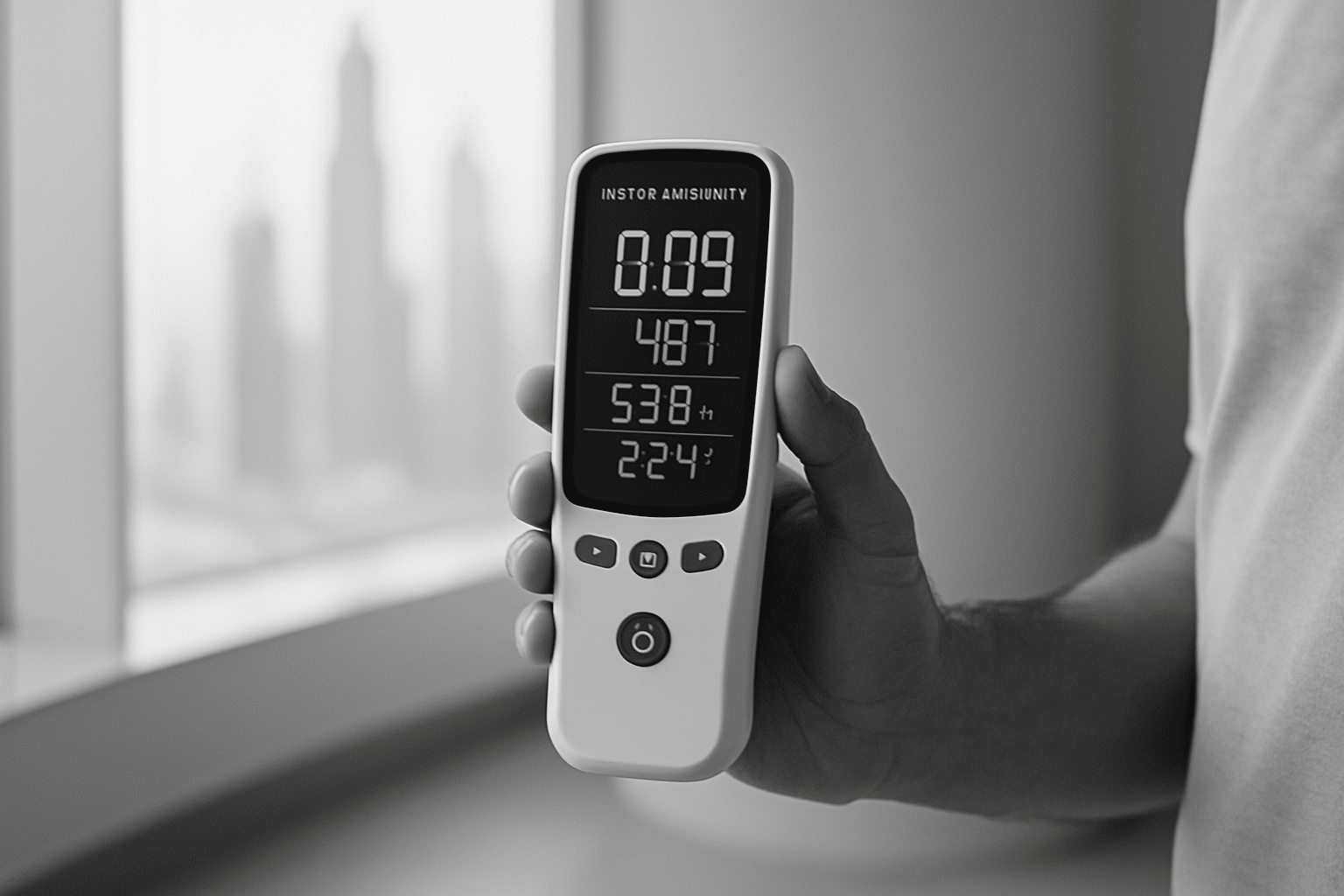
DIY assessment typically focuses on single parameters using consumer-grade sensors that measure basic particulate levels or humidity. These devices provide general indications but lack the precision and calibration of professional equipment. The gap between professional and DIY assessment becomes particularly significant when dealing with mould species identification, VOC speciation, or particle size distribution—all critical for understanding actual health risks in Dubai’s sealed indoor environments.
Diy vs Professional Air Quality Assessment – DIY Air Quality Assessment Capabilities and Limitations
Consumer air quality monitors offer accessible entry points for indoor environmental awareness. These devices typically measure particulate matter, temperature, humidity, and sometimes basic VOC levels. For Dubai residents concerned about general air quality trends or wanting to monitor humidity levels in AC-dominated spaces, DIY devices provide continuous data tracking at relatively low cost. This relates directly to Diy vs Professional Air Quality Assessment.
What DIY Kits Can Detect
Basic particulate matter sensors can indicate dust levels from outdoor pollution or indoor activities. Humidity sensors help monitor moisture levels that could promote mould growth in Dubai’s climate where indoor-outdoor humidity differentials create condensation risks. Some advanced consumer devices claim VOC detection but typically lack specificity about which compounds they’re detecting and at what accuracy levels.
Significant Limitations in Dubai Context
DIY devices cannot identify mould species—a critical limitation since Dubai’s buildings host thermophilic and xerophilic mould varieties that differ from temperate climate species. Consumer sensors cannot detect microbial volatile organic compounds (MVOCs) that indicate hidden mould growth. They also lack calibration against reference standards, making their numerical readings questionable for health-related decisions. Most importantly, DIY approaches cannot provide the contextual interpretation that comes with professional assessment.
Diy vs Professional Air Quality Assessment – Professional Air Quality Assessment Methodology
Professional air quality assessment follows established protocols from organisations like IAC2, AIHA, and ISO. In Dubai, certified professionals begin with a comprehensive visual inspection using thermal imaging to identify moisture intrusion, followed by strategic air and surface sampling based on building investigation science principles. When considering Diy vs Professional Air Quality Assessment, this becomes clear.
The assessment process includes calibrated equipment such as laser particle counters for precise particulate measurement, photoionization detectors for VOC screening, and moisture meters for humidity mapping. Air samples are collected using calibrated pumps and scientific media, then analyzed in accredited laboratories. For mould assessment, professionals use spore trap samples that provide quantified, speciated results—something impossible with DIY methods.
Professional assessment also includes building diagnostics to identify root causes rather than just symptoms. This involves examining HVAC systems, building envelope performance, occupant activities, and outdoor pollution sources. The final report provides not just data but interpreted results with specific recommendations tailored to Dubai’s climate and construction characteristics.
Comparative Analysis: DIY vs Professional Assessment
| Factor | DIY Assessment | Professional Assessment |
|---|---|---|
| Equipment Accuracy | Consumer grade (±20-30% variance) | Laboratory grade (±3-5% calibrated) |
| Parameters Measured | 2-4 basic parameters | 15+ comprehensive parameters |
| Mould Identification | Genus level impossible | Species level identification |
| VOC Specificity | Total VOC only | Compound-specific analysis |
| Data Interpretation | Basic app notifications | Certified professional analysis |
| Actionable Recommendations | Generic suggestions | Property-specific solutions |
| Regulatory Compliance | Not applicable | Meets Dubai Municipality standards |
Cost Considerations for Dubai Residents
The financial aspect of DIY vs Professional Air Quality Assessment involves more than initial outlay. DIY devices range from 300-2000 AED for basic to advanced monitors, representing a one-time purchase cost. However, these devices require regular replacement sensors and may provide misleading data that leads to incorrect remediation decisions.
Professional assessment represents an investment rather than an expense, with costs determined by property size, number of samples required, and complexity of issues. A comprehensive assessment for a Dubai villa typically involves air sampling, surface sampling, HVAC inspection, and laboratory analysis—providing definitive data that enables targeted solutions. While the initial cost is higher than DIY devices, professional assessment prevents wasted spending on unnecessary interventions and ensures solutions address actual problems.
When to Choose DIY Assessment
DIY approaches serve specific purposes in certain scenarios. For general awareness and continuous monitoring of basic parameters, consumer devices provide valuable trending data. They’re appropriate for healthy homes without apparent issues where residents want to maintain baseline monitoring.
DIY methods can also serve as preliminary screening before deciding whether professional assessment is warranted. If a DIY device shows consistently elevated particulate levels or humidity readings outside recommended ranges, this may indicate the need for professional investigation. However, negative DIY results should not provide false assurance—many significant contaminants require professional equipment for detection. The importance of Diy vs Professional Air Quality Assessment is evident here.
When Professional Assessment Becomes Essential
Professional assessment is non-negotiable in several scenarios. When health symptoms persist—especially respiratory issues, headaches, or allergic reactions—professional testing identifies specific triggers. Before property purchases, professional assessment reveals hidden issues that could affect investment value and occupant health.
After water damage events, professional assessment determines the extent of microbial growth and proper remediation protocols. For compliance with Dubai rental regulations or insurance claims, professional documentation provides legally defensible data. When DIY results are inconclusive or contradictory, professional assessment resolves uncertainties with scientific certainty.
Case Study: Dubai Villa Assessment Comparison
A recent case in Arabian Ranches illustrates the DIY vs Professional Air Quality Assessment difference. The homeowners used a consumer-grade monitor showing “acceptable” air quality despite family members experiencing respiratory irritation. The device reported PM2.5 levels of 12 μg/m³ and humidity at 55%—within typical ranges.
Professional assessment revealed the complete picture: elevated Aspergillus versicolor spores (1,200 spores/m³) originating from a concealed AC drain pan leak, plus elevated formaldehyde levels (0.08 ppm) from new furniture off-gassing. The DIY device missed both issues completely—it couldn’t identify mould species and lacked formaldehyde-specific detection. The professional assessment cost 2,500 AED but identified the exact causes enabling targeted remediation, while the homeowners had spent 800 AED on a device that provided false assurance.
Expert Recommendations for Dubai Homeowners
Based on twelve years of Dubai-specific indoor environmental investigations, I recommend layered approach to air quality assessment. Start with DIY monitoring for baseline tracking of temperature, humidity, and particulate trends. These devices work well for ongoing awareness between professional assessments.
Schedule professional assessment every two years for preventive monitoring, or immediately when purchasing properties, experiencing health symptoms, or noticing musty odours. After significant renovations or water events, professional assessment becomes essential rather than optional. For families with allergy sufferers, infants, or elderly members, professional assessment provides the certainty needed for health protection. Understanding Diy vs Professional Air Quality Assessment helps with this aspect.
Choose professional services that include Dubai-specific laboratory analysis—our in-house lab in Al Quoz specializes in the thermophilic mould species and desert dust composition that characterize local indoor environments. This localized expertise makes a significant difference in accurate identification and appropriate recommendations.
Frequently Asked Questions
Can DIY air quality tests detect mould in Dubai homes?
DIY tests cannot reliably detect or identify mould species in Dubai properties. Consumer devices lack the capability to speciate mould spores, and DIY mould test kits often yield false negatives due to improper sampling techniques. Professional assessment using spore trap analysis and laboratory identification is necessary for accurate mould detection.
How often should Dubai residents conduct air quality assessments?
Healthy homes should undergo professional assessment every two years for preventive monitoring. Properties with air conditioning systems should have annual HVAC inspections. Immediately after moving into a new property, before purchasing, or when health symptoms emerge, professional assessment becomes essential rather than periodic. Diy vs Professional Air Quality Assessment factors into this consideration.
What makes Dubai’s air quality assessment needs unique?
Dubai’s desert climate with extreme temperatures year-round AC dependency creates unique microbial ecosystems. Professional assessment must account for thermophilic mould species, high outdoor particulate levels, and construction materials that off-gas differently in heat. These factors require localized expertise beyond generic assessment protocols.
Are professional air quality tests worth the investment?
Professional assessment provides definitive, actionable data that prevents unnecessary spending on incorrect solutions. For health concerns, property transactions, or persistent indoor air issues, professional testing offers scientific certainty that DIY methods cannot match. The investment typically pays for itself through targeted solutions and health protection.
Can I use DIY tests between professional assessments?
DIY devices work well for monitoring basic parameters between professional assessments. They can alert you to significant changes in particulate levels or humidity that might indicate developing issues. However, they should complement rather than replace professional assessment for comprehensive air quality evaluation. This relates directly to Diy vs Professional Air Quality Assessment.
Conclusion: Making the Right Assessment Choice
The DIY vs Professional Air Quality Assessment decision depends on your specific needs, budget, and risk tolerance. DIY methods serve well for basic monitoring and awareness, while professional assessment provides definitive answers for health concerns and property decisions. In Dubai’s unique environmental context, the combination of both approaches—using DIY devices for ongoing monitoring and professional services for periodic comprehensive assessment—offers the most practical solution for maintaining indoor air quality and protecting occupant health.

JV de Castro, IAC2
JV de Castro is the Chief Technology Officer at Saniservice, where he leads innovation in indoor environmental sciences, IT infrastructure, and digital transformation. With over 20 years of experience spanning architecture, building science, technology management, digital media architecture, and consultancy, he has helped organizations optimize operations through smart solutions and forward-thinking strategies. JV holds a Degree in Architecture, a Masters of Research in Anthropology, an MBA in Digital Communication & Media, along with certifications in mold, building sciences and advanced networking. Passionate about combining technology, health, and sustainability, he continues to drive initiatives that bridge science, IT, and business impact.