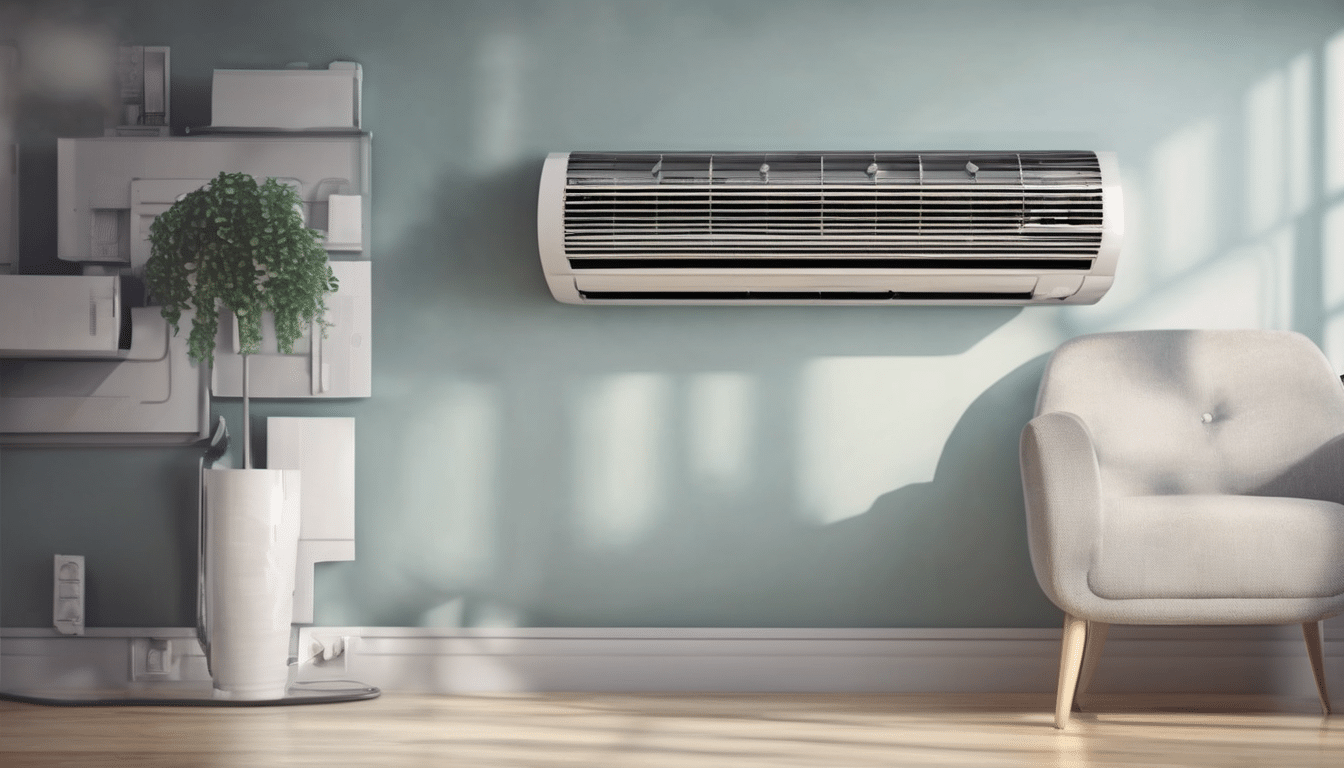
Smart Air Purifiers for Dubai’s Climate Control Systems
Smart air purifiers for Dubai’s climate control systems represent a critical evolution in managing indoor environmental quality in extreme desert conditions. Unlike standalone units, these integrated systems work synergistically with your HVAC to address the specific particulate and microbial challenges of UAE buildings. The effectiveness of Smart Air Purifiers for Dubai’s climate control systems depends on proper sizing, filtration technology selection, and integration with existing ventilation patterns—factors best determined through professional assessment rather than consumer-grade solutions.
In my twelve years directing Dubai’s only in-house indoor environmental microbiology lab, I’ve documented how UAE homes present unique filtration challenges. The combination of 45°C outdoor temperatures, 80% summer humidity, and complete AC dependency creates environments where standard air purifiers often fail. Smart air purifiers for Dubai’s climate control systems must address not just dust, but the thermophilic and xerophilic organisms that thrive in our specific building ecology.
How Smart Air Purifiers for Dubai’s Climate Control Systems Work
Smart air purifiers for Dubai’s climate control systems operate through continuous monitoring and automated response to indoor air quality metrics. These systems integrate sensors that measure particulate matter (PM2.5, PM10), volatile organic compounds (VOCs), humidity levels, and sometimes carbon dioxide. When integrated with HVAC systems, smart air purifiers for Dubai’s climate control systems can increase filtration during peak pollution periods or adjust ventilation rates based on real-time readings.
The intelligence lies in the algorithms that learn your building’s patterns—when desert dust typically enters, how occupancy affects VOC levels, and when humidity spikes occur. Unlike conventional purifiers that run on fixed schedules, smart air purifiers for Dubai’s climate control systems respond to actual conditions, conserving energy while maintaining protection. This is particularly valuable in Dubai villas where indoor-outdoor airflow patterns change dramatically between summer and winter months.
Integration with Existing HVAC Infrastructure
Professional installation of smart air purifiers for Dubai’s climate control systems requires understanding your specific HVAC configuration. Ducted systems in villas need different approaches than split units in apartments. The integration must account for airflow rates, static pressure limitations, and the existing filtration already present in your AC system. Incorrect integration can reduce HVAC efficiency or create pressure imbalances that actually worsen air quality.
Smart Air Purifiers for Dubai’s Climate Control Systems – Key Features of Effective Smart Air Purifiers for Dubai
Effective smart air purifiers for Dubai’s climate control systems require specific features tailored to our environment. HEPA H13 or H14 filtration is non-negotiable for capturing fine desert dust particles that measure 2.5 microns or smaller. Activated carbon beds must be substantial enough to handle VOC off-gassing from new construction materials and furniture common in Dubai’s rapidly built housing stock.
Humidity sensors are critical components in smart air purifiers for Dubai’s climate control systems. Since relative humidity directly affects microbial growth and chemical off-gassing rates, systems that monitor and help maintain 40-60% RH provide more comprehensive protection than particulate-only systems. UV-C light integration, while controversial in consumer devices, can be effective when properly engineered into professional-grade systems with adequate exposure time and safety controls.
Smart Air Purifiers for Dubai’s Climate Control Systems – Dubai-Specific Challenges for Air Purification Systems
Smart air purifiers for Dubai’s climate control systems face unique challenges not encountered in temperate climates. The fine silica particles in desert dust are exceptionally abrasive and can quickly degrade inferior filters. The extreme temperature differential between outdoor air (45°C) and cooled indoor air (22°C) creates condensation issues that can compromise filter media and promote microbial growth within the purification units themselves.
Our lab analysis consistently shows that Dubai homes contain distinctive microbial profiles—thermophilic fungi and bacteria that thrive in warm HVAC systems. Smart air purifiers for Dubai’s climate control systems must be designed to handle these organisms without becoming secondary contamination sources. This requires antimicrobial materials, accessible cleaning mechanisms, and monitoring systems that alert when maintenance is needed.
Laboratory Verification of Smart Air Purifier Performance
At our Dubai laboratory, we’ve developed testing protocols specifically for evaluating smart air purifiers for Dubai’s climate control systems. Performance verification includes measuring actual particulate reduction using laser particle counters, VOC removal efficiency through air sampling, and microbial containment testing. Many consumer-grade units claiming “HEPA” filtration actually perform poorly with Dubai’s specific particulate mix.
We’ve documented cases where improperly sized smart air purifiers for Dubai’s climate control systems actually worsened indoor air quality by creating turbulence that resuspended settled dust or by generating ozone as a secondary pollutant. Third-party verification against UAE-specific challenges is essential before investing in any integrated air purification system.
Installation Considerations for Dubai Homes and Villas
Proper installation of smart air purifiers for Dubai’s climate control systems requires professional assessment of your specific property. Villa installations differ dramatically from apartment implementations. Factors include HVAC system age, ductwork condition, window infiltration rates, and occupancy patterns. We recommend comprehensive indoor air quality testing before selecting any system to establish baseline conditions and identify specific contaminants of concern.
In many Dubai villas, the central air handling unit location presents challenges for integrating additional filtration without compromising airflow. Smart air purifiers for Dubai’s climate control systems must be sized to handle the cubic meter per hour flow rates of your existing system while maintaining energy efficiency. Undersized units become bypass routes, while oversized units strain fans and motors.
Maintenance Requirements for Dubai Conditions
Maintenance schedules for smart air purifiers for Dubai’s climate control systems are more frequent than manufacturer recommendations due to our extreme environment. Desert dust loading requires filter changes every 3-4 months rather than the typical 6-12 month intervals. Humidity sensors require quarterly calibration in Dubai’s climate to maintain accuracy.
Our field investigations consistently show that neglected maintenance transforms smart air purifiers for Dubai’s climate control systems into contamination sources themselves. Clogged HEPA filters become microbial growth sites, while saturated carbon filters can re-release captured VOCs. Smart systems should include maintenance alerts based on actual runtime and environmental conditions rather than simple timers.
Cost-Benefit Analysis of Integrated Purification
The investment in smart air purifiers for Dubai’s climate control systems must be evaluated against the specific health and comfort benefits for your household. Families with allergy sufferers, asthma patients, or infants often experience significant quality of life improvements. The protection of electronic equipment from dust damage provides another economic benefit in Dubai’s dusty environment.
Rather than focusing on upfront cost, consider the total cost of ownership including filter replacements, energy consumption, and professional maintenance. Professional-grade smart air purifiers for Dubai’s climate control systems typically offer better long-term value through durable construction, readily available filters, and service support within the UAE.
Frequently Asked Questions
How do smart air purifiers handle Dubai’s desert sand?
Professional smart air purifiers for Dubai’s climate control systems use multi-stage filtration including pre-filters for larger sand particles, HEPA filters for fine dust, and often electrostatic precipitation for the finest particulate matter. The systems automatically increase filtration during sandstorm events based on particle sensor readings.
Can smart purifiers reduce humidity in Dubai homes?
While not dehumidifiers per se, smart air purifiers for Dubai’s climate control systems can integrate with HVAC systems to optimize dehumidification cycles. By monitoring humidity levels and coordinating with AC operation, they help maintain ideal 40-60% RH levels that discourage mould growth and dust mites.
What size smart air purifier does my Dubai villa need?
Sizing smart air purifiers for Dubai’s climate control systems requires calculating your home’s air volume, HVAC airflow rates, and specific contamination challenges. Professional assessment including air exchange rate measurement provides the most accurate sizing rather than simple square metre calculations.
Are smart air purifiers worth the investment in Dubai?
For most Dubai households, professionally integrated smart air purifiers for climate control systems provide measurable improvements in indoor air quality, particularly during sandstorm seasons and for families with respiratory sensitivities. The investment should be evaluated against specific health needs and property characteristics.
How often should filters be changed in Dubai’s environment?
Filter replacement frequency for smart air purifiers in Dubai‘s climate control systems typically ranges from 3-6 months depending on outdoor conditions, indoor activities, and system usage. Smart monitoring systems that track pressure drop across filters provide the most accurate replacement timing.
Professional Assessment Before Implementation
Before investing in any smart air purifiers for Dubai’s climate control systems, we recommend comprehensive indoor air quality testing to identify your specific contaminants of concern. Our laboratory provides detailed analysis of particulate levels, VOC profiles, and microbial loads that inform the optimal filtration strategy. The data-driven approach ensures your investment addresses actual problems rather than perceived issues.
Smart air purifiers for Dubai’s climate control systems represent a significant advancement in indoor environmental management, but they are not magic boxes. Their effectiveness depends on proper selection, professional installation, and consistent maintenance—all guided by actual measurement rather than marketing claims. In a climate as challenging as Dubai’s, the scientific approach remains the only reliable path to indoor wellbeing.

JV de Castro, IAC2
JV de Castro is the Chief Technology Officer at Saniservice, where he leads innovation in indoor environmental sciences, IT infrastructure, and digital transformation. With over 20 years of experience spanning architecture, building science, technology management, digital media architecture, and consultancy, he has helped organizations optimize operations through smart solutions and forward-thinking strategies. JV holds a Degree in Architecture, a Masters of Research in Anthropology, an MBA in Digital Communication & Media, along with certifications in mold, building sciences and advanced networking. Passionate about combining technology, health, and sustainability, he continues to drive initiatives that bridge science, IT, and business impact.