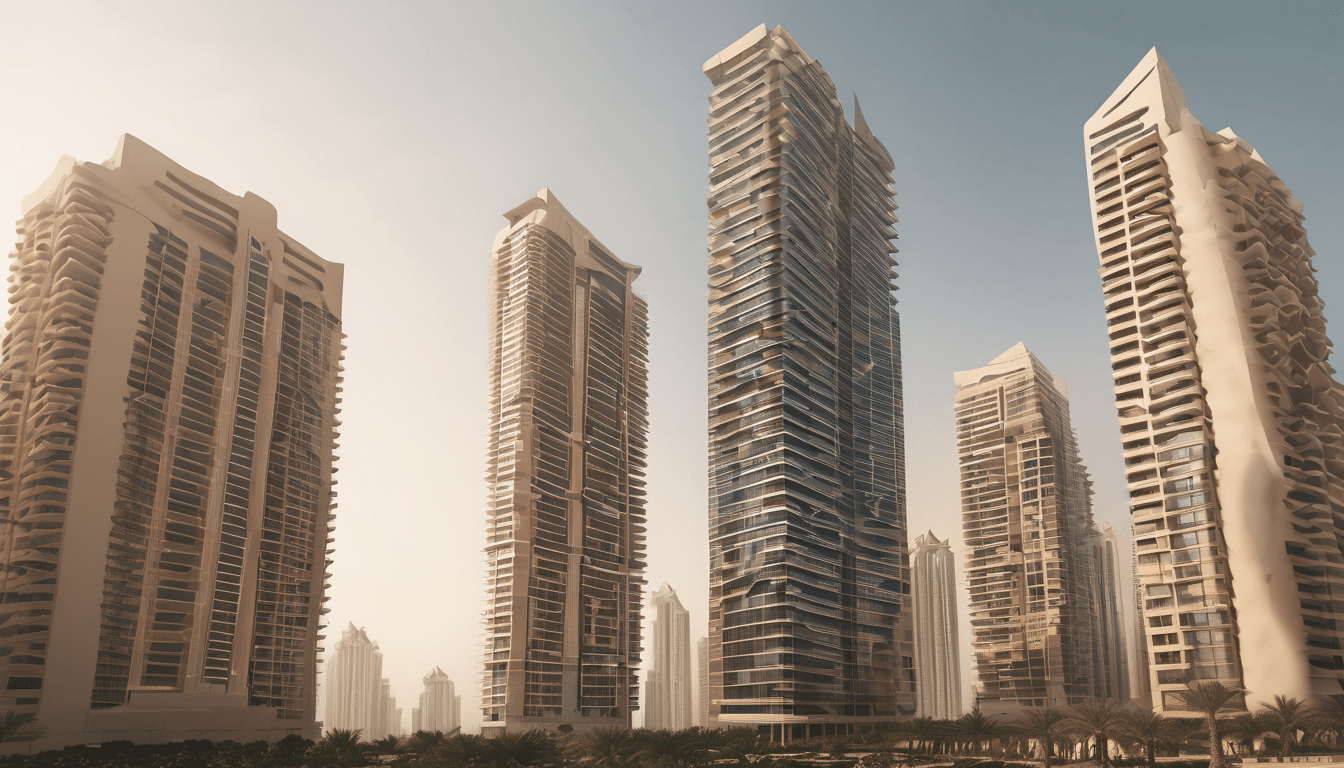
How Does Air Leakage Testing Work in Dubai High-Rises?
Air Leakage Testing for Dubai High-Rise Apartments identifies precisely where conditioned air escapes a sealed envelope and where hot, humid outdoor air infiltrates in return. In a climate where outdoor temperatures routinely exceed 45°C and summer relative humidity climbs above 80%, these infiltration pathways are not minor inefficiencies — they are the primary mechanism behind moisture damage, mould colonisation inside wall assemblies, and the chronic overcooling that sends chiller bills spiralling. Understanding what this testing involves, and how to engage a competent assessor, is the starting point for any serious building envelope investigation in the UAE.
High-rise apartments present a building science challenge that detached villas do not. The stack effect — pressure differences generated by the height of the building itself — creates continuous air movement between floors, through service penetrations, and across facade interfaces. Curtain wall systems, sliding glazing units, and penetrations for MEP services all represent leakage pathways that are architecturally specific to towers. The standard residential assumptions from European or North American building science do not translate directly, which is why UAE-specific field assessment matters more than imported benchmarks.
This guide is written for apartment owners, property managers, and facilities teams who are weighing whether to commission this type of assessment — what it costs in diagnostic precision, what it returns in actionable data, and what mistakes to avoid when selecting a provider.
Why Building Envelope Integrity Matters More in Towers
A detached villa leaks air through its roof-wall junction, window frames, and door thresholds. A high-rise apartment leaks through all of those — plus inter-floor transfer pathways, curtain wall gasket failures, balcony door compression seal degradation, and penetrations shared with neighbouring units and vertical service shafts. Each category behaves differently under pressure and requires a different diagnostic approach.
The consequence of undetected leakage in a Dubai tower is not simply a higher electricity bill. When warm, moisture-laden outdoor air infiltrates a cooled envelope at sufficient volume, condensation occurs on surfaces and within cavities that remain below the dew point. Inside a wall assembly — behind gypsum board, within insulation, around concealed pipework — this condensation creates exactly the sustained moisture conditions that support mould growth. The organism does not need a visible leak. It needs relative humidity above approximately 70% at a surface, sustained over time. Uncontrolled infiltration provides precisely that.
What the Testing Process Actually Involves
Blower door testing is the foundational method for quantifying envelope air leakage. A calibrated fan assembly is mounted in a door or window opening of the unit under assessment. The fan depressurises or pressurises the apartment to a standardised differential — typically 50 pascals — while instrumentation records the airflow required to maintain that pressure. The result is an air changes per hour figure at 50 pascals (ACH50), which describes the leakiness of the envelope in measurable, comparable terms.
A single blower door number tells you how much leakage exists. It does not tell you where. That is why competent air leakage assessors pair pressurisation with either thermal imaging or tracer gas techniques to locate the specific pathways driving the number.
Thermal Imaging During Pressurisation
When a building is held under pressure differential, infiltrating air creates surface temperature anomalies that a calibrated thermal camera can detect. Cool air entering through a curtain wall gasket failure appears as a distinct thermal signature against the warmer interior surface temperature. This technique, performed by a thermographer with building science training rather than simply electrical inspection experience, can map leakage pathways across an entire apartment facade in a single session.
Thermal imaging used independently — without simultaneous pressurisation — is a weaker diagnostic tool for air leakage specifically. The pressure differential is what amplifies the signal. Assessors who offer thermal imaging but not blower door testing are providing incomplete data for envelope leakage work.
Tracer Gas and Smoke Pencil Methods
For pinpointing specific penetration failures — service entry points, electrical box backs, inter-unit transfer pathways — tracer gas or theatrical smoke under controlled pressure differential provides direct visual evidence. These are supplementary techniques, not replacements for pressurisation testing, but they are often the difference between a report that recommends “check the curtain wall” and one that locates the precise gasket run requiring remediation.
Reading Your Air Leakage Results
ACH50 values are the standard reporting metric. For context, modern energy-efficient residential construction in performance-oriented markets targets figures below 3 ACH50. Poorly sealed older apartments commonly test above 10 ACH50. UAE buildings, given their rapid construction history and the specific challenges of desert climate facade detailing, frequently produce results in ranges that would not be acceptable under European building standards — though no mandatory UAE-wide residential airtightness standard currently exists.
The meaningful comparison is not against an international benchmark. It is against what your specific building type and facade system should be capable of delivering, and against a reinspection result after remediation. A reduction from 12 ACH50 to 4 ACH50 following targeted sealing work is a concrete, measurable outcome — not an estimate.
What a Good Report Documents
A professional air leakage assessment report should include the raw pressure-flow data from the blower door test, the ACH50 result with appropriate confidence notation, annotated thermal images or smoke test photographs identifying leakage pathway locations, a description of the building’s facade system and how it relates to identified failures, and a prioritised remediation recommendation list. Reports that deliver only the ACH50 figure without pathway identification are insufficient for remediation planning.
The report should also document ambient conditions at time of testing — outdoor temperature, relative humidity, indoor set-point temperature — because these variables affect the reliability of thermal imaging specifically. A well-documented assessment is reproducible. A poorly documented one is not.
Common Mistakes When Commissioning This Assessment
The most frequent error is selecting a provider based on thermal imaging capability alone. Thermal cameras are instruments. They require a pressurisation source and a building scientist who understands hygrothermal dynamics to generate actionable data. A provider offering thermal scans without blower door capability is delivering a partial service for a problem that requires the complete diagnostic chain.
The second common error is testing a single apartment and extrapolating to an entire floor or building. Air leakage in high-rise construction is highly localised. Unit 1204 and unit 1205, separated by a party wall, can have entirely different ACH50 profiles depending on which facade orientation they share, how their balcony doors seal, and what service penetrations run through their respective kitchen or bathroom walls. Building-wide conclusions require building-wide — or at minimum, representative stratified — sampling.
The third mistake is commissioning the assessment as a standalone exercise rather than as part of a building envelope investigation that also addresses moisture mapping, insulation continuity, and thermal bridging. Air leakage, thermal bridging, and moisture infiltration interact. Addressing only one in isolation produces incomplete remediation and recurring problems.
UAE-Specific Conditions That Shape the Assessment
Dubai’s high-rise building stock spans approximately two decades of rapid construction with significant variation in envelope specification quality. Buildings completed in the late 2000s and early 2010s frequently feature curtain wall systems installed under construction programme pressures that prioritised speed over gasket compression quality. These buildings are now entering the age range — approximately 12 to 18 years post-completion — where primary seals are degrading and air leakage is measurably increasing.
The desert climate introduces an additional variable: thermal expansion cycling. Facade elements in Dubai experience daily temperature differentials that exceed those seen in most European climates by a significant margin. This cycling fatigues compression seals and sealant beads over time in ways that are not always visible from the interior. The facade can appear intact while losing airtightness at every gasket interface simultaneously.
High humidity during summer months — particularly the July-to-September window — means that infiltration pathways which cause cosmetic condensation in winter climates cause active mould colonisation in Dubai towers. The consequence of the same ACH50 figure is substantially more serious in the UAE context than the same number would suggest in a temperate climate.
Selecting the Right Assessor for a Dubai Apartment
The qualifying criteria for an air leakage assessor in the Dubai market should include building science certification or equivalent demonstrated training — not simply thermal imaging certification, which is a narrower credential. Experience specifically in high-rise residential construction is relevant because the stack effect dynamics, facade system types, and MEP penetration patterns differ from villa work. Ask to see example reports from comparable building types before committing to an engagement.
Ask specifically whether the assessor uses simultaneous pressurisation during thermal scanning. This single question distinguishes providers operating at a diagnostic standard from those offering a visual inspection with thermal camera imagery. The answer should be an unequivocal yes, with an explanation of how they achieve the pressure differential during testing.
Enquire about laboratory support. If the assessment identifies moisture signatures within wall assemblies — a frequent companion finding to air leakage — the ability to follow up with microbiological surface sampling and laboratory analysis from an in-house facility matters for turnaround time and result interpretation. Waiting two to six weeks for external laboratory results is a significant constraint when remediation decisions are pending.
What Remediation Looks Like After Testing
Remediation priorities from an air leakage assessment typically fall into three categories: facade system interventions (gasket replacement, sealant bead renewal at curtain wall interfaces), penetration sealing (MEP entries, electrical back-box air barriers, service shaft interfaces), and compression seal replacement at balcony sliding door thresholds.
The cost of remediation is almost always substantially lower than the cumulative cost of the energy waste, humidity-related maintenance, and eventual mould remediation that unaddressed leakage generates over a five to ten year period. This is not a speculative calculation — it is a straightforward comparison between a defined remediation scope and the documented consequence of inaction in a climate that punishes envelope failures continuously.
Prioritise by leakage volume contribution. A blower door test combined with pathway identification allows a competent assessor to estimate what proportion of total leakage each pathway category contributes. Curtain wall gasket failures in a large-format facade may account for 60% of total ACH50 while addressing them requires only linear metre sealant replacement — a favourable effort-to-outcome ratio that a penetration-sealing-first approach would miss entirely.
Expert Takeaways Before You Commission
- Require blower door testing as the quantitative foundation — thermal imaging alone is insufficient for air leakage work
- Ask for simultaneous pressurisation during thermal scanning — this is the technical standard, not an optional upgrade
- Request pathway-identified results, not only an ACH50 number — the number tells you the problem exists; the map tells you where to fix it
- Assess your building’s age relative to primary seal service life — towers approaching 15 years post-completion merit proactive testing regardless of visible symptoms
- Connect air leakage findings to moisture mapping — in the UAE context, these are rarely independent problems
- Select a provider with in-house laboratory capacity if mould risk is a concurrent concern — external lab turnaround times impede decision-making
Frequently Asked Questions
What is Air Leakage Testing and why does it matter for Dubai apartments?
Air leakage testing measures how much air passes uncontrolled through a building’s envelope — walls, windows, doors, and penetrations. In Dubai’s climate, where outdoor air is hot and extremely humid, uncontrolled infiltration introduces moisture that condenses inside wall assemblies, driving mould growth and structural degradation. Quantifying leakage with a blower door test provides the baseline data needed for targeted remediation rather than guesswork.
How is blower door testing conducted in a high-rise apartment?
A calibrated fan is mounted in a door or window opening and used to pressurise or depressurise the apartment to a standardised 50 pascal differential. The airflow required to maintain that pressure is measured and converted to an air changes per hour figure at 50 pascals — the ACH50 result. The test typically takes two to four hours including setup, pressurisation, thermal scanning, and pathway identification work.
Is there a Dubai or UAE standard for residential airtightness?
No mandatory UAE-wide residential airtightness standard for existing buildings currently exists. Assessment results are therefore interpreted against international benchmarks — such as those used under WELL or Passivhaus frameworks — and against what the specific building’s facade system should be capable of achieving. This makes the assessor’s building science expertise more critical than a simple pass/fail reading.
How does the stack effect in high-rise buildings affect air leakage?
The stack effect describes the pressure differential created by the height of a building itself. Warm air rises and exits at upper floors while cooler air is drawn in at lower levels. In a tall residential tower, this creates continuous pressure across envelope elements — particularly service shaft interfaces and inter-floor penetrations — that accelerates leakage through any available pathway and makes upper-floor units disproportionately vulnerable to certain failure modes.
Can air leakage testing identify mould risk before mould becomes visible?
Yes. Pathway identification during pressurisation testing locates infiltration routes where humid outdoor air is entering wall cavities and service voids. These are predictive mould risk locations — the conditions for mould colonisation exist whether or not visible growth has emerged. Pairing air leakage assessment with surface and air microbiological sampling from an in-house laboratory allows risk to be quantified before visible damage occurs.
How often should a Dubai high-rise apartment be tested for air leakage?
A baseline assessment is most valuable between years eight and twelve after building completion, as primary gasket and sealant systems approach the end of their initial service life. A follow-up test after any facade remediation work confirms outcome. Buildings in Dubai experiencing recurring condensation complaints, unexplained humidity elevations, or mould recurrence after surface treatment warrant immediate assessment regardless of building age.
What should a professional air leakage report include for a UAE property?
A professionally prepared report should document the raw pressure-flow data, the ACH50 result with ambient condition notation, annotated thermal images or smoke-test photographs identifying specific leakage pathways, a description of the facade system and how it relates to findings, and a prioritised remediation recommendation. Reports delivering only an ACH50 number without pathway identification are insufficient for planning any remediation work.
The Decision to Test
Air Leakage Testing for Dubai High-Rise Apartments is not a speculative exercise — it is a measurement exercise. The question is not whether your building’s envelope leaks. Every envelope leaks. The question is how much, through which pathways, and what the consequence of that leakage is in the specific conditions of a desert climate with full AC dependency and summer humidity that punishes every infiltration point simultaneously.
The assessment framework described here — blower door pressurisation, simultaneous thermal imaging, pathway identification, and integration with moisture and microbiological analysis where indicated — is the diagnostic standard that produces actionable data rather than vague recommendations. Applied to UAE high-rise construction specifically, it is the difference between knowing your building and guessing at it.
If you are experiencing recurring condensation, unexplained humidity readings, or mould recurrence in an apartment that has already been treated at the surface level, the building envelope is the most probable explanation. Air Leakage Testing for Dubai High-Rise Apartments is where that investigation starts — with measured data, located pathways, and a clear remediation priority list rather than another coat of anti-mould paint.