Air Purifier Selection Guide for UAE Climate Dubai Guide
Choosing an air purifier in Dubai’s climate requires understanding how desert conditions, year-round air conditioning, and high-rise living create unique indoor air quality challenges. The Air Purifier Selection guide for UAE climate differs significantly from temperate region recommendations because dust composition, humidity control needs, and HVAC integration demand specialised consideration. As an IAC2 Certified Indoor Air Consultant who has tested hundreds of Dubai properties, I can confirm that standard consumer air purifiers often underperform here without proper feature matching to our environment.
The right air purifier selection guide for UAE climate begins with recognising that airborne particulates in Dubai contain finer silicate particles from desert sand, combined with biological contaminants from AC systems and higher VOC levels from rapid off-gassing in new buildings. Your air purifier must address this specific contamination profile rather than generic pollen or pet dander concerns. This air purifier selection guide for UAE climate will help you navigate the essential features, common pitfalls, and technical specifications that matter most in our region.
Air Purifier Selection Guide for UAE Climate – Understanding UAE-Specific Air Quality Challenges
Dubai’s air quality challenges stem from three primary sources: fine desert dust that penetrates building envelopes, microbial growth in air conditioning systems, and chemical off-gassing from building materials accelerated by high temperatures. The air purifier selection guide for UAE climate must account for particulate matter measuring under 2.5 microns that constitutes most desert dust particles. These finer particles bypass standard filters and require HEPA-grade filtration.
Humidity control represents another critical factor in air purifier selection guide for UAE climate considerations. While outdoor humidity fluctuates dramatically, indoor environments maintain consistent 45-55% relative humidity through AC systems. However, many air purifiers add moisture to air or lack humidity monitoring capabilities that could conflict with your AC’s dehumidification function. Your air purifier selection guide for UAE climate should prioritise units with humidity sensors and dry operation modes.
Desert Dust Composition Analysis
Through our Dubai laboratory analysis, we’ve identified that UAE desert dust contains higher concentrations of silica and finer particles than typical household dust. This composition demands HEPA H13 or H14 filters rather than standard HEPA filters. The air purifier selection guide for UAE climate should specify minimum HEPA H13 filtration to capture these finer particulates effectively.
Air Purifier Selection Guide for UAE Climate – Essential Features for UAE Air Purifiers
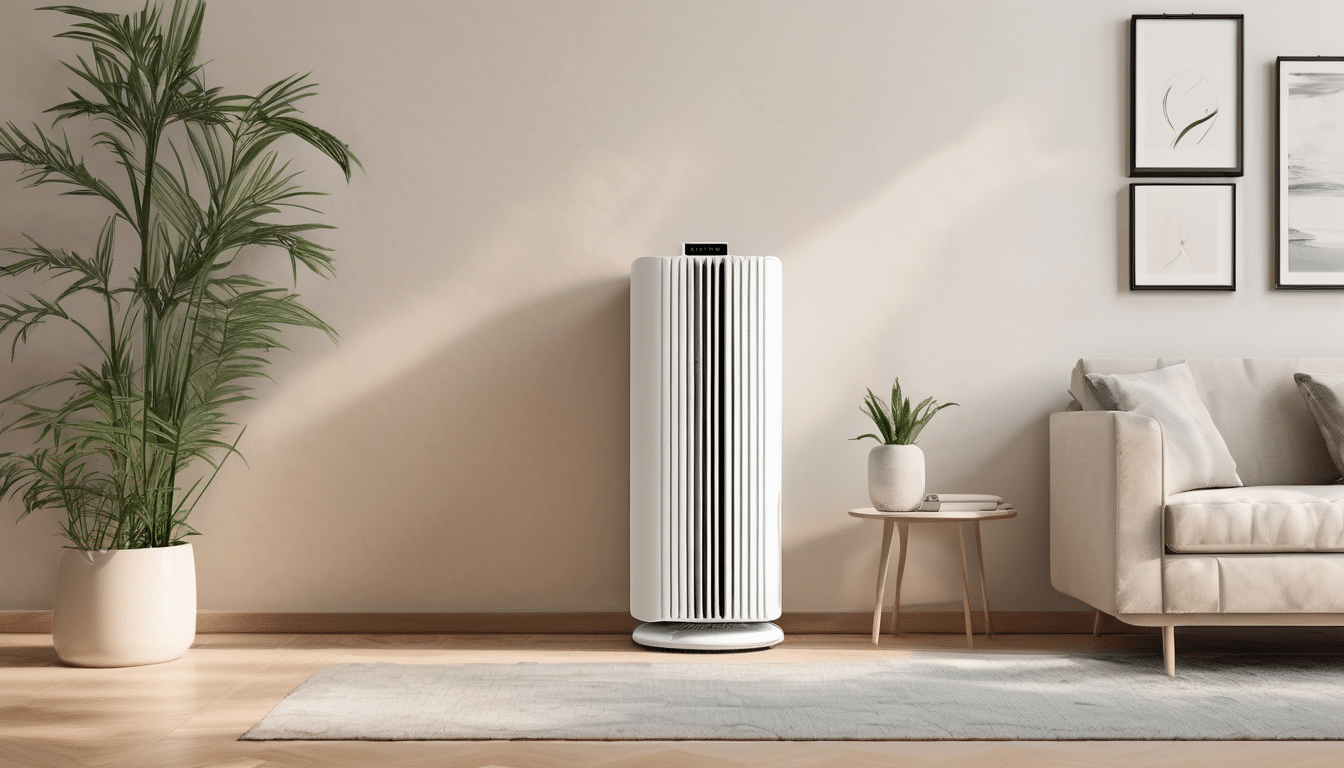
The comprehensive air purifier selection guide for UAE climate identifies seven essential features: true HEPA H13 or better filtration, activated carbon filtration for VOCs, humidity monitoring, automatic mode switching, high CADR (Clean Air Delivery Rate) for large spaces, quiet operation for bedroom use, and smart sensors for real-time air quality monitoring. These features address the specific challenges identified in our field investigations across Dubai residences.
CADR ratings deserve special attention in your air purifier selection guide for UAE climate. Dubai rooms typically have higher ceilings and more open layouts than similarly sized rooms in other regions. Therefore, you should select a unit with CADR ratings 20-30% higher than manufacturer recommendations for your room size. This accommodation ensures adequate air exchange rates despite our unique architectural layouts.
Air Purifier Selection Guide for UAE Climate – Filtration System Requirements for Desert Conditions
Your air purifier selection guide for UAE climate must emphasise multi-stage filtration systems capable of handling our specific contaminant profile. The ideal system includes a pre-filter for large dust particles, true HEPA filter for fine particulates, activated carbon filter for VOCs and odours, and optional UV-C light for microbial control. This combination addresses the full spectrum of contaminants we routinely identify in Dubai indoor air quality assessments.
Filter replacement frequency represents a critical consideration in air purifier selection guide for UAE climate planning. Dubai’s high dust load means filters require replacement every 3-4 months rather than the 6-12 month intervals suggested for less dusty environments. When evaluating models, consider filter replacement costs and availability in the UAE market to ensure sustainable maintenance.
Humidity Control Integration Considerations
An often-overlooked aspect of air purifier selection guide for UAE climate involves humidity management. Many imported air purifiers include humidification functions designed for drier climates, but these can conflict with Dubai’s AC systems that carefully control humidity. Your air purifier selection guide for UAE climate should prioritise units with humidity sensors that automatically adjust operation to maintain optimal 45-55% relative humidity levels.
Some premium air purifiers feature desiccant wheels or dry mode operations that complement rather than compete with your AC’s dehumidification function. This integration proves particularly valuable during Dubai’s humid summer months when indoor humidity control becomes challenging even with functioning AC systems.
AC System Integration and Placement Strategies
Your air purifier selection guide for UAE climate must address integration with existing HVAC systems. In many Dubai homes, air purifiers work alongside rather than replace AC filtration. Placement becomes crucial – units should be positioned where air circulation patterns complement rather than disrupt AC airflow. Avoid placing air purifiers directly under AC vents where they might compete with conditioned air distribution.
Consider smart air purifiers that can integrate with building management systems or respond to AC operation cycles. Some advanced models can detect when AC is actively cooling and adjust their operation to maximise efficiency during these periods. This coordination represents sophisticated air purifier selection guide for UAE climate thinking beyond basic standalone operation.
Energy Efficiency and Operating Costs
Energy consumption deserves significant attention in your air purifier selection guide for UAE climate evaluation. Since air purifiers typically operate continuously, their energy draw adds to already substantial AC electricity costs. Look for Energy Star certified models or units with DC motors that consume less power while maintaining performance. Our testing shows energy-efficient models can reduce operating costs by 30-40% compared to standard units.
Calculate total cost of ownership including filter replacements, energy consumption, and maintenance requirements. Some air purifier selection guide for UAE climate comparisons focus solely on purchase price while ignoring these ongoing expenses that significantly impact long-term value.
Smart Features and Monitoring Capabilities
Modern air purifier selection guide for UAE climate recommendations increasingly emphasise smart connectivity features. Units with WiFi connectivity, mobile apps, and automated reporting provide valuable insights into your indoor air quality trends. These features allow you to correlate air quality data with external factors like sandstorm events or internal activities like cooking that affect indoor pollution levels.
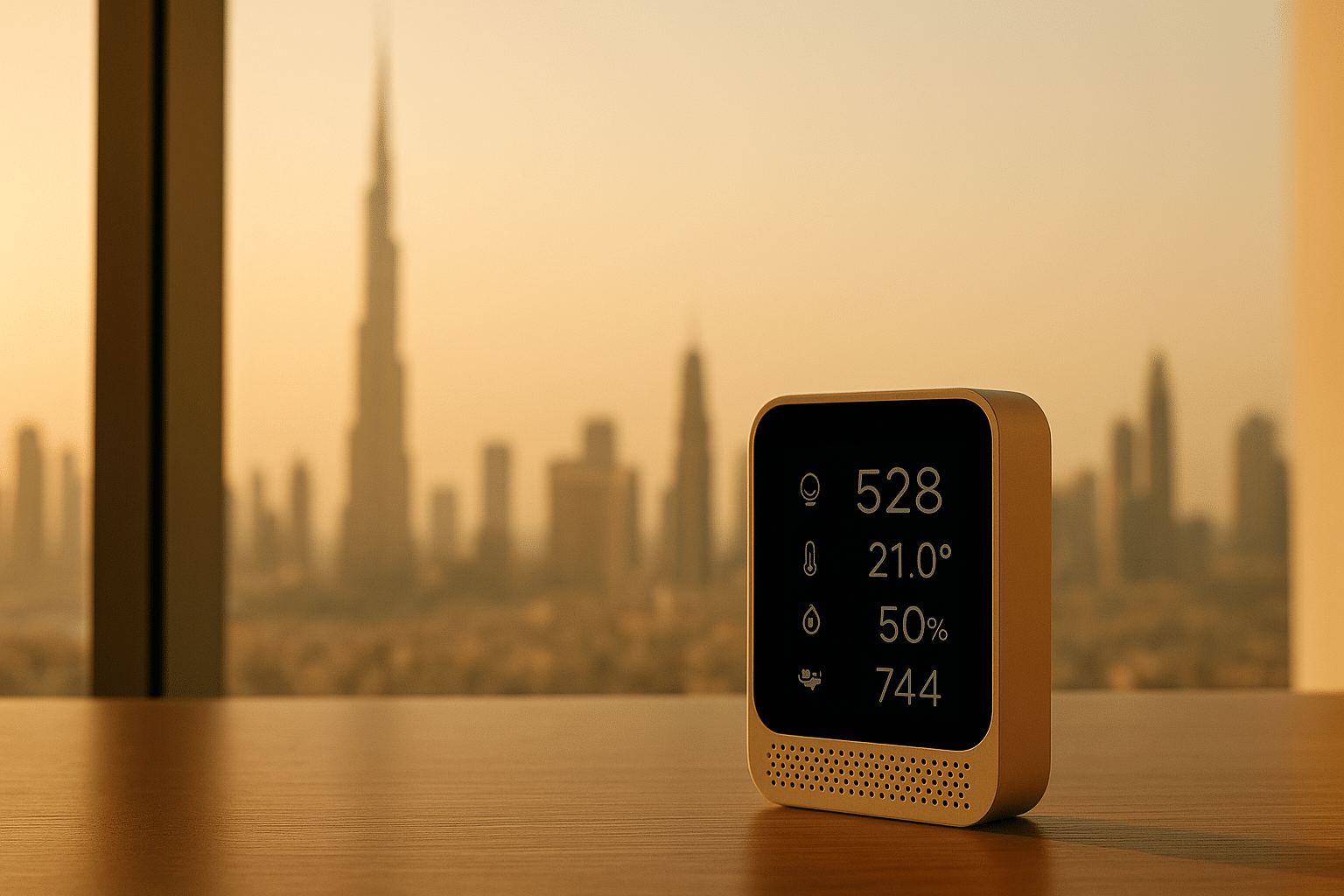
Advanced sensors that detect particulate matter, VOCs, humidity, and temperature provide comprehensive monitoring that aligns with professional IAQ assessment parameters. This data richness transforms your air purifier from simple filtration device to intelligent air quality management system, providing the continuous monitoring that Dubai’s variable air conditions require.
Expert Tips for Air Purifier Selection in Dubai
Based on hundreds of indoor environmental assessments across the UAE, here are my professional recommendations for air purifier selection. First, prioritise units with particle counters that display real-time PM2.5 levels rather than simple colour-coded indicators. This quantitative data helps you understand exactly what’s happening in your air.
Second, select units with auto mode that responds quickly to changing conditions. Dubai’s air quality can shift rapidly during sandstorms or high pollution events, and responsive automation ensures protection when needed most. Third, consider units with washable pre-filters to handle our high dust load between main filter replacements.
Fourth, verify that replacement filters are readily available through UAE distributors to avoid extended downtime waiting for international shipments. Fifth, choose units appropriate for your specific space size with additional capacity for open-plan layouts common in Dubai residences. Finally, consider professional IAQ testing before selection to identify your specific contamination profile and tailor your purifier choice accordingly.
Frequently Asked Questions
What size air purifier do I need for my Dubai apartment?
Dubai apartments typically require air purifiers rated for spaces 20-30% larger than the actual square footage due to high ceilings and open layouts. For a 50 square metre apartment, select a unit rated for 60-65 square metres to ensure adequate air exchange rates in our specific architectural environment.
How often should I replace filters in UAE conditions?
In Dubai’s high-dust environment, pre-filters require monthly cleaning and HEPA filters typically need replacement every 3-4 months rather than the 6-12 month intervals suggested for less dusty climates. Monitor your purifier’s filter indicator and replace when airflow decreases noticeably.
Can air purifiers reduce humidity in Dubai homes?
Most air purifiers do not actively dehumidify air. In Dubai, your AC system handles primary dehumidification. Select an air purifier with humidity monitoring that operates without adding moisture to avoid conflicting with your AC’s humidity control function.
Do I need UV-C light in my air purifier for Dubai?
UV-C light can help control microbial growth from AC systems, but it’s not essential if you have proper HEPA filtration. The decision should be based on whether you have existing microbial issues identified through professional IAQ testing rather than as a standard feature.
How do I know if my air purifier is working effectively?
Effective air purification shows as reduced dust accumulation on surfaces, improved allergy symptoms, and quantitative improvements on particle counters. For definitive verification, professional IAQ testing before and after implementation provides measurable data on filtration effectiveness.
Conclusion
The right air purifier selection guide for UAE climate recognises that our desert environment demands specialised equipment with specific features. From HEPA H13 filtration for fine desert dust to humidity-compatible operation that integrates with AC systems, the optimal unit addresses Dubai’s unique air quality challenges. Remember that air purifiers complement rather than replace proper HVAC maintenance and regular IAQ assessments.
Your air purifier should become part of a comprehensive indoor environmental strategy that includes regular AC cleaning, humidity control, and source control of pollutants. By selecting the right unit for your specific needs and Dubai’s climate challenges, you create healthier indoor environments that support wellbeing despite external air quality fluctuations. The investment in proper air purification pays dividends in improved sleep, reduced allergy symptoms, and greater peace of mind about the air your family breathes daily. Understanding Air Purifier Selection Guide for UAE Climate is key to success in this area.

JV de Castro, IAC2
JV de Castro is the Chief Technology Officer at Saniservice, where he leads innovation in indoor environmental sciences, IT infrastructure, and digital transformation. With over 20 years of experience spanning architecture, building science, technology management, digital media architecture, and consultancy, he has helped organizations optimize operations through smart solutions and forward-thinking strategies. JV holds a Degree in Architecture, a Masters of Research in Anthropology, an MBA in Digital Communication & Media, along with certifications in mold, building sciences and advanced networking. Passionate about combining technology, health, and sustainability, he continues to drive initiatives that bridge science, IT, and business impact.