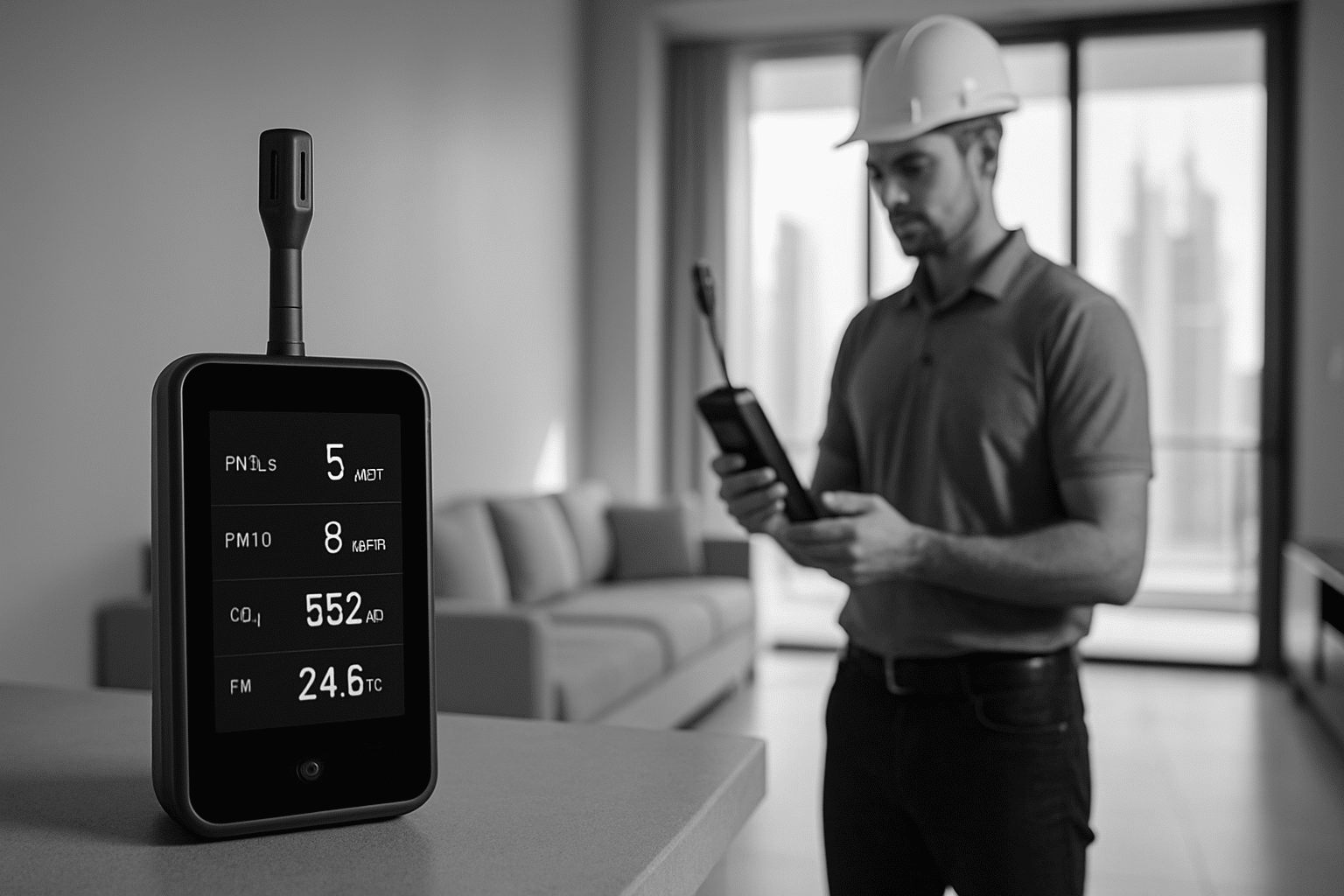
Mold Testing Kit for Home Air Quality Dubai Guide
Mold Testing Kit for home air quality represents the first step many Dubai residents take when suspecting indoor contamination, yet these consumer-grade tools provide only preliminary indications rather than definitive laboratory results. The fundamental limitation lies in their inability to distinguish between active growth, settled spores, and non-viable fragments—a critical distinction that determines both health risk and necessary remediation scope. Professional assessment combines multiple sampling methodologies with laboratory analysis to deliver comprehensive indoor air quality evaluation.
In Dubai’s climate, where air conditioning systems run continuously and indoor humidity levels fluctuate dramatically, mould species exhibit unique growth patterns unlike those documented in temperate climates. Xerophilic organisms thrive in our desert environment, often colonising HVAC systems and building materials without visible signs. This complexity renders simple home testing kits insufficient for proper risk assessment and remediation planning.
Understanding Mold Testing Kit for Home Air Quality Limitations
Consumer mould testing kits typically utilise settle plates or adhesive strips that capture airborne particles over a specified period. While these devices can indicate the presence of mould spores, they cannot differentiate between species, quantify concentrations accurately, or determine viability. The most significant limitation emerges when homeowners attempt to interpret results without professional context—a problem particularly acute in Dubai where local species profiles differ substantially from European or North American mould identification guides.
Laboratory analysis following professional sampling provides speciated identification and quantitative assessment, enabling proper risk evaluation based on established exposure limits. Without this professional interpretation, homeowners may either underestimate hazardous conditions or overreact to benign spore levels. The distinction between Cladosporium (common outdoors) and Stachybotrys (potentially toxigenic) requires microscopic examination and sometimes DNA analysis—capabilities far beyond consumer testing kits.
Common Types of Home Testing Kits
Three primary consumer testing formats dominate the market: settle plates featuring nutrient media that promote mould growth, adhesive strips that capture airborne particles, and vacuum cassettes that collect settled dust. Each suffers from methodological limitations—settle plates only capture viable spores that happen to land during exposure, adhesive strips cannot determine viability, and dust samples represent accumulated debris rather than current air quality.
Professional Mold Testing Kit for Home Air Quality Assessment
Professional mould assessment utilises calibrated air sampling pumps that draw specific volumes of air through collection devices, typically onto adhesive slides or into liquid media for laboratory analysis. This quantitative approach enables calculation of spores per cubic metre—the standard metric for evaluating indoor air quality against outdoor baseline conditions. Professional assessors also employ surface sampling, tape lifts, and bulk material analysis to build a comprehensive contamination profile.
In Dubai properties, professional assessment includes HVAC system inspection and sampling, as air conditioning units frequently serve as amplification sites for microbial growth. The combination of moisture, organic material (dust), and constant airflow creates ideal conditions for mould colonisation. Without HVAC evaluation, any mould assessment remains incomplete in climate-controlled environments.
When Mold Testing Kit for Home Air Quality Makes Sense
Consumer testing kits serve limited but legitimate purposes: initial screening when professional assessment isn’t immediately available, post-remediation verification of surface cleanliness, or periodic monitoring between professional evaluations. Their proper use requires understanding that negative results don’t guarantee absence of mould, and positive results merely indicate the need for professional follow-up.
Home testing proves particularly problematic in Dubai due to the prevalence of Aspergillus and Penicillium species—common outdoor fungi that frequently appear on settle plates regardless of indoor conditions. Without comparative outdoor samples and professional interpretation, residents may mistakenly attribute normal background levels to indoor contamination.
Laboratory Analysis Versus Visual Inspection
The critical distinction between professional and consumer mould assessment lies in laboratory confirmation. Professional assessors submit samples to accredited laboratories for microscopic analysis, culture growth, or DNA-based identification. This process speciates mould types, quantifies concentrations, and determines viability—information essential for evaluating health risks and planning remediation.
Visual inspection remains the foundation of any proper mould assessment, as many contamination issues reveal themselves through water staining, visible growth, or musty odours. In Dubai properties, experienced assessors know to examine behind furniture against exterior walls, underneath kitchen cabinets, and around bathroom fixtures where condensation often occurs unnoticed.
Interpreting Mold Testing Kit for Home Air Quality Results
Result interpretation presents the greatest challenge for homeowners using consumer testing kits. Without comparative outdoor samples, understanding of typical spore levels in Dubai’s environment, or knowledge of species-specific risk profiles, homeowners cannot contextualise their findings properly. Professional assessors compare indoor and outdoor samples, evaluate species composition, and consider building conditions to provide accurate risk assessment.
The presence of mould spores alone doesn’t necessarily indicate a problem—outdoor air always contains some fungal particles. The assessment focuses on comparing indoor and outdoor concentrations, identifying unusual species compositions, and detecting amplification sites where mould grows actively rather than merely accumulates as settled spores.
Health Implications of Mold Exposure
Mould exposure affects individuals differently based on sensitivity, existing health conditions, and exposure duration. Allergic reactions represent the most common response, ranging from nasal congestion and eye irritation to asthma exacerbation. Certain mould species produce mycotoxins that can cause more severe reactions in sensitive individuals, particularly those with compromised immune systems.
In Dubai’s sealed indoor environments, where residents spend approximately 90% of their time indoors, continuous exposure to elevated mould levels can lead to persistent respiratory issues, chronic fatigue, and cognitive difficulties. Children, elderly residents, and those with existing respiratory conditions face heightened vulnerability to mould-related health effects.
DIY Testing Versus Professional Mold Testing Kit for Home Air Quality
The choice between DIY testing and professional assessment ultimately depends on the question being asked. Home testing kits answer “Is there mould present?”—a question with limited practical value since mould exists everywhere. Professional assessment answers “Is there problematic mould growth requiring intervention?”—the question that actually matters for health and property protection.
Professional assessors bring additional capabilities beyond sampling: moisture mapping with thermal imaging, humidity monitoring, air velocity measurements, and building science knowledge to identify underlying causes. This comprehensive approach addresses not just the presence of mould but the conditions allowing its growth—the essential factor for permanent resolution.
Cost Considerations for Mold Testing
While consumer testing kits appear economically attractive at first glance, their limitations often lead to unnecessary anxiety or false reassurance. Professional assessment represents an investment in accurate information and proper solutions, particularly important in Dubai’s real estate market where property values and rental agreements may hinge on indoor air quality documentation.
The variables affecting professional assessment scope include property size, number of samples required, accessibility of potential contamination sites, and complexity of HVAC systems. Villa assessments typically require more comprehensive evaluation than apartment inspections due to multiple air handling units and greater surface area.
Preventive Measures Beyond Testing
Effective mould management extends far beyond testing to include moisture control, ventilation improvement, and regular maintenance. In Dubai properties, maintaining indoor humidity below 60% represents the single most important preventive measure, achievable through proper AC operation, dehumidification where necessary, and prompt repair of water leaks.
Regular HVAC maintenance proves equally critical, including filter changes, coil cleaning, and drain pan treatment. These measures prevent the accumulation of organic material and moisture that support mould growth within air handling systems—a common amplification site in climate-controlled environments.
When to Seek Professional Mold Testing Kit for Home Air Quality
Professional assessment becomes necessary when visible mould growth appears, musty odours persist despite cleaning, residents experience unexplained health issues, or water damage has occurred. Pre-purchase property inspections also warrant professional evaluation to identify hidden issues before transaction completion.
In rental situations, professional documentation provides objective evidence for landlord negotiations or insurance claims. The combination of visual documentation, moisture readings, and laboratory results creates a compelling case for necessary remediation when properly prepared by certified professionals.
Advanced Mold Detection Technologies
Beyond conventional testing methods, advanced technologies including infrared thermal imaging, borescope inspection cameras, and laser particle counters enhance detection capabilities. Thermal imaging identifies temperature variations indicating moisture intrusion within walls and ceilings, while borescopes enable visual inspection inside wall cavities and ductwork without destructive testing.
Laser particle counters provide real-time airborne particle concentration measurements, helping distinguish between dust, mould fragments, and other aerosols. These technologies complement traditional sampling methods by identifying hidden moisture sources and characterising overall indoor air quality beyond microbial contaminants.
Expert Tips for Dubai Homeowners
Based on extensive field experience in UAE properties, these practical recommendations help maintain healthier indoor environments:
- Monitor indoor humidity levels with digital hygrometers placed away from windows and doors
- Ensure AC drain pans remain clean and properly sloped to prevent water accumulation
- Inspect plumbing fixtures regularly for slow leaks that often go unnoticed
- Increase ventilation during cooler hours to reduce moisture buildup
- Address condensation on windows immediately as it indicates elevated humidity
- Clean refrigerator drip pans and dishwasher seals where mould often grows unnoticed
- Store items away from exterior walls where temperature differences promote condensation
- Consider professional HVAC cleaning every 2-3 years depending on usage patterns
Frequently Asked Questions
How accurate are home mould testing kits in Dubai’s climate?
Home mould testing kits provide limited accuracy in Dubai due to the prevalence of desert-adapted fungal species that may not grow on standard culture media. Professional assessment with laboratory analysis delivers reliable speciated identification and quantification essential for proper evaluation.
What makes Dubai’s mould problems different from other regions?
Dubai’s extreme outdoor conditions combined with tightly sealed, AC-dependent buildings create unique microbial ecosystems. Xerophilic (dry-loving) species thrive in these environments, often colonising HVAC systems and building materials without visible moisture damage.
Can mould testing determine if my health symptoms are mould-related?
While mould testing identifies exposure levels and species present, health correlation requires medical evaluation. Professional assessment documents environmental conditions that physicians can consider alongside clinical symptoms for comprehensive diagnosis.
How often should mould testing be conducted in Dubai homes?
Routine mould testing isn’t necessary for most properties. Instead, focus on preventive maintenance and professional assessment only when specific concerns emerge: visible growth, musty odours, water damage, or unexplained health issues among occupants.
What’s the most common mould found in Dubai properties?
Aspergillus and Penicillium species dominate Dubai’s indoor fungal profiles due to their adaptability to air conditioning systems and ability to thrive on common building materials. These species frequently appear in both problematic growth situations and normal background levels.
Do renters or buyers have rights regarding mould in Dubai properties?
Tenants and purchasers have rights to habitable premises free from hazardous conditions. Professional mould assessment documentation provides objective evidence when requesting remediation from landlords or negotiating purchase terms based on indoor air quality concerns.
How long does professional mould testing take in Dubai villas?
A comprehensive villa assessment typically requires 2-4 hours on site depending on property size and complexity, with laboratory results available within 3-5 working days. The final report includes detailed findings, interpretation, and recommended actions based on established guidelines.
Mold testing kit for home air quality serves as an entry point for indoor environmental concerns, but professional assessment delivers the definitive answers necessary for health protection and property preservation. In Dubai’s unique climate, where mould issues manifest differently than in temperate regions, experienced evaluation proves particularly valuable for accurate diagnosis and effective resolution.

JV de Castro, IAC2
JV de Castro is the Chief Technology Officer at Saniservice, where he leads innovation in indoor environmental sciences, IT infrastructure, and digital transformation. With over 20 years of experience spanning architecture, building science, technology management, digital media architecture, and consultancy, he has helped organizations optimize operations through smart solutions and forward-thinking strategies. JV holds a Degree in Architecture, a Masters of Research in Anthropology, an MBA in Digital Communication & Media, along with certifications in mold, building sciences and advanced networking. Passionate about combining technology, health, and sustainability, he continues to drive initiatives that bridge science, IT, and business impact.