Diagnostics · Layers i and iii · Visual, thermal and microbiological

Mold Inspection

Tell us what you have noticed. A building scientist designs the inspection around it, so you pay for the questions your building actually raises. The report tells you where the water comes from, what is growing, and what to do about it, in order of priority.

How it is doneNo standard package
  1. You tell us, in your own wordsphotographs help
  2. A few questionswithin one business day
  3. A scientist designs itwhat to measure, where, why
  4. The visithalf a day, at least
  5. The laboratorycultured and read
  6. The report, read with youcause, evidence, what to do
The quotation lists exactly which methods, where and why.Ask · Design · Visit · Culture · Report

What to expect from the inspection.

What you get

The findings register, ranked by severity; the causal chain from measurement to mechanism; each sampled location with what grew there; the corrective scope, written as a specification that can be priced and held to; and the verification plan.

How long

The site visit takes at least half a day for a three-bedroom home, longer for larger properties; culture needs several days of incubation; the report follows within six working days of the visit.

Who

A room-by-room inspection by an IAC2 Mold Certified inspector, designed by the practice's building scientists, microbiologists and architects, and cultured in the Saniservice Department of Microbiology.

Spreading, or a lot of it?

Call the mold line, 800-MOLDS, 8am to 6pm Mon–Fri, weekend duty cover, and we'll prioritize the inspection: when growth covers more than about one square meter or is moving from room to room, or when a child, an elderly person or someone with a weakened immune system is living with visible growth.

Is this the inspection you need?

Start from what you have noticed.

You have noticed

  • Spots, patches or fluff on a wall, a ceiling, tile grout or the AC grille
  • A musty or earthy smell, with or without anything to see
  • Rooms that feel humid, sticky or stuffy, or a meter reading above 60%
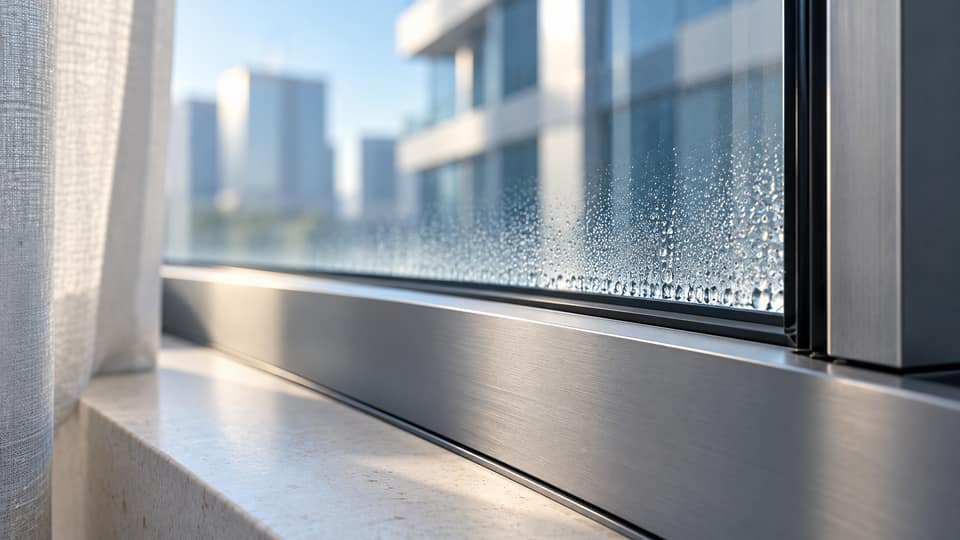
  • Water on windows, on AC grilles, or on a ceiling near the AC
  • A leak, a flood, or water from the unit above, last week or years ago
  • Someone unwell in a way you connect to the home
  • Paint blistering, wallpaper lifting, wood swelling, and no idea why

Any one of these is enough. You do not need to know the cause: "I don't know" is a complete answer, and finding out is what the inspection is for.

Or you need

  • A record before buying, renting or taking handover. A baseline inspection, with nothing assumed to be wrong.
  • Proof that remediation was done properly. That is verification

    Mold Remediation

  • A remodel about to start. When a designer strips a property back, every surface is open for a few days: we read the drawings, inspect while the walls and floors are exposed, and confirm there is no source of moisture before anything is closed up.

A different service answers

A chemical smell, dust, stuffiness or a compliance "air test", with no sign of mold

Air Quality Testing

The air-conditioning cannot hold the room cool and dry

Diagnostics, layer iv

A complex building, a portfolio, or a program over time

Advisory

Designed, not packaged

No two interiors are alike. No two reports are.

There is no standard package. What you describe decides what is measured: a smell with nothing visible is a different investigation from a stain under a bathroom, and neither needs everything below. The scientist chooses from these methods, and your quotation lists exactly which, where and why.

MethodWhat it isWhen the scientist includes itRead against
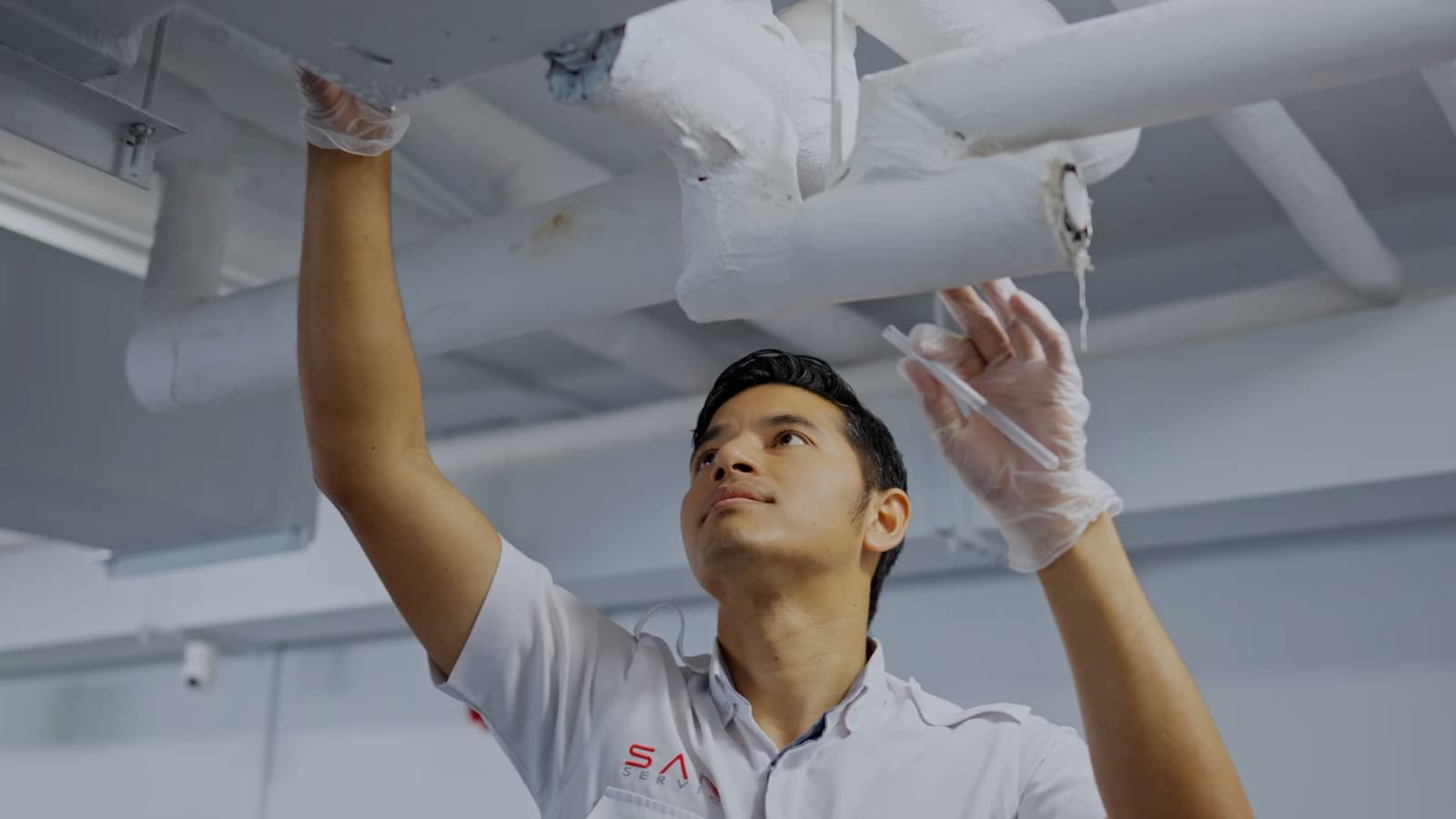
Room-by-room inspectionby an IAC2 Mold Certified inspector, following the IAC2 Mold Inspection Standards of PracticeAlways. It is how every other method is aimed.IAC2 Mold Inspection Standards of Practice
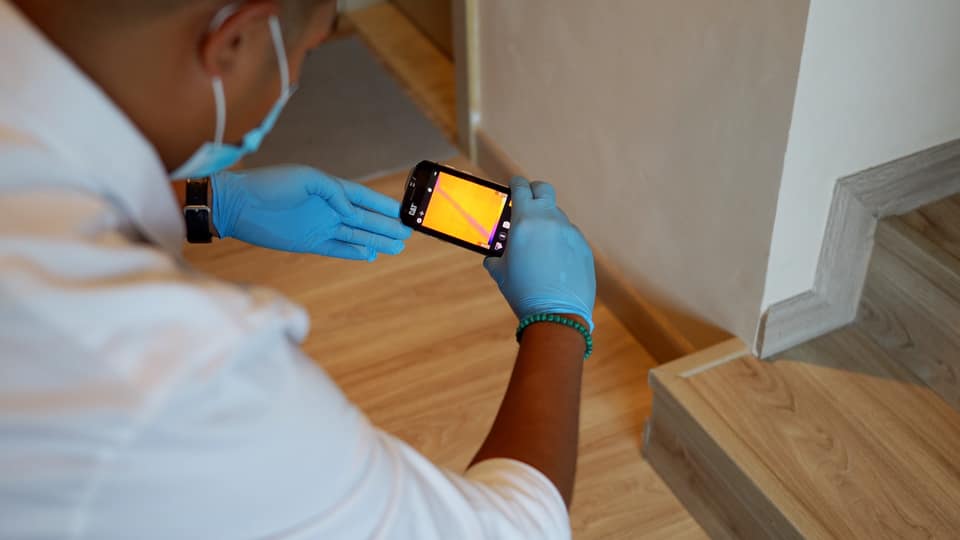
Thermal camera passover walls, ceilings, ducts and pipes to find the cold spots and the wet patchesWhen a cold or wet surface is suspected and nothing shows on the paint.The dew point of the room
Moisture readingsinside walls, floors and timberWherever there has been water, a stain, or a material that feels damp or soft.the practice's own criteria, labeled as such
Surface temperature and dew pointsurface temperatures where a cold surface is suspected; air temperature and humidity in each room, from which its dew point, the temperature at which the moisture in the air turns back into water, is computedWhenever the complaint is humidity, condensation, or growth with no leak.room humidity against Dubai Municipality's 60% guideline (TG 142); surface temperature against the room's dew point
Room pressurethe pressure of each room against its neighbors and against outdoorsWhen growth sits inside cavities or at the top of outside walls, or a door pulls shut on its own.practice criterion, direction only
Air sampling for mold sporesread against the Dubai Municipality guideline of 500 CFU/m³ (TG 119), a count of living mold per cubic meter of airWhen there is a smell with nothing visible, a health concern, or a result someone else must accept.DM TG 119
Surface swabswhere growth is visible or suspectedTo settle whether a mark is growth, and what it is.ANSI/IICRC S520-2024, Conditions 1, 2 and 3
The Moldiness Profilea surface-by-surface culture of settled dust that maps where growth is concentrated and where it is notWhen the source is hidden and the question is where.the practice's own criteria, labeled as such

Every culture sample is grown and read in the Saniservice Department of Microbiology; each species is identified under the microscope and reported location by location, with how much living mold there was and whether any of the species found are the ones that only grow where a material has been wet. The species matters less than where it is growing and why.

We culture, because living mold is what colonizes, spreads and has to be removed. Where you, your physician or a protocol you are following specifically requires an ERMI mold-DNA result, we arrange it alongside culture, never in place of it: that one sample is analyzed by a laboratory in Europe or the United States, and its turnaround sets the minimum.
How it is done

From what you noticed to a quotation you can read.

You tell us, in your own words

Write it as you would say it, and attach photographs. Your own account is the most useful thing we receive, and it stays on the record exactly as you wrote it.

A few questions

A building scientist responds within one business day. Usually ten to fourteen questions, fewer if we have been to the property before: where, since when, when it is worse, how the AC is run, what has already been tried.

A scientist designs the inspection

What must be investigated, where, and what the inspection has to be able to answer when it is finished.

An inspector reviews it

The inspector who will carry it out checks that it can be done as written, in your building.

The scope and the price, before anything is booked

There is no list price, because the fee follows the scope and the size of the property: a single room and a whole villa are different investigations. The price can be discussed; the science is not trimmed to fit it. If you ask for something to be taken out, a scientist checks what the inspection could still answer without it.

The visit

The site visit takes at least half a day for a three-bedroom home, longer for larger properties. What you accepted is exactly what is carried out.

The laboratory

Samples are cultured in the Saniservice Department of Microbiology, each species identified under the microscope and reported location by location. Culture needs several days of incubation; the report follows within six working days of the visit.

The report, read with you

A call to walk through the cause, the evidence, and the recommendations in the order they should be done.

What you receive

Not "there is mold". Which species, where, how much, and why.

The cause

Named, with how sure we are: established, probable, or, when the evidence does not settle it, unresolved, and what would settle it.

What contributed

The contributing factors and the conditions that allowed it, each with the reading or the photograph that shows it.

What to do, in order

The recommendations in priority order: the corrective scope, written as a specification that can be priced and held to; and the verification plan.

Every reading is reported against a guideline or standard cited by document and version; where the criterion is the practice's own, it says so.

Measuring instruments used in Indoor Sciences assessments are maintained under Saniservice's ISO 9001 management system. Each instrument is individually identified, with its calibration or verification schedule, history and certificates recorded and reviewed. Instruments are calibrated or verified at manufacturer-recommended intervals, in-house by the laboratory and engineering functions or by external calibration providers where required. Calibration and verification records for the instruments used in a specific assessment are available to clients on request.

Culture and identification in the Saniservice Department of Microbiology; where a result must carry formal accreditation, the EIAC-accredited (ISO/IEC 17025) partner laboratory, and the report says which. The Saniservice Department of Microbiology is a working laboratory, not a certifying body. It is run in-house by our microbiologists to recognized methods and documented protocols, and is used to diagnose, to guide the work and to verify results in context. It is not accredited to ISO 17025. Where a result must carry formal or legal certification, an EIAC-accredited (ISO/IEC 17025) partner laboratory is used, and the report says so.

Where something could not be measured on the visit, the report says so; nothing modeled is stated as measured.

Every report is signed by the scientist accountable for it, in the Indoor Sciences report format.

Then what

The criteria are written before the work. The verification is the same whoever does it.

Two things have to be true for mold to stay gone: the surface must be dry and stay dry, with no leak reaching it, no condensation on it, and no air against it humid enough to feed growth; and the material that was colonized must have been dealt with to a defined standard.

The recommendation

The acceptance criteria are written into the report before any work is priced.

Remediation

The remediation itself is carried out by the Saniservice mold remediation team, to ANSI/IICRC S520-2024, and verified afterwards by the Indoor Sciences team.

Mold Remediation

Verification

Then the building is measured again, by the same methods, read in the same laboratory, against the acceptance criteria written before the work began. Where our own team carried out the work, the verification is done by Indoor Sciences staff who did not do the work, it is reported separately, and the report says who did the work.

Questions

What people ask when they find mold.

Is Indoor Sciences the same company as Saniservice?

Yes. One company. Indoor Sciences is the building-science consultancy that investigates, tests, prescribes and verifies; the Saniservice mold remediation team and the air-conditioning teams do the work. Same front desk, same laboratory, same address.

Is the mold in my home dangerous?

That depends on the species, the quantity, the location and who is exposed, and it cannot be answered from a photograph. What can be answered is what is growing, how much and why, and that is what the investigation establishes. Where a finding warrants medical advice, the report says so; the practice does not give it.

Can I just clean it with bleach?

You can remove visible growth from a hard surface; you cannot change the reason it grew, and porous materials that have been colonized are not made sound by surface cleaning. Without the moisture cause found and corrected, the growth returns on a schedule set by the climate.

Is a home test kit enough?

A kit shows that spores settled on a dish, which is true of every home. It cannot say how much is growing, where, or why, and those three decide what to do.

I cannot see any mold. Is an inspection still worth it?

Yes. A smell with nothing visible, or a wall that stays damp, is a complete reason. The inspection is designed for exactly that: to find what cannot be seen, or to establish that there is nothing to find.

Why culture rather than a DNA test?

Because living mold is what colonizes, spreads and must be removed. A DNA test counts living and dead spores alike and gives one number for the whole home; culture, sampled surface by surface, tells us what is alive and where. Where an ERMI result is specifically required we arrange it, alongside culture and never in place of it.

How long does it take?

The site visit takes at least half a day for a three-bedroom home, longer for larger properties; culture needs several days of incubation; the report follows within six working days of the visit.

Do you do the remediation?

Indoor Sciences investigates, prescribes and verifies. The remediation itself is carried out by the Saniservice mold remediation team, to ANSI/IICRC S520-2024, and the verification uses the same methods and criteria, by people who did not do the work.

What does it cost?

There is no list price, because the fee follows the scope and the size of the property: a single room and a whole villa are different investigations. Tell us what you have seen and where, and the proposal states the fee before any visit is booked.

Do you inspect offices, commercial buildings and towers?

Yes. The inspection is designed the same way for a villa, an office floor or a tower: what has been noticed decides what is measured. For a portfolio, a building under management or a program over time, Advisory carries the same inspection into a managed program.

Are your inspectors certified?

Yes. Our inspectors hold IAC2 Mold Certification, and each certificate number can be checked in the IAC2 public register. Every report is signed by the scientist accountable for it.

What equipment do you use?

A thermal camera for cold and wet surfaces; moisture meters for walls, floors and timber; surface temperature and dew point in each room; a differential manometer for room pressure; air sampling for mold spores; sterile swabs, cultured in the Saniservice Department of Microbiology. Measuring instruments are calibrated or verified under Saniservice's ISO 9001 management system; records are available on request.

Someone at home has asthma or allergies. What should the inspection include?

Tell us. The scientist then includes air sampling for mold spores in the rooms that person uses, and surface samples where growth is suspected, so the report says what is in the air and on the surfaces, not only what is visible. Allergens such as dust mites, pollen or pet dander are not part of the test. Where a finding warrants medical advice, the report says so; we do not give it.

Can you inspect a villa before I buy or rent it?

Yes. A baseline inspection, with nothing assumed to be wrong: the water paths, the surfaces at risk and what is growing, if anything, recorded before you sign. The report is written so a landlord, a seller or an agent can read it.

Do you do emergency or same-week inspections?

Where growth is spreading, or covers more than about a square meter, call the mold line, 800-MOLDS, 8am to 6pm, Monday to Friday, with duty cover at weekends, and we prioritize the inspection. Every other request gets a building scientist's reply within one business day.

What is in the report?

The cause, named with how sure we are; each sampled location with what grew there; the readings behind every finding; the corrective scope, written as a specification that can be priced and held to; and the verification plan. Every reading is reported against a named guideline; where the criterion is our own, the report says so.

Do you work outside Dubai, in Abu Dhabi and the other emirates?

Yes, across all seven emirates, from the laboratory and front desk in Al Quoz, Dubai. Outside Dubai, the report states which authority's guideline each reading is compared with.

Go deeper: why mold comes back · why 60% feels fine and still grows mold · Research Note 01, the control volume